

Olympic Athletes Share How They Really Feel About Food In The Olympic Village

While most viewers of the Olympic and Paralympic Games speculate on who will take home the gold, fans who also love food may be wondering what competitors eat at the Olympic Villages. To get the scoop on meals served at the Games over the years, Tasting Table spoke with Paralympian snowboarder and skier Amy Purdy, Olympian figure skater Jason Brown, and Olympic artistic gymnast Aly Raisman. The athletes have partnered with Hershey's this year for its campaign celebrating happiness as "the real gold," releasing limited-edition chocolate medals in honor of the Games.
Purdy won a bronze medal for the U.S. at the 2014 Sochi Paralympic Games, then a silver and bronze at the 2018 Pyeongchang Paralympic Games, before retiring in 2022. Brown, still a working athlete, competed in the Olympic Games for Team USA in Sochi 2014 and Beijing 2022, winning a bronze medal at the former. Before retiring in 2020, Raisman earned six Olympic medals for the U.S., including three golds, at the 2016 Olympic Games in Rio de Janeiro and 2012 London Olympic Games.
When asked about food at the Olympic Villages, Purdy's answer was practical. "We were outdoors competing and starving," she said. "So I had no problem with the food ... I would just eat it all". Raisman said that the dining halls offered "tons of options," but having "an opportunity to see so many athletes" was the most exciting part of meals for her. The athletes told us more about dining hall dishes and their eating habits while competing.
Amy Purdy, James Brown, and Aly Raisman share what was on the menu at Olympic Villages
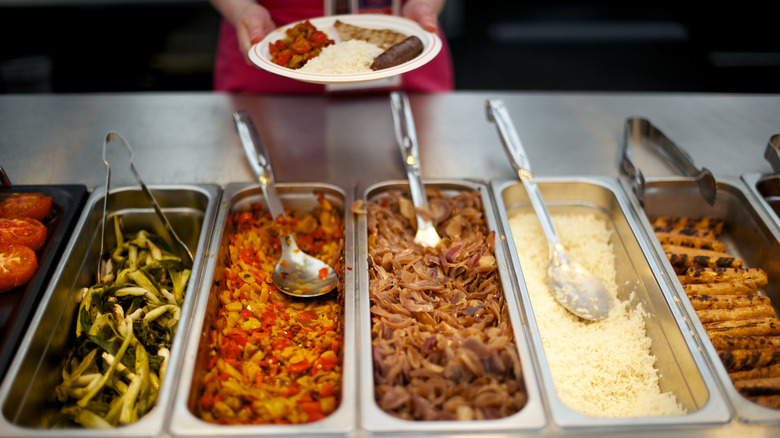
According to our three Olympians, the best thing about food at Olympic Villages is the number of options. Jason Brown agreed with Aly Raisman that "the cafeteria [for] the two games that I was at had such a great variety," but he "focused on what fit into my diet" during the competitions. However, he said, "When I finished competing, I really went ham and ate everything that I wanted to," which included regional dishes unique to the Games' settings. "When I was in China, they had hot pot, noodle dishes, dumplings. [Alongside] too, boiled chicken."
Amy Purdy also saw many regional specialties, although dishes from multiple cultures all had their place. "In Korea, we had Italian, then there'd be Korean, and then there'd be American," she said. "There'd be mac and cheese, but then there'd be ... a salad bar."
Notably, the athletes didn't solely depend on cafeteria meals. Brown said that his team had a resident nutritionist who brought their own food. "[They had] a fridge on our floor and they would make ... chia pudding or smoothies ... that we can grab and go." Purdy agreed, saying, "We had that too. We even had rice and different things just in case there wasn't food we could eat in the Village." Broccoli juice, the "it" beverage of 2026 Winter Olympians, might well have fit in with these nutritionist-approved selections.
Many Olympians have to watch their diets while competing
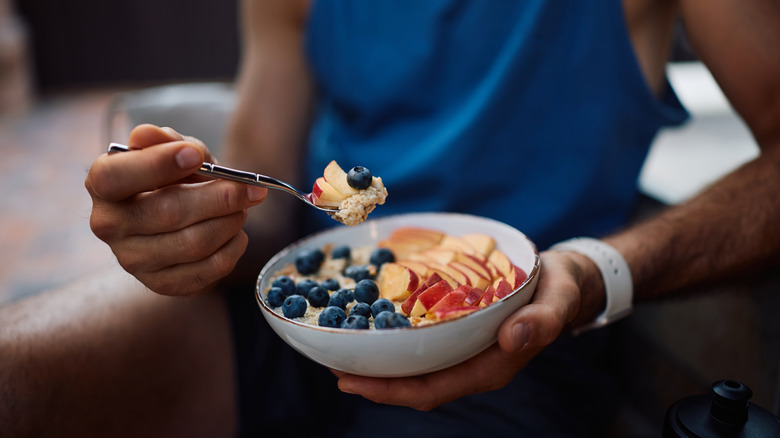
Though Olympic Village cafeterias offer tons of tempting dishes, not every athlete dives in headfirst. At the Olympic Village in Rio as well as London, Aly Raisman mainly followed her regular diet, saying "I wanted to know I was eating something that my body was used to." However, this meant she didn't get to try as many dishes as she desired. "I don't agree with ... how much pressure there was for me to eat a certain way," she said, adding that she would "experience the food in a different way" if she went to an Olympic Village again.
Jason Brown and Amy Purdy were also careful about their meals. "I couldn't eat a lot before I competed," Purdy said, mainly due to nerves. "So I would just do my routine of oatmeal and half an egg or something, even though you have all this variety." She brought snacks to the ski and snowboard mountain in case she got hungry later.
While Brown definitely enjoyed himself after the Olympics, he didn't take risks during the actual Games. However, he saw plenty of people doing things differently at the dining hall. "You could be sitting next to someone that's eating a bowl full of pasta and cookies and pizza and you're like, 'Oh my God, why am I having boiled chicken and a salad?'" he said. Of course, it's possible that those people weren't athletes. However, Brown says, "That doesn't mean one is better than the other ... Everybody fuels themselves differently and there's no wrong way."