

The Overlooked Reason Winter Vegetables Feel So Satisfying
We may receive a commission on purchases made from links.
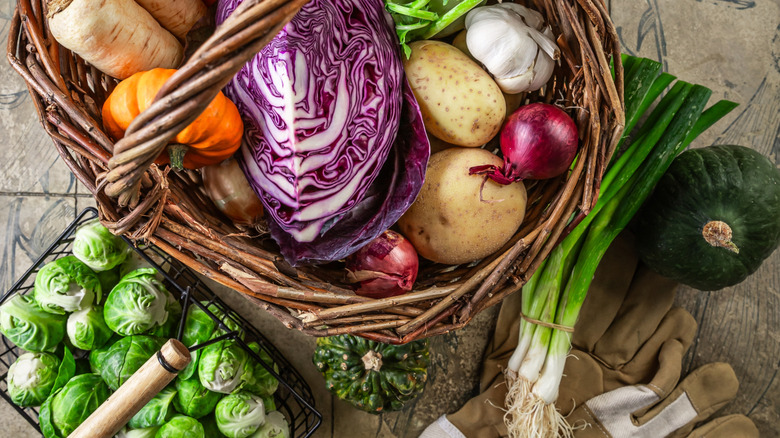
Winter vegetables are often referred to as "hearty," and we usually think this refers to thickness, winter resistant structure, and generally longer shelf lives than spring and summer harvests. But they tend to be filling and warming. This might be due, in part, for a high fiber count inherent in most vegetables. In an interview with Jackie Newgent, RDN, Los Angeles-based chef, plant-forward nutrition expert, and author of "The Plant-Based Diabetes Cookbook," she thinks that protein is the overlooked reason winter vegetables feel so satisfying.
Plant-based diets often rely on multiple sources of protein that collectively reach the target protein intake. And you'd be surprised at just how much protein certain winter vegetables supply. Chef Newgent told us, "though not technically "high" in protein, I'm a big fan of green peas and Brussels sprouts." Green peas and Brussels sprouts have 5 and 3 grams of protein per 100 grams, respectively, their protein content is supplemental but significant enough to make them a filling side.
However, says chef Newgent, "for something heartier, higher in protein, and even more satisfying, I recommend including "vegetables with more," like lentils, split peas, or white beans." With 18 grams of protein per cooked cup, lentils are main dish material and a key staple in plant-based diets. Split peas offer up nearly as much protein as lentils with 16 grams per cooked cup. Beans aren't too shabby themselves, containing between 7 and 15 grams of protein per cooked cup depending on the type of bean.
More dishes and cooking tips for protein-packed winter vegetables
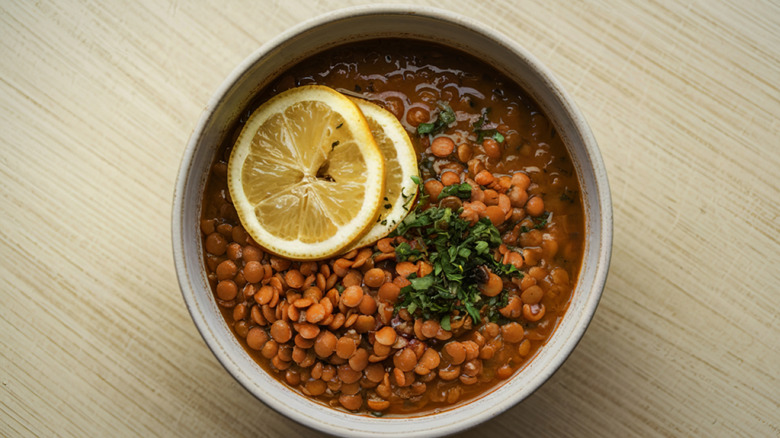
The best thing about hearty, protein-packed vegetables and pulses is that they're quite cheap and many of them are available year round. Lentils, for example, come in countless varieties, each with unique shapes, colors, textures, and flavors all available in dried form at your local grocery store. And, unlike many dried beans, they take a mere 15 to 20 minutes to cook without soaking first. Split peas are also dried staples while green peas are better from the frozen section than fresh.
Chef Newgent recommends "velvety split pea soup, caramelized Brussels sprouts with crispy chickpeas, or spicy lentil and avocado tacos." And we have many recipes to follow suit. These lentil tacos bring even more protein with the help of walnuts. Roasting is one of the best ways to enhance the flavors of Brussels sprouts by caramelizing its sugars and lightly charring its exterior leaves. You can throw the chickpeas on the same roasting pan for an easy sheet-pan side dish. Lentils are also a great base for comforting winter salads to top with roasted beets, sweet potatoes, and butternut squash. The key, according to chef Newgent is " to build layers" of flavor during the cooking process. She gives the example of "simmering pulses with aromatics like bay leaves to boost flavor ... and "add[ing] a bright finish with an acid, like lemon or lime juice, or a splash of sherry vinegar to cut through the earthiness and liven up the dish.