

The 'Upside-Down' Method That Might Actually Get Your Kitchen Decluttered In 2026
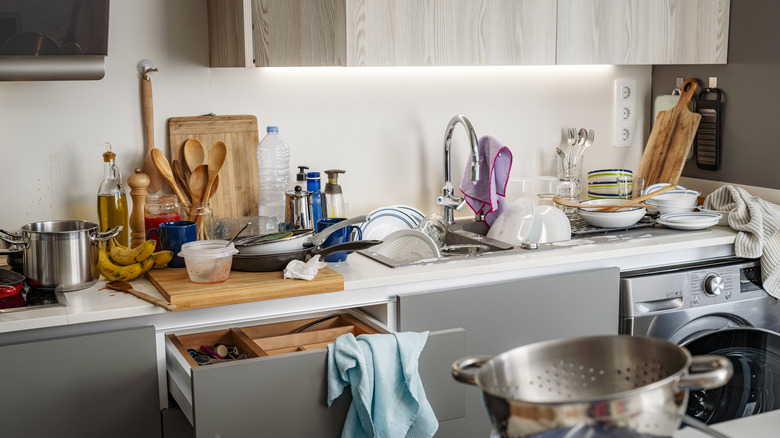
Accumulating kitchen clutter is an inevitable fact of living in the modern world, but if decluttering methods have failed you in the past, try the upside-down method in 2026. The problem with many decluttering methods is that they rely on guesswork or subjective judgements. Your box grater may not "spark joy," but does that mean you should throw it out? On the other hand, going too hardcore can mean you get rid of things you realize you actually needed a month later. That's the situation the upside-down method was made for: sorting the truly necessary from your most useless kitchen tools in a clear and measurable way.
The method is all in the name. Go through your kitchen and turn everything you have upside-down. Or, if it's something impractical to do that with, like a mixer, at least put it on its side. Then, once you have used that item, start storing it back in its normal upright position. This way, you can easily track when you have actually used something in your kitchen.
Of course, there is still some subjectivity here in setting how long of a period you want to track. Do you only want to keep items you use every week? Every month? That's up to you. But set a clear goal and stick to it. Then, once the time period is done, you'll have a concrete list of everything in your kitchen you didn't use.
Decluttering using the upside-down method gives you a clear list of items you don't use
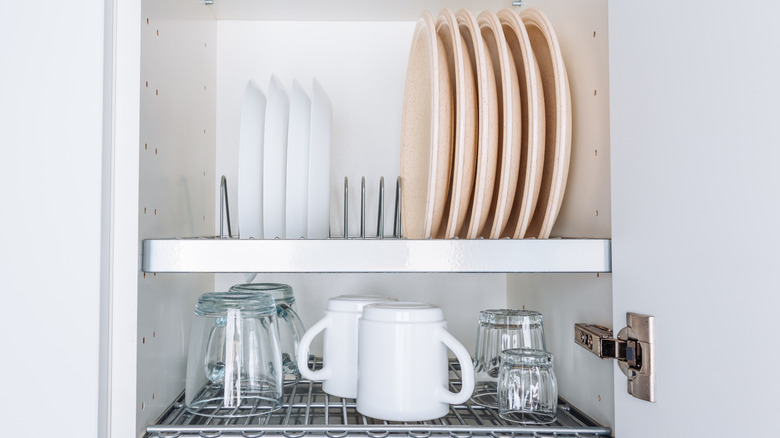
You don't need to apply the upside-down method to every area of your kitchen, but it's great for high traffic areas where it can be hard to keep track of usage. Think plates and mugs, or cleaning out your pantry and spice racks. It might be okay to go a month without using your Dutch oven, but if you have glassware that isn't special or decorative (and you haven't touched it in over 60 days), how much do you really need it?
It can also make things easier to set up a designated area where you move unused items before you get rid of them. When you first realize that something you thought you needed is still upside-down, it rids you of that hoarding instinct that says, "I'm just not sure I won't ever need this." Gradually move plates and appliances to an out-of-the way box or storage container as they stay upside-down.
Once your trial period is up, you can go back through and apply more subjective judgements. Maybe you didn't use a particular mug, but it has real sentimental value. The method isn't going to totally remove judgement calls, but it will give you a much more objective picture of how much you actually "need" said item. By spreading out your kitchen decluttering over an extended, gradual period of time, giving you concrete measurements, and taking a lot of the emotions out, the upside-down method eases a lot of the exhaustion of clearing out your kitchen.