

A Baking Tool Can Help You Fill Pasta Shells In Half The Time
We may receive a commission on purchases made from links.
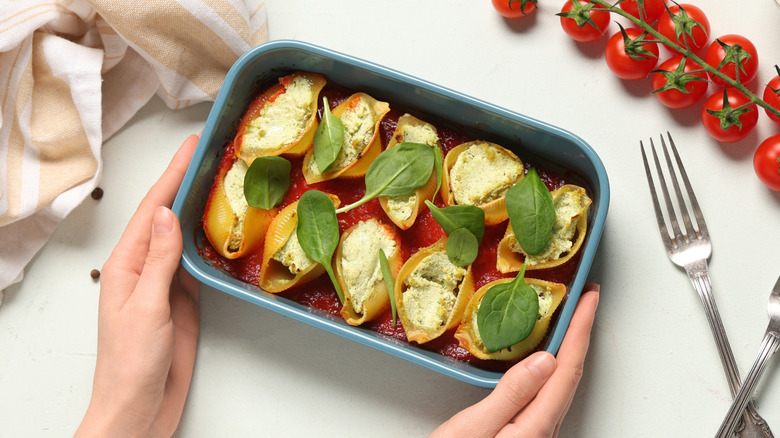
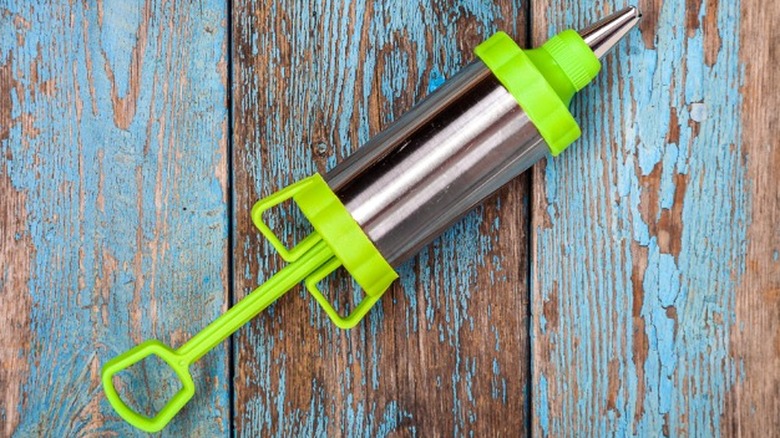
Stuffing pasta shells is no easy feat, whatever their size. The curved shape of the pasta can make them tough to fill, especially if you lack the proper tools. While a spoon might be the most tried and true method, it isn't always the cleanest technique — think ricotta-covered fingers and messy shells. Not to mention that it's pretty time-consuming. While a piping bag can help, there is a better tool for the job that should cut the time it takes to fill shells in half. That handy-dandy tool is none other than an icing gun, aka an icing press or icing syringe.
An icing or frosting gun is pretty much what it sounds like. The dessert-decorating gadget features a cylindrical body that you usually load with sugary frosting which is then distributed evenly through a piping tip by simply pressing down on a trigger. While these tools are typically used for sweet preparations, they aren't limited to icing. Custards, buttercream, and fruity fillings can also be stuffed into the icing gun, so why not a cheesy ricotta filling? To effortlessly and efficiently stuff pasta shells, simply scoop your filling into the loading container and fire away.
As if you needed more reasons to stuff shells with an icing gun, the tool is also easy to fill and clean. And it's reusable, unlike flimsy plastic piping bags. Nearly any kitchen supply store or online retailer will carry icing guns that come with a variety of differently shaped tips (like JAYVAR's Dessert Decorating Set from Amazon) to better fit the size of your pasta, as well as add extra finesse when stuffing.
There are some limitations to using an icing gun
While using an icing gun can be an easy way to fill pasta shells, it's worth remembering a few things before you begin stuffing. First, consider the consistency of your fillings. Ones that are too thick won't move through the tool as easily. Ideally, fillings should be relatively soft and far from viscous. Simple stuffed shells filled with fresh ricotta, and pasta shells stuffed with creamy butternut squash are ideal. Any chunky fillings that feature large pieces of meat or vegetables could prove problematic by prompting blockages that will prevent a proper, fully-piped shell.
For the best results, we suggest that the shells be cooked to al dente. This ensures that the pasta has a better bite, and that the shells will hold up better without falling apart as you fill. Likewise, be sure to add enough filling into each shell — they should be stuffed to the opening, but not overflowing. Lastly, coat the dish with the sauce of your choosing, and cover with foil before baking to avoid burning those meticulously stuffed shells.
Once you've mastered using an icing gun to stuff pasta shells, try using the versatile tool to prepare batches of tubular manicotti or trays of traditional Italian cannelloni. Other pasta shapes can also benefit from an icing gun — try the gadget when filling ravioli to make this fiddly task a mess-free breeze.