

It's Time To Ditch Plastic Food Storage Kitchenware And Invest In Silicone — Here's Why
We may receive a commission on purchases made from links.
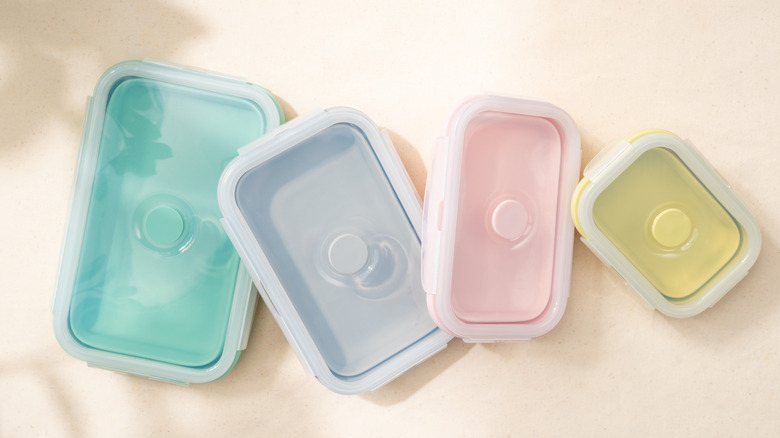
The introduction of plastic food storage containers in the 1940s was a game changer. Here was a material that was airtight and durable, but lightweight and easier to stack than metal or glass. As it became more affordable, plastic only became more popular — open the cupboards in any kitchen, and you're sure to find one stuffed with all sizes of plastic containers and lids. Silicone has been more of a slow burn in terms of popularity, perhaps because so many of its features overlap with plastic. But there are some areas where it really excels, such as resistance to high temperatures. This means silicone is safe for the oven, dishwasher, and microwave.
In comparison to silicone food containers, only "microwave-safe" plastic containers should be used in the microwave, and thin or single use plastics should never be put in the dishwasher because the heat can cause the release of harmful chemicals. This leads us to perhaps the most compelling reason to switch from plastic to silicone: the food safety aspect. Food grade silicone is non-reactive, and doesn't contain BPA, lead, or phthalates. While BPA plastics are certainly available, plastic is more prone to scratching or breaking down, at which point it can release microplastics or harbor harmful microorganisms.
What to consider when buying silicone storage containers
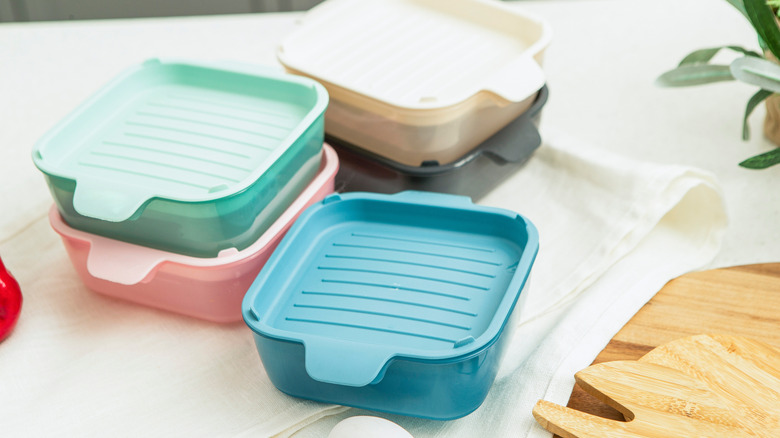
Before you rush to replace all your plastic containers with silicone options, there are a few things to consider. The first is what you'll be storing. Silicone can be very flexible, which makes it space saving, but it can be too flimsy for liquids. Collapsible sets sometimes make use of plastic lids to provide structure and a tight seal, which don't offer the same benefits of an all-silicone container. If you don't need the flexible option, look for hard-walled silicone sets like the ISSEVE food storage containers.
Silicone material is generally more durable and resistant to degradation than plastic, but there are still some rules to follow when using silicone kitchenware. Abrasive cleaning materials and exposure to direct sunlight can weaken or damage your containers. Silicone is designed to be used safely for years, but when it does reach the end of it's life, be aware that unlike plastic it can't be added to curbside recycling, and needs to be disposed of at a specialized recycling facility.
You'll also notice that set of silicone storage containers is generally more expensive than plastic kitchenware — even more so if you've just been reusing old takeout containers. But the safety and convenience they provide is more than worth the extra cost.