

The Bold Wine Judy Garland Added To Her Iconic Casserole
We may receive a commission on purchases made from links.
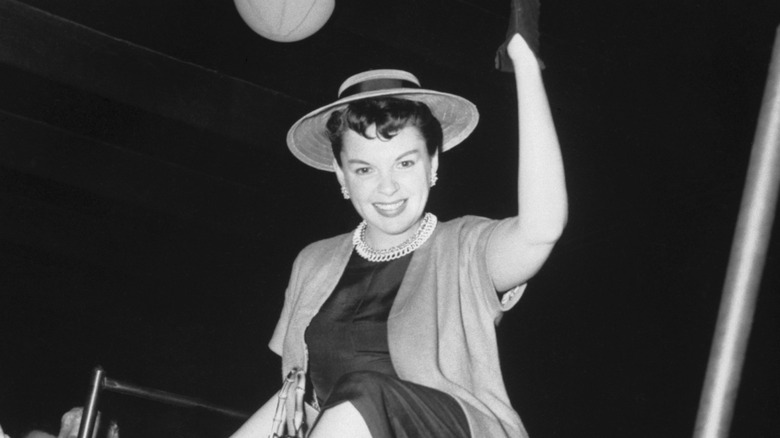
Anyone who ever lost themselves in Judy Garland's voice may find it hard to believe, but the star of "Meet Me in St. Louis" and "The Wizard of Oz" once claimed in a 1967 Evening Sun interview that she could "probably cook better than I sing." Garland's ham casserole recipe certainly suggests she knew her way around a kitchen because of its bold inclusion of sherry.
Unfortunately, like many Hollywood stars of her era, Garland was often forced to abide by a highly restrictive diet –- something she bristled against. But Garland was still able to enjoy home-cooked comfort foods like her elaborate Shepherd's Pie Supreme and her distinctive ham casserole.
Collected in Frank DeCaro's "The Dead Celebrity Cookbook Presents: Christmas in Tinseltown," Garland's recipe calls for cooked ground ham, cooked rice, heavy cream, beaten eggs, chopped tomatoes, diced green pepper, grated onion, mustard, Worcestershire sauce, breadcrumbs, melted butter, paprika, and of course, sherry wine. All ingredients are mixed thoroughly in a greased casserole dish save for the butter, breadcrumbs, and paprika, which are combined separately and used to as a topping for the mixture, with the casserole then baked for 45 minutes at 350 degrees Fahrenheit.
While Garland's recipe is similar to many one-dish casserole recipes prevalent at the height of her career, it is also distinguished by the fact that it uses freshly prepared ingredients, in contrast to the growing popularity of packaged foods that would lead tuna noodle casserole to become a staple of 1950s American cooking.
How to choose the right kind of sherry to cook with
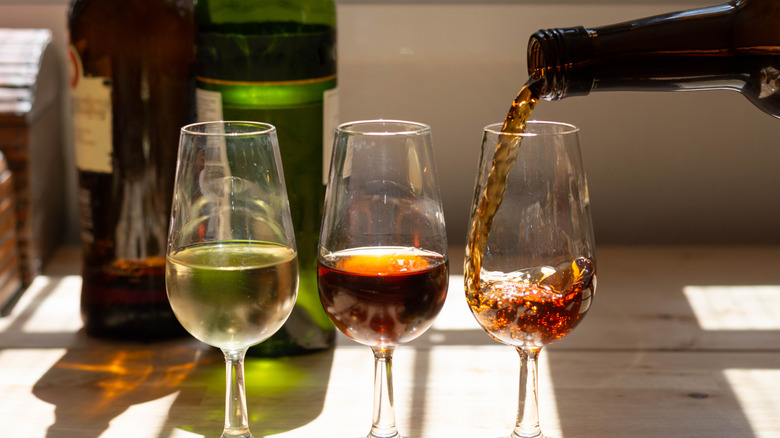
For those unfamiliar with it, sherry is a wine fortified with brandy which, although imitators have been produced internationally, is properly only made from white grapes grown around the Spanish city of Jerez de la Frontera. When used in cooking, it can add tremendous depth to a vast range of dishes, imparting characteristic flavor notes quite distinct from those found when cooking with any other kind of wine. Dry sherry like Manzanilla and Amontillado work best with intensely savory dishes of meat, poultry, and seafood, while sweet sherries like Moscatel and pale cream are better for desserts.
Garland's recipe does not specify whether the type of sherry used should be dry or sweet, but given the other ingredients, dry or medium is probably preferable. Also, it is worth remembering that the wine marketed as cooking sherry is typically preserved with salt to increase its longevity; if you wish to have more control over the level of seasoning in your casserole, or if you just abide by the old adage to never cook with wine you wouldn't drink, you may wish to choose a more potable sherry instead.