

Next Time You Make Prime Rib, Rub A Handful Of This All Over The Beef (It's Heavenly)
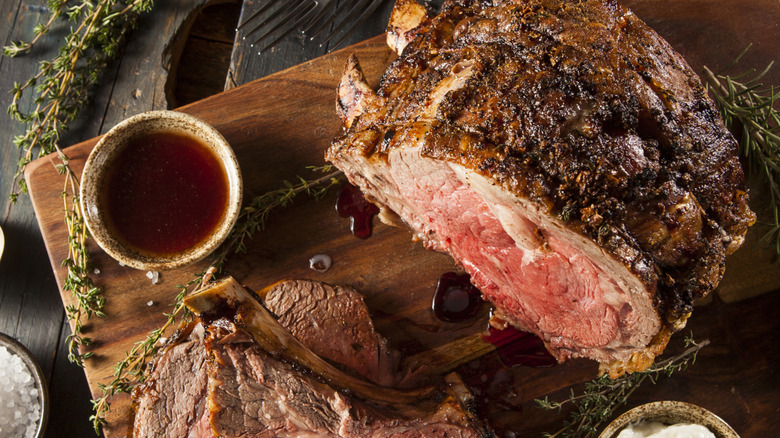
A well-prepared prime rib is as delicious as it is often prohibitively expensive, so you may understandably be wary of any unfamiliar adulteration to your magnificent slab of big-ticket beef. But if you're serving up a show-stopper like prime rib, you'll want it to be the best that it can be, and one way of ensuring that is with the aid of orange zest.
To appreciate what orange or any other kind of citrus zest can bring to your prime rib, it is important to understand the function of a meat rub and how it imparts flavor. While marinades typically contain a combination of oil and acid, which permeates and tenderizes the meat by breaking down proteins while keeping it moist, a rub is an aromatic mixture of herbs, spices, or other seasonings that flavors the meat's exterior. Once applied, the rub will undergo various chemical reactions as the meat cooks (rubs containing sugar, for example, will spur caramelization) and yield a deeper, richer, more complex-tasting crust.
The transformative power of a good dry rub is prized among barbecue enthusiasts, many of whom have their own favored rub recipes that come with an intimidating laundry list of ingredients. With a high-quality piece of meat like prime rib, however, sometimes less is more, particularly if you want the bold, distinct flavor of orange zest to stand out. Martha Stewart's recipe for prime rib, for example, features only salt, pepper, olive oil, bay leaves, and sage. For a three-rib beef roast, Stewart recommends adding ⅓ cup of freshly grated orange zest, which is combined with all the other ingredients and used to coat the prime rib. The meat is then covered and refrigerated overnight to allow the flavors to deepen.
Making your own dried orange zest is easy and avoids waste
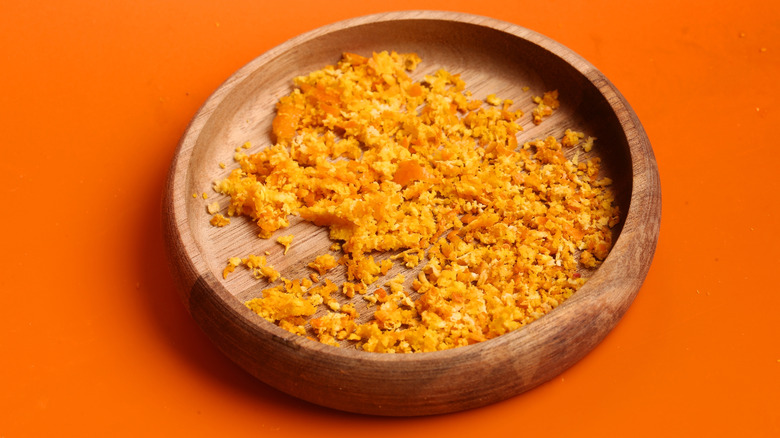
Any rub using fresh orange zest would arguably qualify as a wet rub, though a dry rub can just as easily be made using dried orange zest. While dried orange zest is available for purchase, making it yourself is a simple process – plus a good way to get the most out of your oranges and avoid waste.
When peeling your oranges, try to only get the most strongly colored part of the peel and avoid the white pith, but if you grate too deeply into the peel, carefully remove the pith with a good paring knife. Lay the peels on a parchment-lined baking sheet and place them in a 200-degree Fahrenheit oven for 25 to 30 minutes until they harden and begin to curl. Turn off the heat and leave them for an additional 30 minutes. Once removed and allowed to cool, the peels can be ground down using a spice grinder or mortar and pestle, leaving you with powdered zest that's perfect for mixing into a rub. If you find yourself with a bunch of orange peels but no time to prepare them, don't worry – they freeze well, and can just as easily be dried once defrosted.
If you are feeling ambitious and truly want to maximize the flavor of your prime rib, you can use both a marinade and a rub. In both, think about what would pair well with orange zest — you may find your rub well complemented by a similarly citrus-heavy mojo marinade – while commonly used to prepare pork shoulder for Cuban sandwiches, it also pairs wonderfully with beef.