

Whether Retail Or Brewery: Never Buy A Case Of Beer Shelved Like This
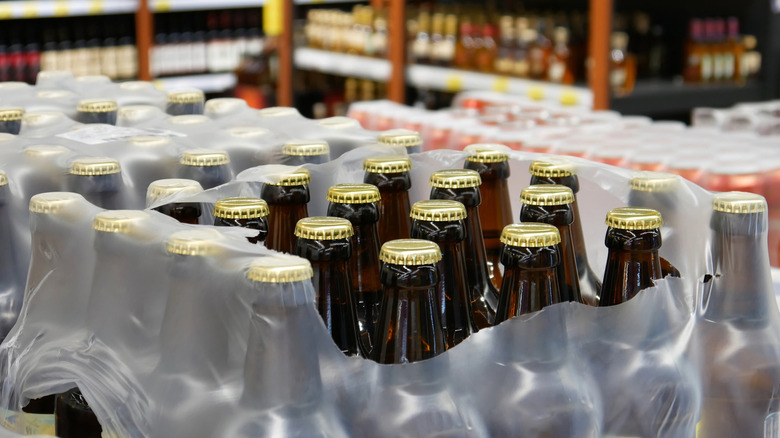
Buying a case of beer is generally a grab-and-go experience. Beyond checking that there's no damage to the packaging or dents in the cans, there's not much to it. But beer is surprisingly sensitive, and how it has been stored after brewing can make all the difference in how it tastes.
Beer that's sitting in direct sunlight should be given a wide berth. If you've ever cracked open a beer to discover a distinctly off smell, UV light is to blame. UV light reacts with the hops in the beer, breaking it down into the compound MBT — which has such a bad smell that the effect is known as skunking. Skunking can happen to beer in a matter of minutes in strong UV light, which is why beer is often sold in brown glass. Brown glass offers the best protection against UV rays, with green only offering moderate protection, and clear glass offers none at all.
Cans are completely opaque and will not let in any frequency of UV light, but even then, we'd still advise skipping a case that's been sitting in the sun. Storing at high temperatures will speed up the aging process of the beer. At best you'll find your beer lacking in flavor and aroma, but heat damage can lead to unpleasant stale flavors (think wet paper or burnt rubber) and beer that gushes uncontrollably when opened. In short, avoid those beers sitting in store windows or on a shelf that's getting tons of direct sunlight. The beers could already be turning.
How long can you store beer at home?
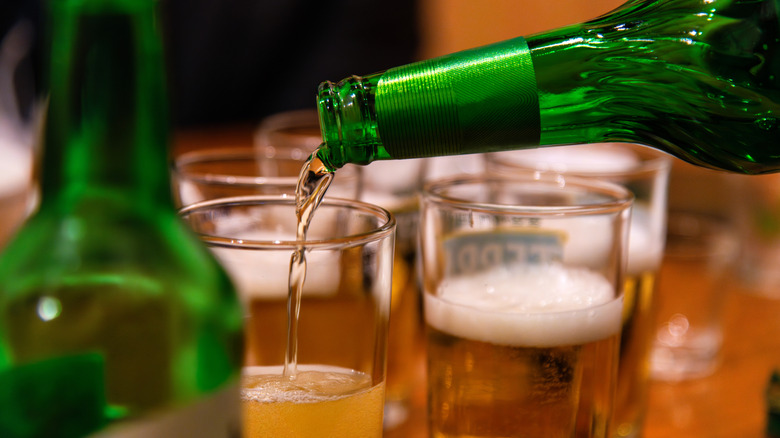
You might not think of cellaring beer in the same way that you would wine, but even if you just like to have a case on hand for impromptu parties, you want it to taste its best — particularly if you've shelled out for something special from a local craft brewery.
Most beer is best consumed fresh, within about three months. This is particularly true of pale ales, IPAs, and wheat beers. If kept refrigerated consistently, you can push this up to six months. Lagers also offer the best flavor when enjoyed within four to six months. It's only select beer styles that can be stored longer and may actually improve with age. Those with a high ABV, sour beers, and barleywines can all be cellared for years rather than months, taking on new and complex flavors.
The length of time the beer maintains its optimal taste will rely on correct storage conditions. Keeping it out of the light is of course a must, as is keeping it cool. Consistency of temperature is also important, which is why storing beer at room temperature such as in the pantry can be problematic. Even if you live in a cool climate, there will be fluctuations in the ambient temperature. If you have the space, then storing it in the refrigerator will tick all these boxes.