

A Personal Chef Explains The Problem With Eggs And Cast Iron
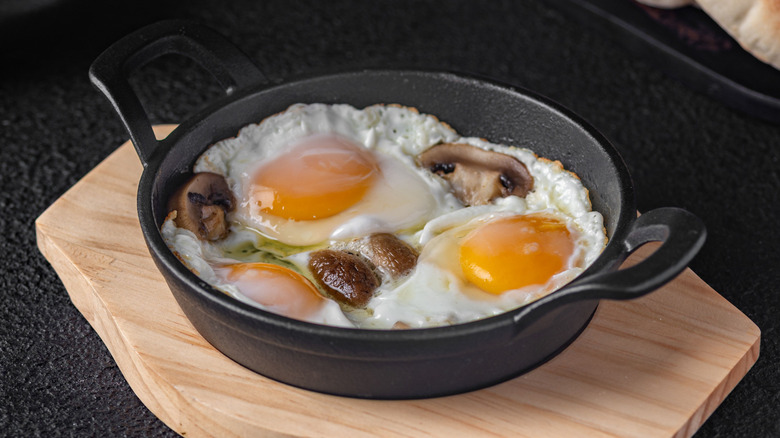
Whether donning an apron at home or in a Michelin-starred restaurant, pretty much everyone agrees on the merits of cooking with cast-iron pans. They've been around for generations, passed down like an heirloom and fired up for all kinds of meals, from everyday comfort food to special company-is-coming fare. But there's one thing that needs to be acknowledged: it's not ideal for everything — specifically, cooking eggs.
To get some intel on the problem with eggs and cast iron, we turned to professional personal chef and culinary instructor Danielle Turner. After coaching contestants on Food Network and teaching more than 8,000 students in 800-plus cooking classes, she knows a thing or two about creating magic in the kitchen. In an article penned by Turner for Tasting Table, she reveals six ingredients to never use in cast iron, and sadly, eggs sit on that list.
As Turner notes, choosing the right kind of pan for eggs is crucial because eggs are super sticky. That means they really need a non-stick surface, which only comes with well-seasoned cast-iron pans. With brand-new ones, she explains, "the protein in the eggs seeps into the tiny pores in the cast iron — and when heated, they stick." Even with seasoned pans, she says, it can still be a messy challenge because cast iron retains heat exceptionally well, so eggs are more likely to overcook or even burn. However, if you're intent on making your favorite iron-maiden work with egg creations, there are a few things you can do.
Cast iron and eggs play well together with supervision
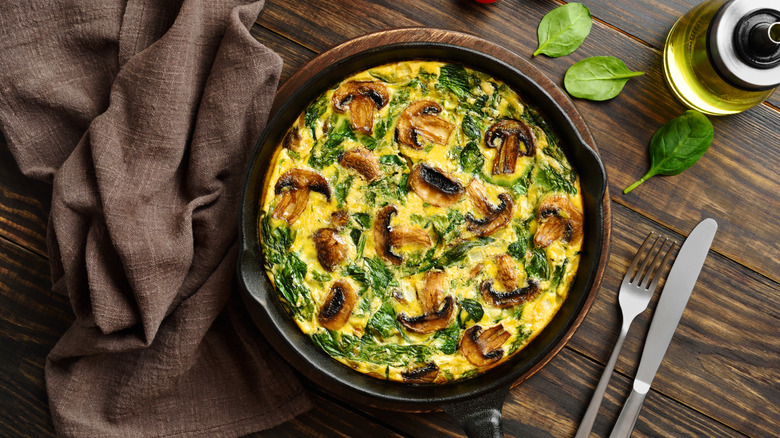
If you're a stovetop pan purist, utterly devoted to your cast-iron kitchen companion, you're in good company. A lot of home chefs feel the same way. In that case, there are still ways to remain allegiant when cooking eggs. Turner encourages paying attention to two things: cooking oil and how hot the pan is. "You can increase your chance of success and prevent eggs from sticking to a cast iron skillet by using plenty of oil," she notes, "enough to coat the bottom of the pan." If you prefer cooking eggs in butter instead of oil, the same principle applies.
Then there's the cooking temperature. Turner recommends making sure your pan is hot enough, which is a generally accepted piece of advice from all types of chefs. However, experts note that there's such a thing as "too hot" for eggs. Many agree that it's best to preheat the skillet on medium to high heat to get the process going before adding the eggs, making them less likely to stick. You can then reduce and control the heat so the eggs don't burn.
You might want to consider cooking eggs with clarified butter, which carries a high 450 degrees Fahrenheit smoke point to better tolerate higher heats, while also injecting deep buttery flavor. For more tips on stovetop egg magic, check out the best ways to keep eggs from sticking in cast iron and why it pays to cook scrambled eggs in cast iron pans.