

These 3 Foods Are Most Commonly Linked To E. Coli
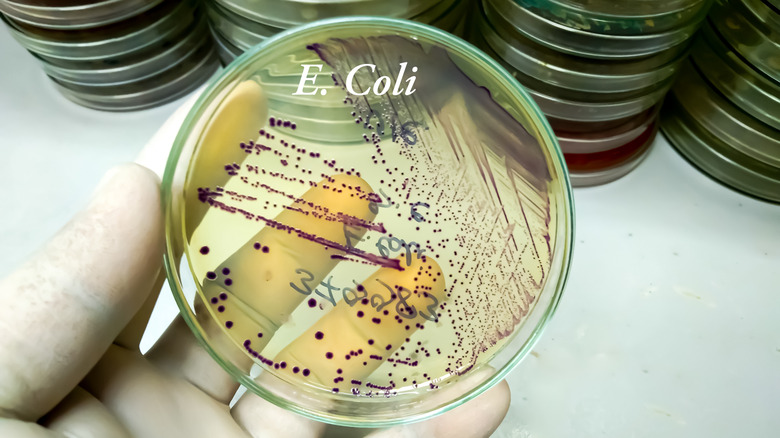
E. coli — you don't want it. You really, really don't. Properly known as Escherichia coli, E. coli are bacteria found in the intestines of humans and animals. While many of them are harmless,
some kinds can cause severe gastrointestinal illness, with the most dangerous pathogenic types — such as Shiga toxin-producing E. coli (STEC) — potentially leading to kidney failure and death, particularly among vulnerable groups such as children, the elderly, and those with compromised immune systems.
While precautions against E. coli and other food-borne illnesses can be taken by observing some basic rules of food safety, E. coli is often present in foodstuffs that were contaminated long before they reached your kitchen. The U.S. Food and Drug Administration warns that E. coli can by spread by carriers at any point in the supply chain, whether on the farm, in the packing facility, or at the supermarket. This is why preventing it can be such challenging work, and why rigorous safety standards exist throughout the food industry. Here are three of the foods most commonly linked to E. coli that you should be aware of.
Raw beef
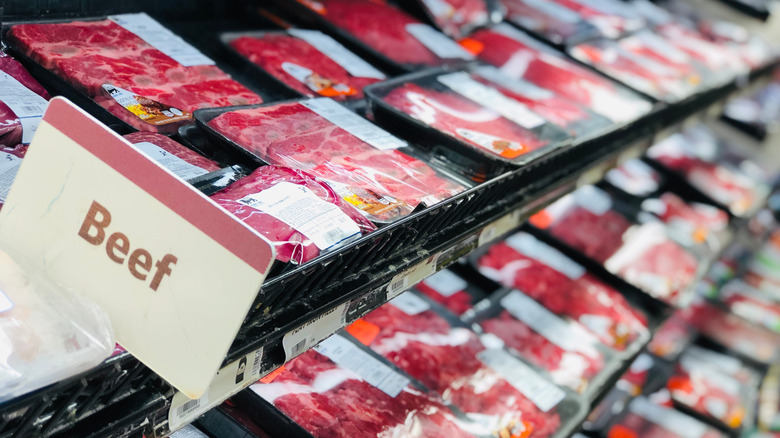
According to the Food Safety and Inspection Service of the U.S. Department of Agriculture, raw ground beef is especially vulnerable to bacteria like E. coli if the pathogens are present during its processing; not only will more of the meat's surface be exposed to the bacteria, but the grinding can mix the contamination throughout the entirety of the meat. Amongst bacteria, E. coli is a particular cause for concern, as it can survive extremely low temperatures, and even slowly multiply when the food is frozen.
In 1993, these dangers were tragically demonstrated by one of the most notorious E. coli outbreaks in American history, when undercooked, contaminated burger patties from the fast food chain Jack in the Box resulted in over 700 cases of illness across four states, including 171 hospitalizations, and the deaths of four children. The scandal has been credited with raising awareness of E. coli and transforming food safety standards throughout the meat and poultry industries. Today, the possibility of E. coli contamination is enough to trigger massive recalls, as it did in December 2025, when almost 3,000 pounds of raw ground beef products were recalled by the Mountain West Food Group, LLC, after E. coli was discovered routine USDA testing.
Raw milk
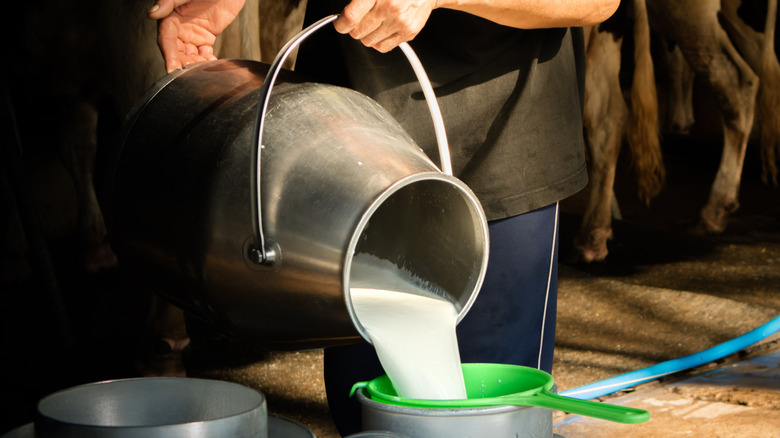
In recent years, there has been much controversy surrounding the dangers and supposed benefits of raw dairy products, not least because they have been championed by Secretary of Health and Human Services Robert F. Kennedy Jr. Nevertheless, the FDA's guidance on raw milk remains clear: Unpasteurized milk from cows, sheep, or goats can carry not only E. coli, but other dangerous germs such as Salmonella and Listeria. Despite what raw milk advocates may claim, raw milk is not nutritionally superior to pasteurized milk and carries many more health risks.
And yet, there are still those who sell and consume raw milk, the legality of which varies state by state. This month, Ballerina Farm — the Utah company owned by social media personality and influencer Hannah Neeleman and her husband — halted its production and sale of raw milk, after the Utah Department of Agriculture and Food found that the milk contained coliform, the type of bacteria of which E. coli is a subset. Meanwhile, Idaho's Central District Health agency is currently investigating nine cases in Ada County now experiencing severe illness following their consumption of raw milk; among these cases, two children have been reported as suffering hemolytic uremic syndrome, a condition most often caused by E. coli which can lead to kidney failure.
Sprouts
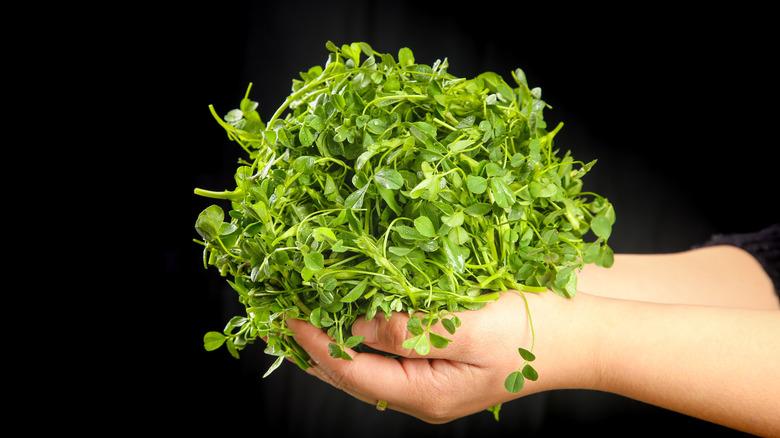
Raw sprouts, such as alfalfa and bean, rank high amongst potential carriers of E. coli, given that they were judged responsible for one of the biggest E. coli outbreaks of the modern era. In 2011, a novel strain of the bacteria emerged in Europe, afflicting almost 4,000 people and resulting in 53 deaths. Though early findings erroneously suggested that Spanish-imported cucumbers were to blame — a theory which cost the Spanish economy roughly $290 million — a European Food and Safety Authority task force eventually concluded the outbreak originated with a batch of seeds for fenugreek sprouts, which led to the seeds being temporarily banned throughout Europe.
For anyone wondering how this unassuming vegetable, so often prized as a health food, could be such a potent agent for E. coli, the answer lies in how it is grown, as well as how it is often consumed. The warm humidity necessary for sprouts to propagate is also ideal for the growth of bacteria. As sprouts are often eaten raw, there has been no cooking process to kill off any bacteria they carry. As such, sprouts are regularly among the foodstuffs pulled from the shelves for safety reasons, as in January 2023, when Fullei Fresh issued a voluntary recall of its alfalfa sprouts after E. coli was discovered during an FDA inspection.