

Oatmeal Vs Grits: How They Compare Nutritionally
We may receive a commission on purchases made from links.
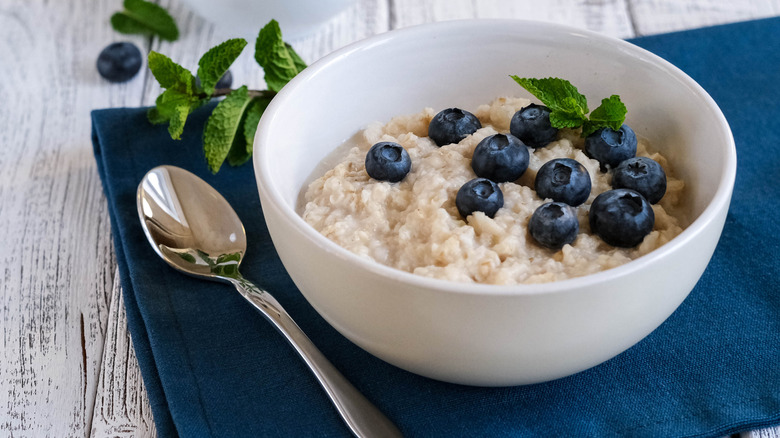
Oatmeal and grits are the two classic types of porridge. While fairly plain on their own, both provide endless customization options that allow for ample variety, such as our recipe for classic creamy grits with butter and cream cheese or our cinnamon apple baked oatmeal. Despite their similarities, the two breakfast cereals do have some differences. Oatmeal is made from oats, while grits are made from corn, which means they differ in nutritional composition. Both options provide a satiating carb-forward breakfast, but oatmeal is more nutritionally complete as a whole.
Grits are slightly higher in calories and carbohydrates, making them a good choice for the mornings when you need a quick energy boost from your breakfast. Oatmeal, on the other hand, has more protein and fat, so the energy you get from it arrives slower but is more stable and long-lasting. Oatmeal also has significantly more fiber, which can be helpful for people trying to lose weight or raise their fiber intake for health reasons.
There are, however, a lot of different store-bought grits and oatmeal varieties you can purchase nowadays, and not all of them will have the same nutritional profile. Sometimes, manufacturers will fortify the cereals with vitamins or protein to appeal to different customer bases.
Oatmeal naturally has more vitamins, but commercial grits can be fortified to be more nutritious
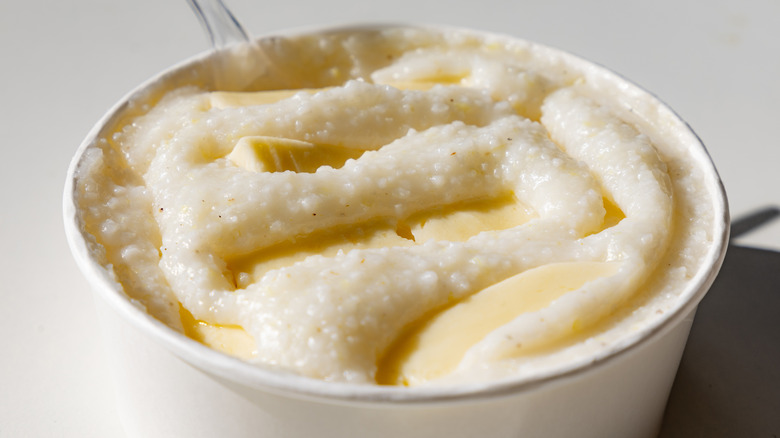
A big part of why oatmeal is more nutritionally complete in comparison to grits is that oats are richer in vitamins, particularly B1, B2, B3, B5, B6, and B9 (folate). These vitamins can only be supplied through one's diet and are essential for energy and metabolism. Oats also contain vital nutrients like manganese, phosphorous, and selenium, which are important for reducing inflammation, supporting bone health, and boosting immune function, respectively.
On their own, grits are less nutritionally dense than oats, but that doesn't mean they don't make a good meal. They're still a great source of carbohydrates and calories, and also provide iron as well as antioxidants to support eye health. Not to mention that grits are a fine neutral base to pair with many other foods that can provide any missing nutrients. Realistically speaking, very few people eat plain grits without any additions. For example, our old-fashioned shrimp and grits recipe has a whopping 23 grams of protein per serving.
You can also find fortified grits on store shelves that come with added nutrients, for those who do want more out of plain grits. Quaker Instant Grits Original contains four different B vitamins, and two grams of protein per serving. At the end of the day, the choice between oatmeal and grits is personal, fully depending on your individual nutritional needs. Luckily, there are plenty of delicious ways to elevate both.