

How New York's Liquor Rule Changes Opened Up Opportunities For Adult Recreation Venues
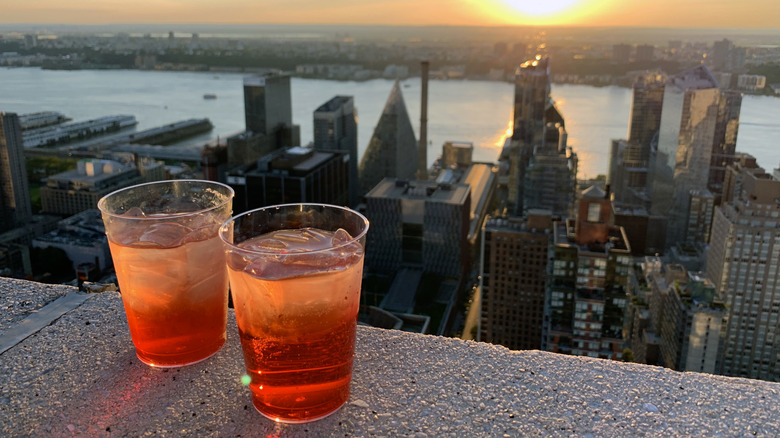
Until recently, serving alcohol was rarely possible outside of traditional watering holes like bars and restaurants in New York, but this has changed thanks to a recent reform that has dramatically expanded the range of adult recreation venues that can serve alcohol.
Following the repeal of Prohibition in 1933, the state of New York enacted the 1934 Alcoholic Beverage Control (or ABC) Law, which continues to regulate the manufacture, distribution, and sale of alcohol within the state. Under the ABC Law, the New York State Liquor Authority (SLA) is empowered to grant liquor licenses to "lawful adult entertainment or recreational facilities". In September 2025, the SLA announced that its policy would change to better reflect this, and the implications are considerable.
Venues now able to apply for liquor licenses in New York include art galleries, cooking classes, pool halls, comedy clubs, batting cages, escape rooms, board game cafes, go-kart tracks, virtual reality arcades, laser tag arenas, and axe-throwing clubs. To be eligible, any venue applying must simply demonstrate that it is a lawful business open to the public and will serve alcohol in accordance with existing SLA rules.
Of course, this does not necessarily mean that every venue of these types will suddenly start serving cocktails, but the reform has significantly altered the nature of recreation and hospitality in New York.
Other big changes will affect the sale of alcohol in New York
The SLA's updated policy isn't the only big change to New York's liquor rules: in December 2025, New York Governor Kathy Hochul signed a "retail-to-retail" bill that loosened restrictions on where licensed businesses can buy alcohol. Previously, if a bar or restaurant needed to purchase more stock, their only recourse was to go to a wholesaler — the kind that often delivered their orders by the crate or truckload.
Under the new law, these venues can now buy and resell small amounts of alcohol and liquor, which is hoped will be a boon to local businesses. Now, for example, if a bar or restaurant wished to try putting a new brand of spirit or niche liqueur behind the bar to test how popular it might be with patrons, it could do so by purchasing one or two bottles, rather than making a bulk order that might end up sitting untouched in the cellar.
Speaking to WHMT, New York SLA chair Lily Fan commented: "New York's restaurants and bars work hard every day to serve their customers, and this common-sense new law gives them a safety net when inventory runs low so they can continue to operate." Fan added that the bill was "a win for our small businesses ... and for the people who live and dine in our communities."