

The Juicy Steak Red Flag To Look Out For When Visiting A Steakhouse
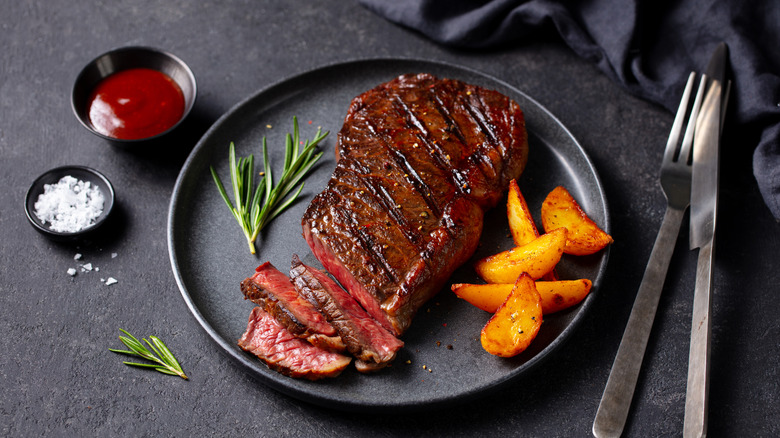
When people talk about beef, juicy is a commonly used adjective — but juicy doesn't mean messy. If you get a steak and it's swimming in its own juices on your plate, that means the meat was not allowed to rest properly before it was served. It may not have even been cut at all. A fork or a meat thermometer could have been poked into it, resulting in a less flavorful steak. Be wary of any steakhouse making this basic mistake.
The juices that are in your steak are meant to stay there, at least if you want to enjoy the full flavor. Cooking steak causes the muscle fibers to contract and force moisture out. The hotter the temperature, the more those fibers contract and the more moisture your steak loses. If you cut into a steak right off the heat, the muscle fibers are still tight. The liquid, which isn't blood but water and myoglobin, just oozes out and goes all over your plate.
Even though it is only a small amount of liquid, you'll still end up with a drier steak than intended. If the steak has a chance to rest for about 10 minutes, long enough for the internal temperature to drop by a few degrees, the muscle fibers relax and draw the moisture back in to redistribute it so very little will leak out. You shouldn't have to let it rest at your table, though. When dining at a steakhouse, the steak should have already rested before it gets to you.
Mistakes with steaks
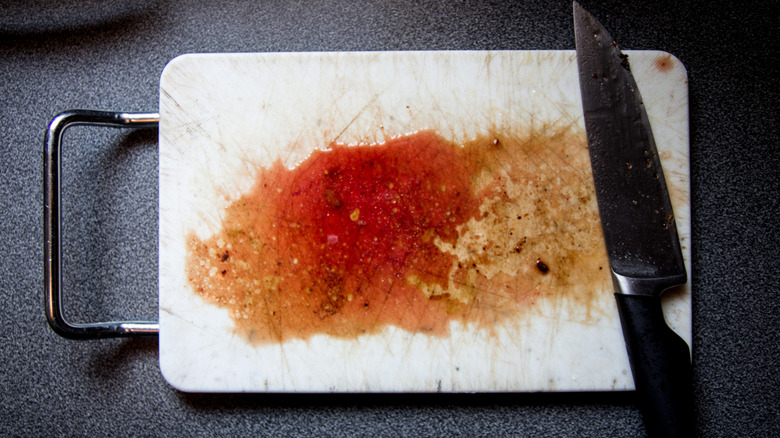
When you prepare a steak at home, you can monitor and control the entire process. That means you can keep track of how it's handled and avoid this and every other 16 steakhouse red flags altogether. Handle the steak with tongs instead of a fork to ensure the juices stay inside until you're ready to cut it. If you follow specific cook times and temperatures, and know how to tell if your steak is done without cutting into it, you shouldn't need to pierce it.
Different cuts of steak and levels of doneness can make it hard to know how long a steak should rest before cutting into it. One easy rule of thumb is to let it rest as long as you let it cook. With that in mind, some steaks do benefit from being sliced before serving. Tough cuts should be sliced against the grain so they're easier to chew. Preparations served with sauces or garnishes are typically sliced before serving, too, but you should still let the meat rest first.
More tender cuts like a filet mignon, ribeye, or porterhouse should be served whole and never pre-sliced. These cuts don't need special handling because they shouldn't be tough or chewy.