

How You Should Be Storing Fresh Clams For The Best Results
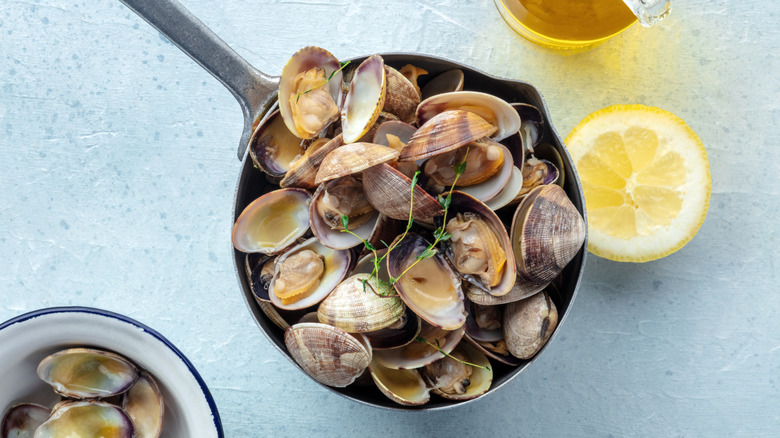
There are so many amazing dishes that highlight fresh clams. You can throw them right in a pot with some broth and aromatics to make a dip-worthy stew, or toss them into a hearty zuppa di pesce or seafood linguine. Then, of course, you have creamy clam chowder, stuffed clam recipes, and seafood bakes to consider, too. One of the best things about these handy shellfish is how easy they are to work with, but you do need to store them correctly in order to ensure the best results.
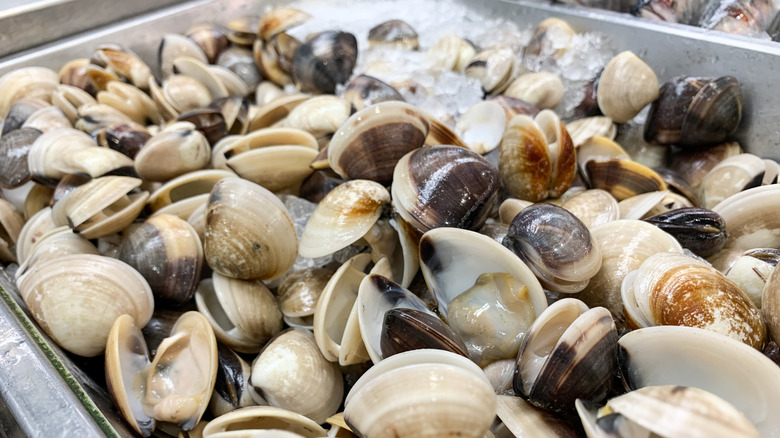
Tasting Table spoke exclusively with Chef Franklin Becker, owner of the popular Manhattan restaurant Point Seven, about his best seafood and clam storage tips, and he says to "remember, they are alive." Clams need to be kept cold in order to survive in a kitchen, while also remaining damp with some access to oxygen. Becker's favorite way to store them is on ice. He says, "We store fresh clams buried in ice with a drain board so they do not drown. This is never covered, so they can breathe."
Keep clams cold when storing them
Many people soak clams in salted water before cooking, which is known as purging. The process is thought to filter fresh water into the shells and push any debris out. If you want to try it, mix a couple of tablespoons of salt with a few quarts of water and leave the clams to soak in the solution for a few hours.
Before you get to that step, though, just stick to keeping the clams on ice, or at least put them in the refrigerator. If you don't have a drain board, the best method is to put the clams in a bowl, cover, and store the bowl on top of a big container of ice inside the fridge. You can also keep them in a breathable bag in the back of the fridge. When stored correctly, this should help the clams stay fresh for up to one week.
Becker uses the ice method for both hard and soft shell clams, but he does have an extra step for the latter. He says, "For soft shell, I usually keep a damp cloth over them. Never store them in a closed container." Apart from that, the main thing to focus on really is the temperature. Check your ice frequently and top it off as often as needed – 35 degrees Fahrenheit is a good aim for live clams, mussels, and oysters. As Becker says, "Keeping them cold is always best."