

Goulash Vs. Stew: What's The Difference?
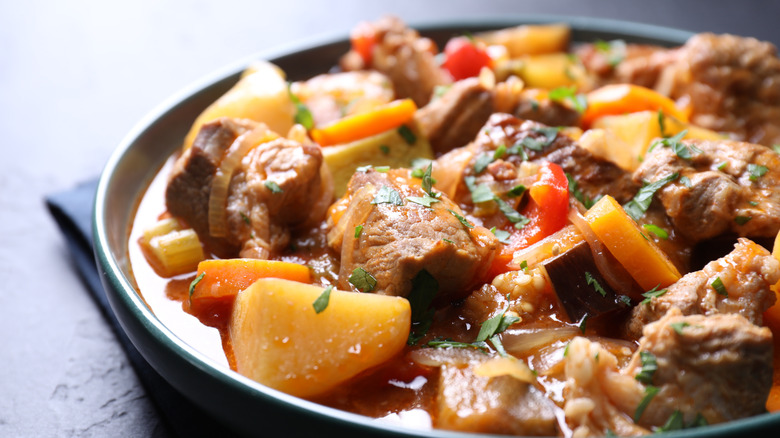
The terms "goulash" and "stew" are often used interchangeably to mean a meat, vegetable, and potato dish that is hearty, rich, and filling. However, these dishes each have unique origins and methods of preparation. Understanding the differences can help you master the art of making each one, or at least guide you in creating your weekly dinner menu. The biggest differences between the two dishes are their consistency and flavor.
Goulash is considered by some to be a type of stew or a soup; however, it is typically prepared in a broth that is thinner than the sauce used for stew. Traditional Hungarian goulash is spicy and fragrant, made from vegetables, potatoes, and braised or smoked meat (often beef, but sometimes salami, bacon, or fish), and simmered in a rich broth. The meat is heavily seasoned with paprika and other spices or cooked in bacon fat or pork lard to enhance its flavor and make the dish a more sensory experience overall. After the meat is cooked, ingredients like jalapeños, serrano peppers, red peppers, or dried, crushed chili pods are added to give the dish even more heat. It is often served on top of egg noodles or Spätzle, but American-style goulash actually incorporates pasta into the dish.
Beef stew also includes vegetables, meat, and potatoes, but it is cooked in a dense, robust sauce or gravy rather than a broth. The meat is braised or roasted and then combined with a tomato-based sauce and seasonings, then slowly cooked with vegetables like onions, carrots, celery, and potatoes. The end result is a thick, saucy dish that is generally not as spicy as goulash.
Both dishes have roots in old European cuisine
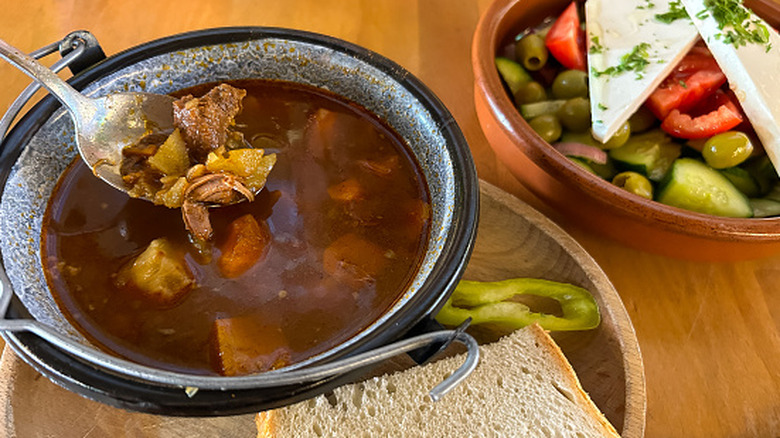
Goulash is the national dish of Hungary. It originated in the 9th century as a dish made by Hungarian cowherds who cooked it in cauldrons over an open fire. Accustomed to making use of every part of the animal, shepherds would make meals using smoked or cooked meat that had been dried in the sun to preserve it. The food would be seasoned with dried, crushed chilis and stored in bags constructed from the stomachs of sheep so that it could be easily transported while herding. In the early 1800s, goulash could be found in restaurants and cookbooks, eventually elevating its status beyond just that of "peasant food." By the late 1800s, Hungarians were growing chili plants and had even created novel varieties. This led to the creation of a new type of paprika, which was used in place of chili pods to flavor goulash.
The origin of beef stew can be traced back to 14th-century France, when root vegetables and dry, preserved meat would be cooked over fireplaces in homes. Combining meat and vegetables with wine, spices, and sauces could make the ingredients last longer and hide some of the less pleasant tastes and aromas associated with aging ingredients. This cooking method was also ideal for making tough cuts of meat more tender and palatable, even if they originated from less-than-desirable animals like pheasants. At that time, stew was called ragout. Stew didn't get its risqué name until about 1756, when it became a playful and somewhat scandalous way to compare the dish to public bathhouses or brothels.