

The Rice Cooker Setting You're Leaving On For Far Too Long
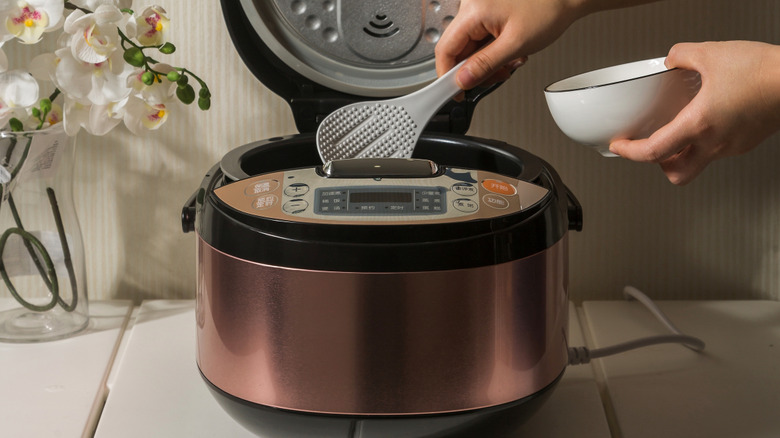
The rice cooker is, without a doubt, one of the greatest inventions known to man — or at least the home chef. Once you've mastered the essential steps of using a rice cooker, you're guaranteed to have perfect, fluffy rice for life. However, even regular users of the kitchen gadget might err, and one of the most common rice cooker mistakes is leaving rice on the "keep warm" setting for too long. Not only can this affect the flavor and texture of your rice, but it can potentially lead to bacterial growth if it's warm setting is off kilter.
The "keep warm" setting is intended to do just that: keep rice warm after it's already finished cooking. This is a brilliant setting if you're hosting and you don't want rice to get cold by the time your guests are looking for seconds, or if you're simply thinking ahead and want it all to be ready come dinnertime. But it's not foolproof. While all of the best rice cookers vary slightly, it's safe to say that you shouldn't keep rice in the "keep warm" setting for longer than 12 hours — but be sure to read the manual to know what's recommended for yours.
If you keep your rice in longer than the recommended time (or possibly even before), you may notice that the rice has dried out due to the moisture evaporating, or worse, that the bottom has become hard and crunchy. In that additional time, it's likely that the flavor won't taste too great either. After all, rice always tastes better when fresh.
When 'keep warm' rice becomes dangerous
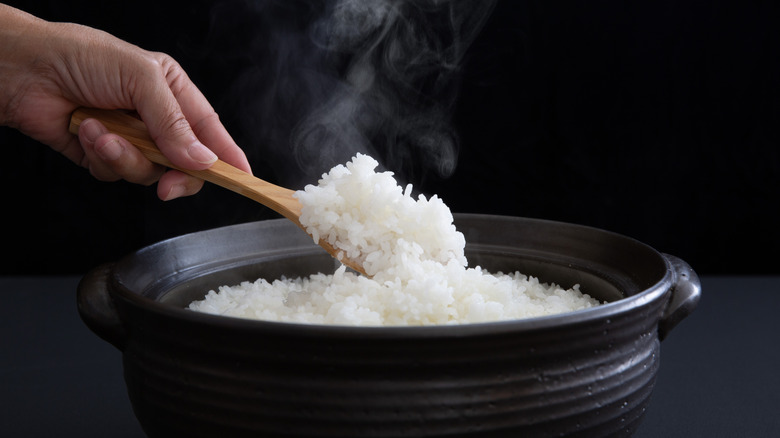
We're by no means discouraging you to use the "keep warm" setting altogether, but it's important to be cautious when doing so. Beyond impacting the flavor and texture, rice that's been left in the rice cooker for too long can develop dangerous, potentially life-threatening bacteria if it's not kept above a very specific temperature. It isn't necessarily dangerous to eat leftover rice, but proper storage protocols must be followed, even in your rice cooker's "keep warm" setting.
The main pathogen you want to look out for when eating leftover rice is bacillus cereus, which can grow between 41 degrees Fahrenheit or 135 degrees Fahrenheit. If your rice is kept anywhere between these temperatures, that's considered the "Danger Zone," and you absolutely should toss it. However, if your rice cooker's "keep warm" setting keeps rice above 135 degrees, it'll be safe to eat even after a few days. Although, you might not want to considering the inevitable changes to its flavor and texture.
Your rice cooker's "keep warm" setting should take the "Danger Zone" into account, but if you're nervous about it, you can always double-check the user manual. If you don't have yours, use a food-safe thermometer to check the temperature of the rice before eating it. If it's above that sweet spot of 135 degrees, you're free to use it in all your favorite hearty rice recipes.