

The Ultimate Guide To Buying Olive Oil
We may receive a commission on purchases made from links.
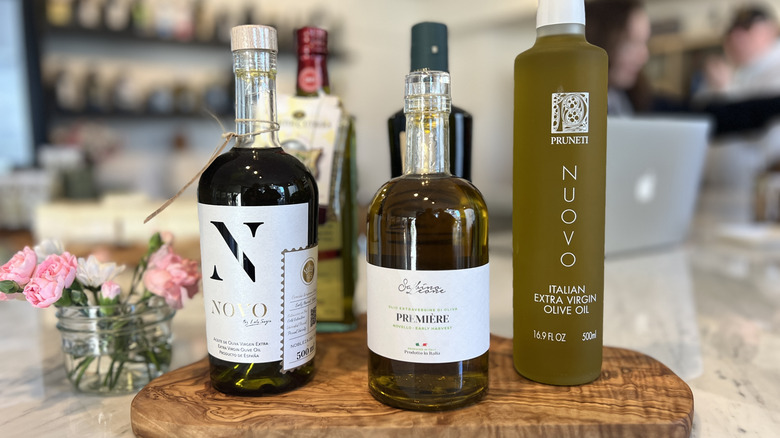
Have you ever perused bottles of olive oil at your favorite grocery store and wondered what terms like "extra virgin," "cold pressed," or "early harvest" mean? If you aren't familiar with the methods used to harvest and extract olive oil, these terms can be far from intuitive. As a result, you might feel so overwhelmed by the numerous varieties in front of you that you just pick a bottle at random. Or worse, you base your choice on how aesthetically appealing the packaging is.
Stop. Breathe. And quit scrolling long enough to learn how and why each bottle of olive oil offers a flavor profile that is completely distinct from the next one. We asked two experts our most pressing questions about olive oil (pun intended) and how to pick the right bottles. Emily Lycopolus is an olive oil sommelier who shares her expertise on her website, Olive Oil Critic, and holds a coveted spot on the International Registry of Olive Oil Tasters. Meanwhile, Sam Miller is the head of marketing at Sunshine Olive Oil, a family-run business that produces award-winning olive oils using organic and sustainable methods.
Together, their insights prove why we should slow down and notice the multifaceted flavors of olive oil. They give tips not only for purchasing olive oil, but also for sampling and cooking with it. You'll come away with a newfound appreciation for the precision of the olive oil industry, plus an urge to taste and experience the differences for yourself.
How is olive oil made?
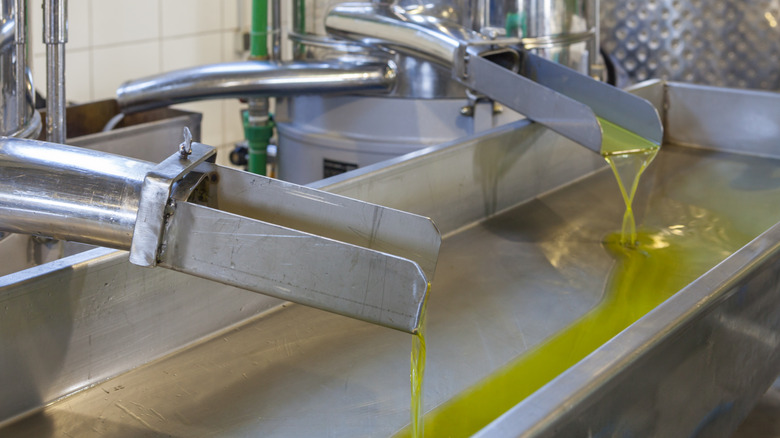
Traditional extracting techniques — or, rather, pressing techniques — that rely on stones and mats are very rare today. That's partly because they produce creamy, oxidized oils with low phenolic content and extremely short shelf lives, Emily Lycopolus explained. She and Sam Miller briefed us on the typical modern techniques below.
After being harvested, olives are fast-tracked to a mill to limit oxidation and fermentation. Six hours or less is the dream scenario, but it can sometimes take up to 24 hours. The olives are then separated from their leaves, washed to remove dirt and microorganisms, and dried. This last step is crucial to ensure that the phenolic content of the olive oil stays robust.
Far from being what you purchase off a grocery store shelf, the oil in an olive is flavorless and colorless, Lycopolus shared. So then, what gives a bottle of olive oil its flavor, hue, and nutrients? The pit, flesh, and skin of the olive. To incorporate those aspects, a crusher and an auger are required. According to Lycopolus, the crusher is often referred to as "the heart of the mill"; it pops the oil vacuoles and pulverizes the pit and flesh into a paste.
The paste is mixed for about 20 to 45 minutes, separating the oil from the flesh and infusing it with the olives' own flavors, nutrients, and antioxidants. Keeping the paste cold during this process helps preserve aroma, micronutrients, and antioxidants (hence why some labels read "cold pressed"). The paste then enters a centrifuge, or a decanter, where the pulpy solids and liquid are separated. Finally, a vertical centrifuge, sometimes called a polisher, eliminates wastewater and sediment from the oil.
Understand olive oil grades
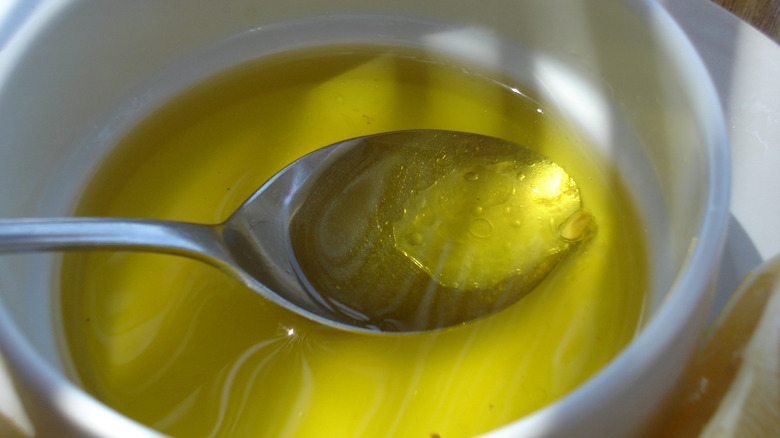
The International Olive Council develops rigorous standards used to assign grades to olive oils, each of which must undergo chemical testing and be judged by a professional tasting panel. The golden standard is extra-virgin olive oil, where the oil resulting from the process above is filtered to remove any remaining sediment. This extends the oil's shelf life by as many as 14 months, Emily Lycopolus said.
Extra-virgin olive oil offers ample nutritional benefits. While the polyphenol count for commercial EVOO can be as low as 50 milligrams per kilogram, Sam Miller explained that some oils score much higher and therefore offer plenty of antioxidants. "Extra-virgin means that it is an oil made exclusively from olives, extracted mechanically, has a fruitiness above zero in its aroma and flavor, and passes the chemistry analysis," clarified Emily Lycopolus. Such oil is free of defects, which she defined as "a negative sensory characteristic — typically, a smell, aroma, or taste — that comes from a flaw in processing." Severe defects can make an olive oil unsafe to consume.
Virgin olive oil is likewise made only from olives, mechanically extracted, and has a fruitiness above zero. However, it is more acidic and has a few defects. Light and extra light olive oil are highly processed to remove defects, giving them higher smoke points, but also significant disparities in color and flavor. Finally, classic or pure olive oil, said Miller, is typically a blend of different oils, which may or may not contain extra-virgin olive oil. Both Lycopolus and Miller prefer buying single-origin oils rather than blends.
Cultivar and terroir can make a world of difference
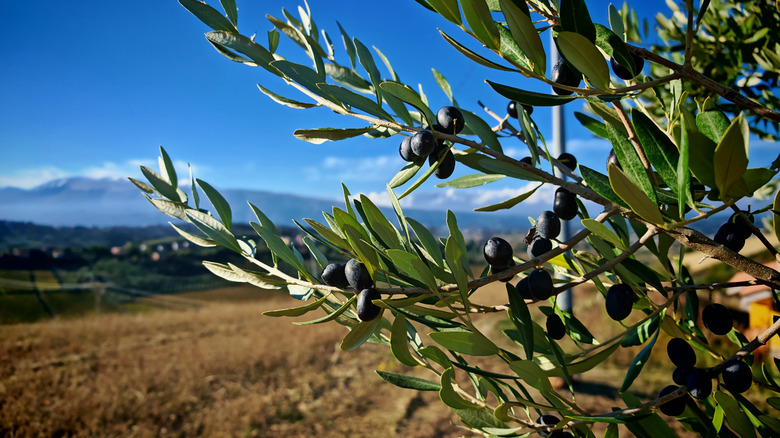
Similar to how a Sauvignon Blanc can taste drastically different from a Riesling, each olive oil is driven by its cultivar, according to Emily Lycopolus. That opens up more doors than you might realize. There are well over 1,000 unique cultivars worldwide, and Italy alone has more than 500 unique cultivars, some of which are grown on extremely small scales. Indeed, one of the major reasons why olive oil is so expensive is that it is often imported from the Mediterranean region.
It wouldn't be pretentious to say that you can taste the soil in olive oil, too. "Clay soils retain more water," observed Sam Miller, "while lighter sandy soils allow water to drain more quickly, often affecting ripening times." Other geographical factors like climate and altitude can largely influence the quality and flavor of olive oil, as with farming techniques like the way trees have been fertilized, irrigated, pruned, and harvested.
Identifying the source of each flavor in an olive oil is like a scavenger hunt, Lycopolus stated. With immense practice, you can learn to detect defects and identify growing and processing techniques.
Here's a specific example. In Italy's Ligurian region, Lycopolus explained that the Taggiasca olive tastes "buttery and creamy and smooth, and smells like avocados and fresh artichokes and ripe almond." On the other hand, a Californian Taggiasca will still "knock your socks off," according to Lycopolus, but it is more reminiscent of arugula, mustard greens, and wasabi.
Harvest timing has a major impact, too
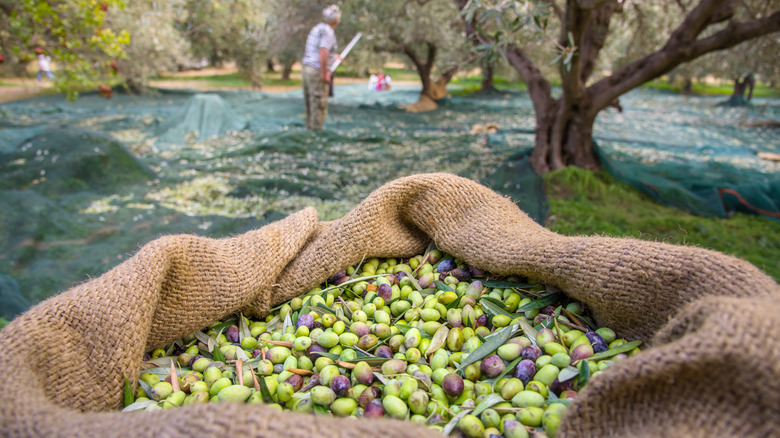
Although you can distinguish a Cabernet from a Shiraz in the first sip, olive oil varieties are not so clear-cut. "Any qualified professional olive oil taster will tell you that you cannot identify the variety or cultivar of olive in an oil based on flavor, and that is due to harvest timing," stated Emily Lycopolus.
Mid-October to early December is the season for olives in the northern hemisphere, noted Lycopolus. Early harvest olive oil tends to be "very green, bright, peppery, bold, bitter, and not have any ripe, fruity notes," she said. On the other hand, later-harvest olive oil "will have a more ripe, fruity aroma, taste like a juicy tomato ... or have a white pepper and capsicum [finish]." Sam Miller concurred, noting that "harvesting somewhere between these stages often creates a well-balanced, highly-enjoyable oil with strong chemical analysis."
The enzymes and micronutrients that develop in a ripening olive will naturally affect its flavor profile, explained Lycopolus. Because black olives are just riper versions of green olives, this may already be intuitive.
Try to consume olive oil as close to the harvest date as possible. Just like you want freshly pressed orange juice, you want your olive oil to be fresh, too, explained Lycopolus. The best-by date is typically set for two years after an olive oil has been bottled, she said. However, she recommended looking for the harvest date instead to get a better sense of its freshness.
Consider the other ingredients in your dish
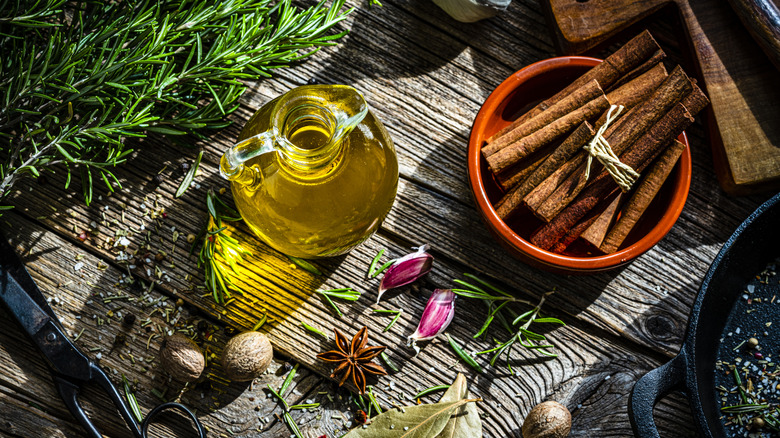
Clearly, it's worth having a few bottles of olive oil on hand. You'll use them to prepare simple classics, like spaghetti aglio e olio, as well as dishes featuring unexpected ingredients that pair well with olive oil, such as ice cream and cake.
But oh, how to choose the right oils? Emily Lycopolus recommended first identifying whether the oil is destined to be the star of the dish or a supporting act. No matter what, there needs to be some amount of harmony. Creamy, light, and mild dishes featuring elements like Alfredo or béchamel sauce call for similarly creamy, mild, and fruity olive oils, said Lycopolus. Such oils are also better suited to baked goods and ice cream, said Sam Miller, where pungent oils with bitter, peppery notes would be too overwhelming. Bold oils are better suited for spicier dishes. For instance, Lycopolus said that a robust olive oil could still be detected in a caponata featuring tomatoes, eggplants, capers, olives, paprika, and plenty of spices. It might also meet its match in salad dressing or pizza, suggested Miller.
Next, Lycopolus recommended envisioning what flavor profiles would complement the dish at hand. Peranzana and Ogliarola olive oils, for example, are herbaceous and can complement eggs, she said. Furthermore, if you are pairing eggs with tomatoes, Lycopolus advised opting for Picual — featuring notes of green tomato and tomato leaf — or else Nocellara del Belice — lending elements of artichoke and tomato. Or perhaps it's salmon on tonight's menu? Miller suggested matching it with a delicate lemon olive oil.
Are you applying heat?
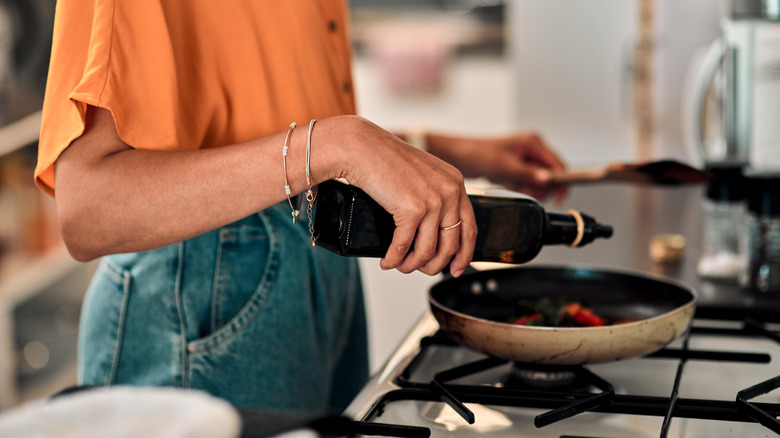
If you ever dabble in food science, it won't be long before you learn about the smoke points of different cooking fats. In your research, you might hear rumblings that olive oil is best used as a finishing oil and shouldn't be subjected to heat, but Emily Lycopolus urged folks to fact-check this assumption. "The myth that you can't cook with olive oil is absolute hogwash," she stated. "Olive oil is incredibly stable. The way that the fat structure is, and the antioxidants in the oil, actually create a very, very resilient oil. It is often safe to cook [at up to] 425 degrees Fahrenheit."
However, that comes with a caveat. You should select an oil containing more antioxidants, advised Lycopolus. If you're roasting, frying, or sautéing ingredients, she suggested looking for a robust, peppery olive oil. Those qualities indicate more stability than the gentle, buttery notes of other olive oils. In practice, this might look like buying early harvest olive oils for stovetop use. You can also invest in a digital cooking thermometer to ensure that the cooking temperature remains below 425 degrees Fahrenheit.
Pick the right bottle
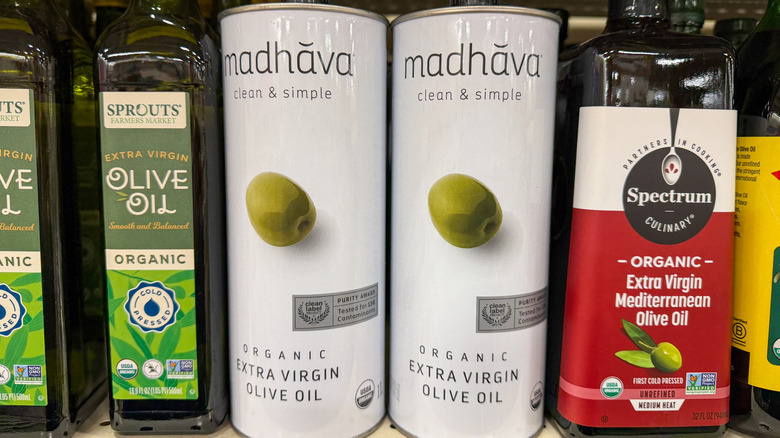
And by that, we literally mean the right bottle. Dark glass or stainless steel are non-negotiables for Emily Lycopolus, who says bottle type is the first factor she considers at the grocery store. Clear packaging is a big no-no, since it can accelerate the rate at which an oil goes rancid. Lycopolus also advised avoiding tin or plastic containers, comparing olive oil to a sponge that can absorb metal particles and microplastics.
After opening a bottle of olive oil, you may have two months or less to use it before its quality significantly deteriorates, shared Lycopolus. In light of that, the bag-in-box method of storing olive oil was designed, and Lycopolus is a huge fan, especially when it comes to the Bella Fiore oil from Rio Largo olive estate. The bag-in-box technique places a plastic bag with a one-way valve inside a box of corrugated cardboard that protects the bag during transportation. Because the plastic bag is usually composed of multiplastics and not monoplastics, they are less likely to leach, explained Lycopolus. Meanwhile, the one-way valve prevents oxygen from entering the oil, making it a great choice for buying in bulk.
If you do buy a bad batch — or if your oil deteriorates quickly after it has been opened due to oxidation — stay vigilant for rancidness. As soon as you notice a slippery texture, an aroma of stale nuts, artificial sweetener, or sausage, or a musty quality, it's time to chuck your oil, per Lycopolus.
Learn the proper tasting techniques
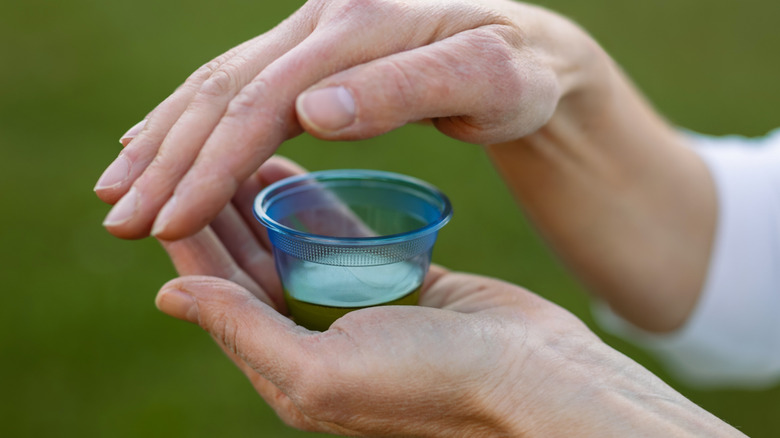
Though guided tastings at specialty shops and farms are ideal, you can also taste olive oil at home. If you don't have a certified tasting glass, you can use a small glass (perhaps a stemless wine glass), said Emily Lycopolus. Meanwhile, Sam Miller advises letting the oil do the talking without distractions from other foods. Repeat the process below two to three times as necessary.
Warming the olive oil to about 79 to 82 degrees Fahrenheit is crucial to release its flavors, stressed Lycopolus. But please, don't microwave it. Pour a tablespoon of oil into the glass, then place one hand on its bottom. Next, cover the glass with your other hand, and swirl the oil gently to aerate and agitate it, releasing volatile molecules.
After about 30-45 seconds, bring the glass near your nose, remove your hand, and relish its aroma. Then, take a small slurp and suck the oil through your teeth along with some air, further eliciting volatile molecules — this step is called stripaggio in Italy. Lycopolus urged folks to notice the oil's fruity, bitter, and pungent notes. Does it taste or smell like oregano, bananas, and/or mustard greens? Allow the flavors to blossom for about 45 seconds, then notice how the oil evolves while swallowing.
Lastly, don't forget to note mouthfeel. According to Lycopolus and Miller, mouthfeel can vary according to factors like olive variety and wax content; olive ripeness; polyphenol count; crushing and separating techniques; and whether the oil has been filtered. A clean and dry mouthfeel is ideal, Lycopolus said, while a greasy, slippery, waxy, and filmy olive oil may indicate rancidness. Unfiltered oils may feel more rustic and cloudy, shared Miller.
Consider both brick-and-mortar and online stores

Olive oil specialty stores and tasting rooms play host to many olive oil varieties. Ask plenty of questions to gauge how much expertise your vendors have, recommended Emily Lycopolus. Inquire about country of origin, chemistry analyses, and olive cultivars. Well-informed staff can guide you based on your regular rotation of dishes and personal preferences.
When shopping in person, Lycopolus never buys from the top, bottom, or front of shelves because light, heat, and oxygen expedite an olive oil's journey to rancidity. The hot beams of fluorescent lights in a store can, therefore, change an olive oil's flavor. Meanwhile, olive oils stored on the lowest shelves may not get much turnover, potentially meaning that they are older.
With experience, you'll know which olive varieties speak to your palate. You'll also become more familiar with chemical characteristics like free fatty acidity and phenolic content, which are sometimes listed in product descriptions. As your repertoire grows, you'll become more adept at navigating the online market. After all, the internet is saturated with olive oil options, but many of them should be entirely avoided.
For example, we don't recommend cooking with Amazon Grocery olive oil, which is simultaneously bland and acrid. Instead, Lycopolus recommended American Olive Farmer and Ootopia as reliable online sources of olive oil. When in doubt, Sam Miller advised, one can reference the winners of olive oil competitions like the Athena International Olive Oil Competition in Greece, the California Mid-State Fair, and Olive Japan.