

This Common Frying Pan Design Is Actually A Red Flag For Buyers
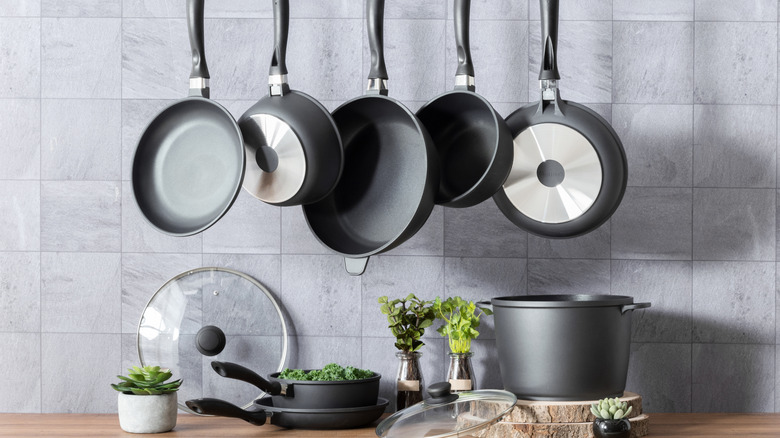
If you cook even a little, chances are you're using your frying pan pretty frequently — they're endlessly versatile. That's why it's so important to know how to choose the best frying pan. You want the right size, you want something durable, and you want something that cooks evenly and safely. The quality of our pots, pans, and tools makes such an impact on the food we eat at home, we wanted to round up the biggest red flags to watch out for when shopping for cookware. Trained chef and restaurateur Fred Decker noted that when it comes to pans in particular, you'll want to avoid what may seem like just another design approach: handles attached with rivets.
Specifically, this applies to thinner pans with rivets. With a material like lightweight aluminum, the pan can be thinner than the rivets. Over time as you fill, lift, and hang the pan, the rivets are able to wear away at the aluminum and loosen. Once this happens, it's difficult to stop or fix the issue. You can try lightly hitting rivets in with a hammer, but this won't be a lasting solution. The best way to avoid loosening handles — which can lead to messy and even dangerous drops if they break mid-use — is to consider a pan's material or avoid rivets altogether.
How and why to avoid thin pans with rivets
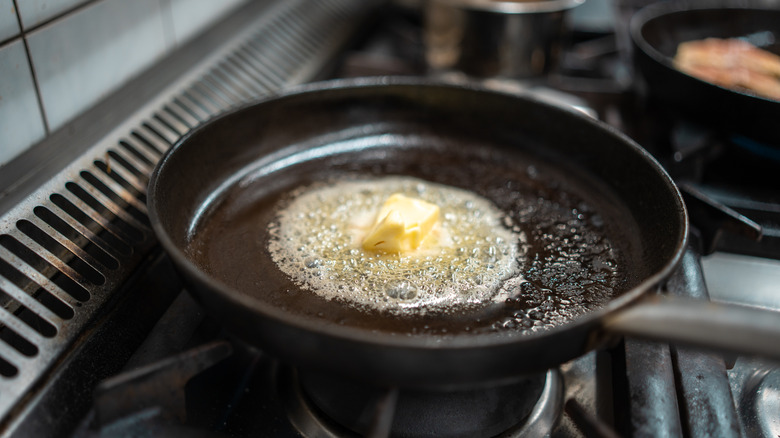
Even when you're shopping the best cookware brands, ensuring you don't run into loosening handles comes down to materials. Aluminum is one of the thinnest, lightest materials for frying pans. It may be too light for the thickness and heft of rivets. Copper can also be thinner, but you might find heavier pans if you do your research among brands. Carbon steel is another lightweight material. If you prefer a lighter, easier to maneuver pan rather than heftier cast iron, skip those with riveted handles.
The other primary method of attaching handles to pans is welding. Choosing pans with welded-on handles helps ease worries of rivets wearing away at the pan and handles getting wobbly and ready to snap. They're also an especially food-safe option: They eliminate any cracks that food can get into and they're easier to clean than the nooks and crannies around rivets. Plus, if your pan is nonstick, rivets will be the one little section that isn't, so food can still adhere to them. Welded handles avoid any sticky territory.
Of course, even welded handles are prone to breaking off, especially after years of wear and tear. One benefit of rivets over welding here is that the loosening of rivets gives you a heads up the handle's getting less secure, while a welded handle may just break. Be sure to consider your weight and material options, how you'll use your pan and how often, and shop accordingly.