

The One Way You Should Be Cleaning Fresh Corn On The Cob
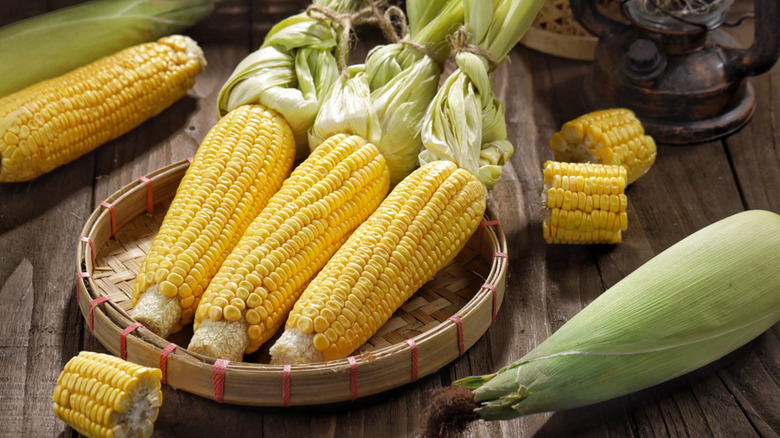
Corn on the cob is one of the simple pleasures of summer. It's very easy to prepare and delicious, but it does require a bit of work beforehand. Although you can find uses for corn husks and corn silk, most of us just strip them away and get rid of them before cooking. While the bulk of it is easy enough to pull away, there are always a few stray threads that linger. Luckily, there is an easy way to clean your corn before eating.
Maybe one or two stray strands of corn silk aren't going to ruin your meal. However, if you're trying to make dinner for people and you want it to look polished, you need to make sure they've all been removed. Tasting Table talked to George Madosky, sous chef at a.kitchen+bar D.C., about how he cleans a fresh cob of corn. "We use a clean, dry kitchen towel and work with separate bowls so the cleaned corn stays away from any stray silk," Madosky says. "This method is gentle, effective, and avoids adding unnecessary moisture, which can make silk cling and spread."
You may have been tempted in the past to run a cob of corn under a tap to wash away that stray silk, but as Chef Madosky points out, that can end up causing the last few to stick and become even harder to get rid of.
Cleaning corn so it's smooth as silk
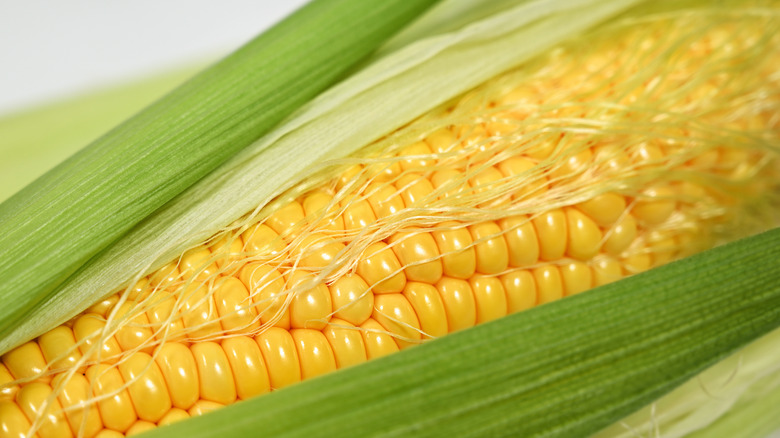
If you don't happen to have a clean, dry kitchen towel on hand, there are some other ways to remove corn silk in a pinch. You can even just put on a pair of kitchen gloves and clean your corn that way. You really just need to handle it gently, and the job becomes fairly easy.
There are plenty of ways to cook corn, and the method you choose can also affect how you clean it. You can follow Madosky's method for cleaning corn before boiling, but grilling is a different situation. "I'm from South Jersey, and we eat a lot of sweet white corn. Our preferred method is to trim any loose leaves or silk from the top, then grill the corn directly in the husk," he told us. Even though the corn husks aren't edible, cooking your corn this way protects the kernels from the high heat. It will add a new, smoky flavor from the husks that makes it taste even better.
"Char it on all sides, let it cool slightly, peel it back, and brush off any remaining silk with a clean towel. Cooking loosens the silk, so far less sticks after grilling," Madosky says. After that, you're free to eat it right off the cob or use it in other recipes. If you're making a lot of corn, you might want to consider holding on to the corn silk, too. There are a few ways you can use corn silk, making cleaning it less of a nuisance since it actually has a purpose.