

This Homemade Neapolitan Pizza Dough Recipe Calls For A Flour Worth Seeking Out
We may receive a commission on purchases made from links.
Neapolitan pizza is a masterclass in textural perfection. It strikes the perfect balance between fluffy and crisp, making us yearn for more with each bite. As the toppings are traditionally minimal, usually sticking only to tomatoes, mozzarella, and fresh basil, the quality of the dough is very much at the forefront and definitely requires some finesse. There are many steps to making the perfect Neapolitan pie at home, but the process surprisingly starts with a very specific choice of flour.
In Tasting Table's recipe for Neapolitan pizza dough, recipe developer Miriam Hahn advises using the 00 type of flour. The number 00 indicates that it's the most finely ground flour on the market — coarser grinds are marked with the numbers 0, 1, and 2. The reason why 00 flour is considered a superior choice for Neapolitan pizza is because its powdery texture improves the elasticity of the dough. Stretching the dough is a key part of the pizza-making process, and working with a softer flour will prevent it from tearing.
This elasticity that 00 flour creates in the dough has benefits beyond Neapolitan pizza. For example, it's ideal for homemade pasta, especially if you're planning to make more creative shapes where a willing and flexible dough makes all the difference. As far as availability goes, you can find this fine flour in most major grocery chains, such as Costco or Walmart, but the King Arthur 00 Pizza Flour (which is used in our recipe) is also available on Amazon.
The 00 flour type is the secret to fluffy and crisp Neapolitan pizza
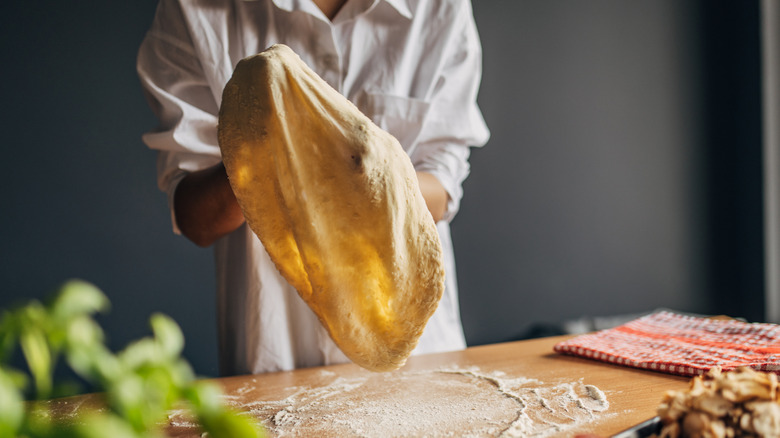
Hahn explained in our recipe that timing is an important component of any good Neapolitan pizza. The dough asks for patience, as it requires several rest times, including one that lasts between 12 and 24 hours. The prolonged rest is important for fermentation, which creates the air bubbles that yield the satisfyingly airy crust at the end. 00 flour is a great match for longer fermentations, another reason why it's a must for this style of pizza. Because it's so finely ground and sifted, it absorbs less moisture than a coarser grind would, therefore allowing for faster fermentation and bigger air pockets. In plainer terms, it bakes a crust with a fluffy interior and crunchy exterior.
Modern grocery stores sell many different types of flour, and not all of them are classified by grind size. Rest assured that you can still make a pretty good Neapolitan pizza with regular bread flour, but "you may have to be a little more careful working with the dough to avoid tearing," says Hahn. That said, the 00 flour is absolutely worth seeking out, especially since our detailed Neapolitan pizza dough recipe takes all the guesswork out of the process.