

For Some Of The Best Pancakes, Cook Them Like IHOP
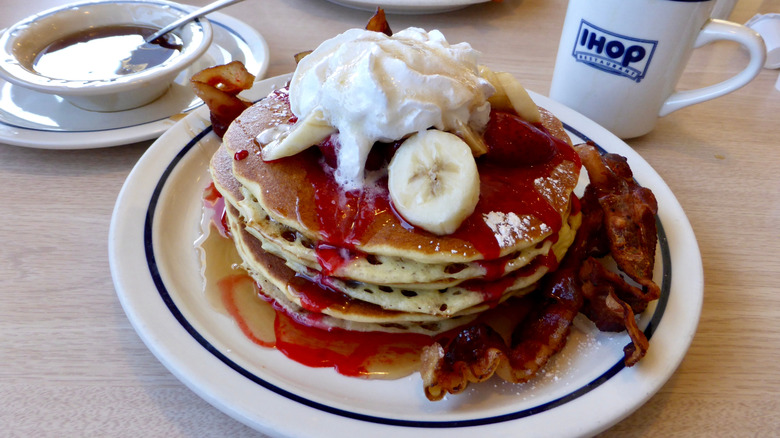
Pancakes, waffles, and French toast — the holy trinity of breakfast carbs. Everyone has their favorite, and all three are known for bringing out the fussy in their fans. For some pancake lovers, IHOP's short and full stacks are the pinnacle of pancake pleasure. If only they could be achieved at home. The idea that IHOP might know a thing or two about making pancakes is not surprising. After all, they are America's most popular diner chain, and they've been at it since their first location opened in Los Angeles, in 1958. But what's the secret to their perfectly fluffy pancakes?
Detailed by Marie Grimm, IHOP's then-vice president of culinary innovation (in a 2015 interview with Delish) Grimm emphasized not over-mixing the batter, reminding that it's okay for there to be small "pea-sized" clumps. King Author Baking Company echoes this sentiment, claiming just "a few turns of the wrist" is the key to light, fluffy pancakes. Whisk too much and pop the air bubbles formed by the leavening which gives the pancakes lift. Secondly, it causes excess gluten to develop, leading to a chewy, heavy, and not-so-tender result.
While some of the pancakes on IHOP's menu are anything but basic, like the New York Cheesecake Pancakes, Mexican Tres Leches Pancakes (#1 on 10 IHOP Pancakes, Ranked Worst To Best), and their most popular menu item, an old-school favorite, the Rooty Tooty Fresh 'N Fruity Pancakes, their secret isn't really a secret. It's really just a handful of simple tips and techniques that equal pure flapjack magic.
Hot and cold tips for IHOP-style pancakes
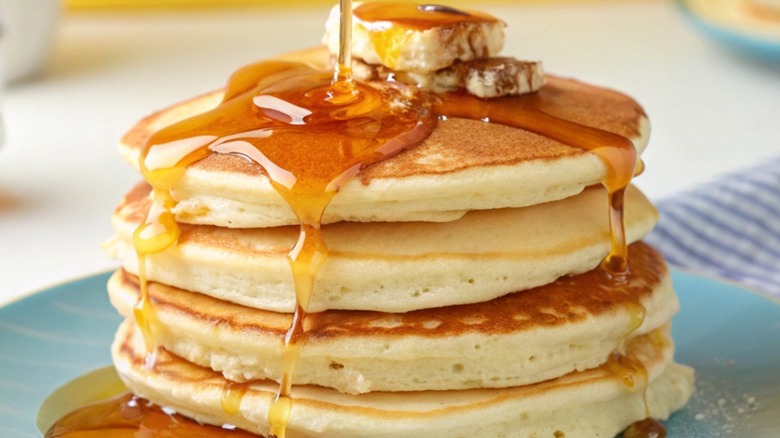
Even if you're following an IHOP copycat recipe, the instructions may not include IHOP's fine-tuned specifications, such as keeping your wet ingredients (milk, eggs, oil, etc.) ice cold. The reason for this has to do with activating the gluten "prematurely," according to Grimm, negatively affecting the pancake's texture and density. On the flip-side, you'll want your griddle to be fully to temp before pouring on your batter. According to Restaurant Business, IHOP sets their griddles at 350 degrees Fahrenheit.
And now for the real shocker — butter, don't use it on your pan (oil either). It leads to a "webbed, lacy look, instead of a uniformly golden brown 'cake," said Grimm. (If you must use something, a bit of Crisco, applied with a paper towel to a cold pan, is recommended.) IHOP employee, Chef Scott Randolph, shows these principles in a brief TikTok where he flips the pancakes after two minutes. But don't just go by timer though. According to Grimm, you'll want to look for two things: When the bubbles just begin to form and the edges "start to round out, forming an edge or lip."
Some say to leave it to the professionals, pancakes taste better at a restaurant than at home, but much can be learned from the chain's practices. Although you may not be able to fully mimic IHOP, with these industry insider tips, you can at least creep a little closer to golden-hued perfection.