

Here's The US State That Broccoli On Your Plate Probably Comes From
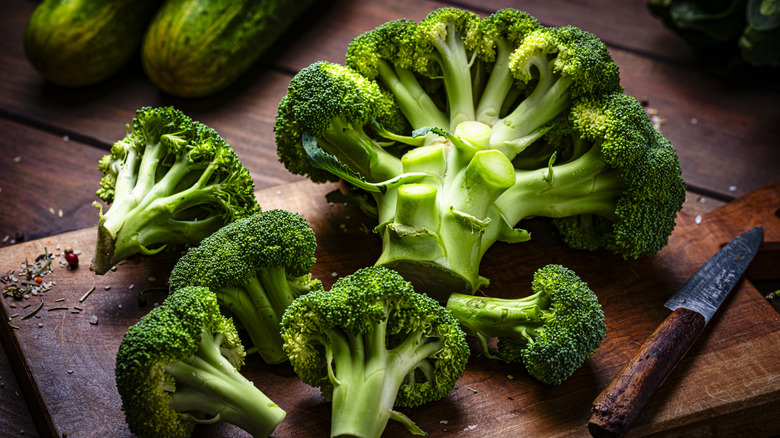
We all know it's important to eat your vegetables, but have you ever wondered where they come from? Broccoli is a ubiquitous vegetable on the American plate. It's available year-round, priced about the same everywhere, and is without a narrow seasonal or regional identity. It's at home in a gamut of recipes, from broccoli cheddar mac and cheese to take-out style beef & broccoli. It's also quite nutrient dense. You may be surprised to learn that this ever-present vegetable isn't grown everywhere. It's actually mostly grown in one state: California.
According to data from the United States Department of Agricultural, California produces nearly 90% of all broccoli grown in the U.S., weighing in at a mind-boggling 1.21 billion pounds (or 12,110,000 hundredweight) harvested in 2024 alone. Arizona grows the second largest crop, with the remainder coming from a small handful of other regions. For a vegetable that appears everywhere from Maine to Alaska, that level of geographic concentration is striking. Of course, California offers mild temperatures, fertile soil and long, temperate growing seasons that make it possible to stagger plantings and harvest almost continuously. Coastal fog moderates heat, and inland valleys support the infrastructure of large, nearly $50 billion industrial farming operations.
Over time, broccoli production has followed the same trajectory of other American-grown crops, now grown by huge, subsidized agriculture operations where risk is distributed across enormous acreage and per-unit costs are driven down. This cluster of circumstances allows broccoli that is grown thousands of miles away to arrive cheaply and consistently, year-round, undercutting smaller, local growers who can't compete with the pricing or power of industrial agriculture.
Root causes of commodity crop centralization
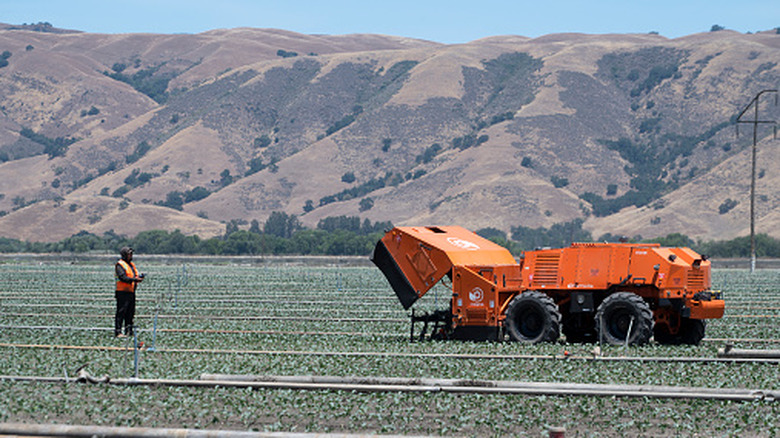
Botanically, broccoli is not especially complex or demanding. It needs dirt, sun, and water. It's a cool season crop that can tolerate a wide variety of conditions, and it grows successfully in many parts of the country from the Midwest to northern coastal regions. Broccoli doesn't require a California climate, but over decades, U.S. food production has shifted toward consolidation, favoring large-scale operations that produce massive volumes at the lowest possible per-unit cost. As industrial production concentrated in California, smaller regional growers were priced out.
U.S.-grown broccoli is shipped thousands of miles under refrigeration, relying heavily on fossil fuels and tightly timed logistics to meet the demand of a national year-round appetite. California routinely experiences water shortages and pervasive, extreme drought; labor disruptions; and erratic weather patterns, including a voracious, and expanding, fire season. When most of a staple vegetable is grown so disproportionately in one place, the food system is less resilient.
Broccoli is something of a paradox. This easygoing, versatile and nutritious vegetable that could be grown anywhere, but has instead become a centralized commodity. The low price and constant availability are signs of the system that prioritizes faster and bigger, but not necessarily better. Humongous-scale factory farming increases yield, efficiency and fragility, and relies on subsidies, stability and growth to function. It turns out, the answer to where America's broccoli crowns come from reveals how much of the country's produce rests on a surprisingly narrow base.