

The 10 Mistakes Everybody Makes When Cooking With Stainless Steel
We may receive a commission on purchases made from links.
Chances are that even if you've been cooking with stainless steel cookware for years, there are a few things you're doing wrong. While most won't hurt anything and simply affect your cooking outcome, others are more likely to damage your pan and may even shorten its lifespan. It turns out that some of the main complaints you have about cooking with stainless steel might be because of user error, even if you're a seasoned cook. In fact, once you correct what you've been doing wrong with your stainless steel cookware, you might use them just as often or more than your non-stick pans, especially if you're worried about non-stick forever chemicals.
The mistakes you're making possibly started from the moment you brought the pan home for the first time if you didn't prep it right. In fact, there's a right and wrong way to prep it every time you use it. The temperature of your food and pan matter as does when you add certain things to your pan. You'll learn that patience and attention go a long way to a better cooking experience. Plus, when you're done cooking, there's a right and wrong way to clean your pan to make it last as long as possible. Once you stop making these 10 mistakes and master the alternatives, we think you'll find that you're a better cook when it comes to using stainless steel cookware.
Not seasoning your stainless steel pan
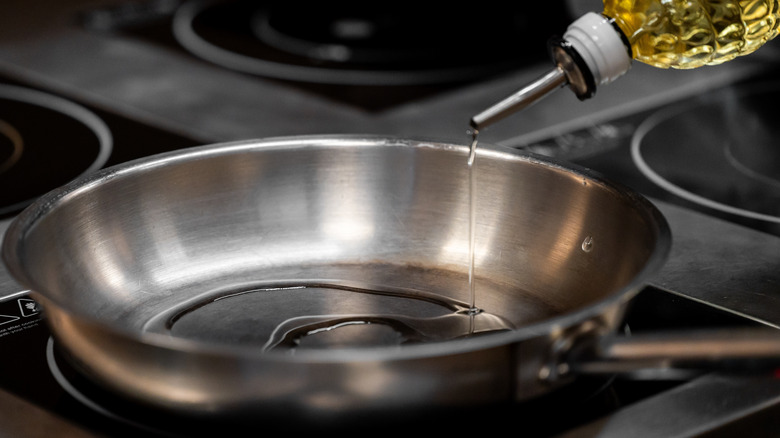
While most of us know we need to season a wok or iron skillet, we tend to forget to season our stainless steel pans. While it won't build up a thick non-stick layer like a wok or iron skillet, it does serve the same purpose of creating a non-stick surface. Also, there are two different seasoning processes: one when you first get your pan and a different one for everyday use.
When you first get your pan, you'll want to give it a nice protective barrier with a light layer of oil after washing with warm soapy water and drying. When choosing oil for this process, you'll need one that has a high smoke point. So, the same types of oil you'd choose to season your wok will work great. Think avocado oil or rice bran oil, not olive oil. Once you've coated the pan with oil, heat it slowly over medium heat. It's ready to either use or store after the oil shimmers and the pan has cooled.
Any time in the future, when you need a temporary non-stick surface, like when cooking eggs, you'll season it a different way. Heat your clean, dry, and oil-free pan over medium-high heat. It's ready when the water you drip onto the pan beads rather than evaporates (the Leidenfrost effect). Then, turn off the heat and wipe a thin layer of high-smoke-point oil onto your pan. The pan should cool before using it for non-stick cooking.
Not tempering and drying your food before cooking
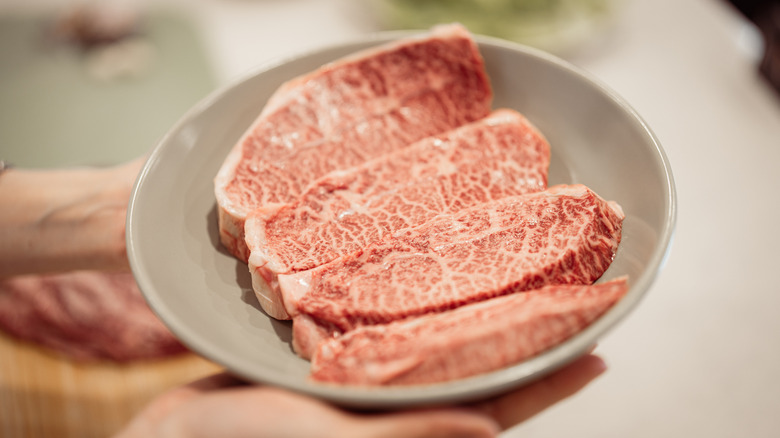
Steak isn't the only food that needs tempering and drying before cooking. So, you'll need to plan ahead and have a little patience when cooking with stainless steel for the best results.
What we mean when we say that you need to temper your food is that you should start cooking with food that has a room-temperature surface rather than food that's still chilled from being in the refrigerator. Sitting out on the countertop for 20 to 30 minutes should do the trick. Keep in mind that you don't want to add cold butter or other cold fats to the pan, either. So, even those need to be left out to reach room temperature before cooking with them.
We're going to talk about the importance of preheating your pan later, but if you go to the trouble of preheating a pan and then place cold food in the pan, the preheating process was for nothing. The thermal shock of placing cold food into a hot pan causes the pores of the pan to expand from heat and contract suddenly from cold, which will likely make food stick and brown unevenly. Wet food is also likely to stick, which is why you want to pat any external condensation or water from rinsing off the food before placing it into the pan.
Not preheating it properly
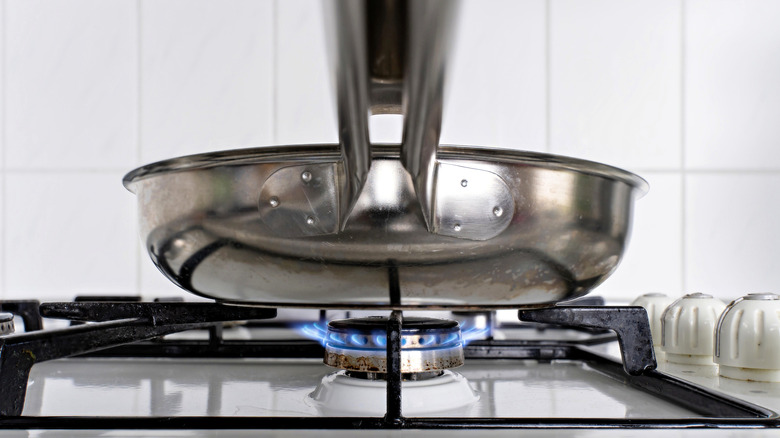
Every time you use your stainless steel pan, you should preheat it first, whether you plan to season it or not. It might make you a little nervous to heat the pan while dry, but you're going to be watching it and testing it to ensure that it has reached the right temperature before adding oil or food.
Preheating the surface of the pan before cooking provides a static, solid cooking surface. To preheat it, you'll place the pan on medium heat for just a minute or two. It's at the correct heat when water that you drop to the surface beads instead of slowly evaporating from being too cool or evaporating instantly from being too hot. So, you have to find the sweet spot before it's ready to add food. The effect tends to happen at around 200 degrees Fahrenheit (more or less).
We mentioned previously that you need to add room-temperature food and oils to the pan to avoid thermal shock. However, keep in mind that you also only should add them after the pan is at the right temperature if you don't want the food to stick. If adding oil or fat, you'll know it's time to add the food when the oil shimmers or has surface ripples. Another mistake with stainless steel is using cooking sprays instead of real oil and fat, as sprays tend to stick to the surface from a polymerization chemical bond.
Adding salt before your water or pan is hot
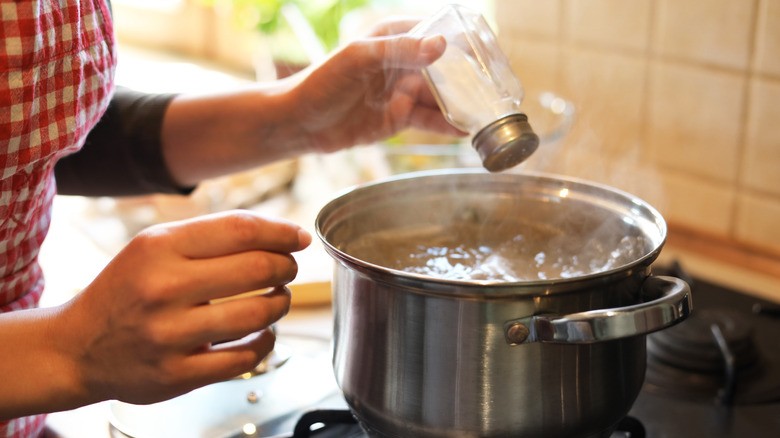
There's a myth out there that we want to debunk before we get into our point about not adding salt to cold water before boiling it in a stainless steel pan. Regardless of what you might have heard, salt doesn't make water boil faster. In fact, it does the opposite by raising the boiling point of water. However, not only is adding salt to cold water not a shortcut to cooking food faster, but undissolved salt can also ruin your stainless steel pan. Surprise!
Now that you know that you're not going to be cooking your food any faster by starting with salt in the water, consider what happens if you add solid and undissolved salt to your pan: Whether the salt is sitting in the bottom of your pan in cold water or if you add it to your food in a pan that's not pre-heated, it acts as an abrasive substance like sand. So, if solid, non-dissolved salt is moving around your pan while your water is heating or while you're stirring items in your pan, you can end up irreparably scratching and pitting the surface.
Your best bet to avoid damaging your stainless steel pan's surface with salt is to wait until the water or pan is hot before you add it. That way, the salt will have a chance to dissolve rather than acting as a harsh scouring pad.
Overcrowding the pan
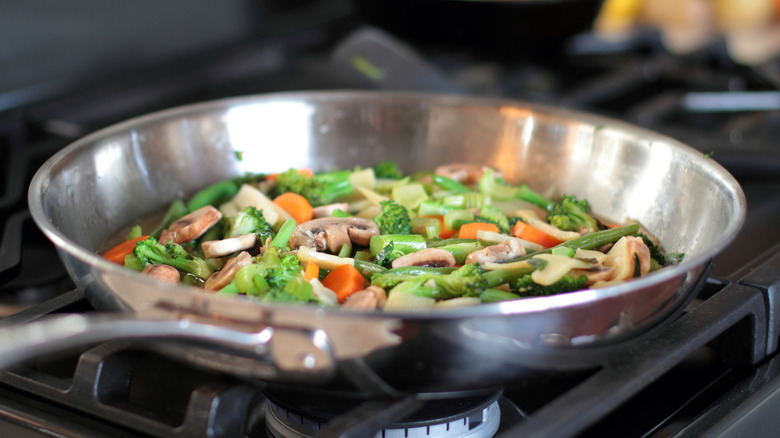
If you're in a hurry to get everything done at once and don't have a pan that's big enough for the job, it's easy to make the mistake of overcrowding your stainless steel pan. Overcrowding is especially an issue if you want your food to brown, crisp, or sear food. However, it's also an issue if you want it to cook in a timely manner.
If you think about what happens when you put a lot of food in a pan, you'll quickly see why putting too much in at a time is often a mistake. The more food is taking up internal space, the less space heat has to circulate, lowering the overall temperature in the pan. Thus, not only will it take longer to cook, but most of the food will end up steaming and stewing in its own trapped moisture rather than sautéing and crisping or browning.
So, if you're aiming for food that's browned and crisped rather than steamed, you'll want to add fewer ingredients to the dish or use a bigger pan to provide more space. If you don't have a bigger pan, you might need to cook in batches, but the overall results will have better flavor and texture.
Overheating the pan
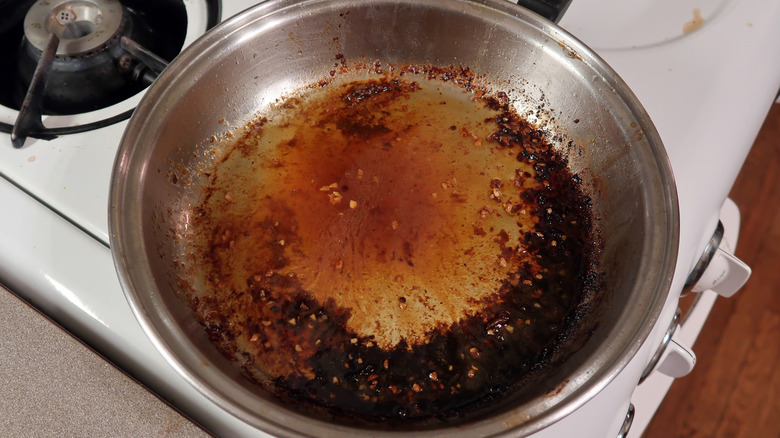
Just as you can overcrowd the pan, you can also overheat the pan. Cooking in stainless steel isn't a race to the finish line; it's a thoughtful process. Overheating can damage your food, your pan, or both.
Overheating a stainless steel pan can end up discoloring or warping the pan. If you have a stainless steel pain that has a sort of rainbow effect on it, this happened from overheating. The good news is that this discoloration isn't permanent. You can remove it with cleaners like All-Clad Specialty Powder Stainless Steel Cleaner and Polish or even an acid like vinegar. If the stain is inside the pan, you can fix it by simply cooking something acidic like tomato-based spaghetti sauce. However, if it gets so hot that the internal layers heat and expand at different rates, the subsequent warping isn't reversible.
Overheating the pan can result in burned or unevenly-heated foods. If you're using fat with a lower smoke point, like extra virgin olive oil or even butter, you can end up with the oil burning, which can ruin the flavor of your food. When your burner is too high, you can also end up with unevenly-heated foods, where food in the inner area touching the burner gets far hotter than those items around the outer edges. Also, at high temperatures, the external portions of your food can burn before the inside gets done.
Flipping or moving foods too early
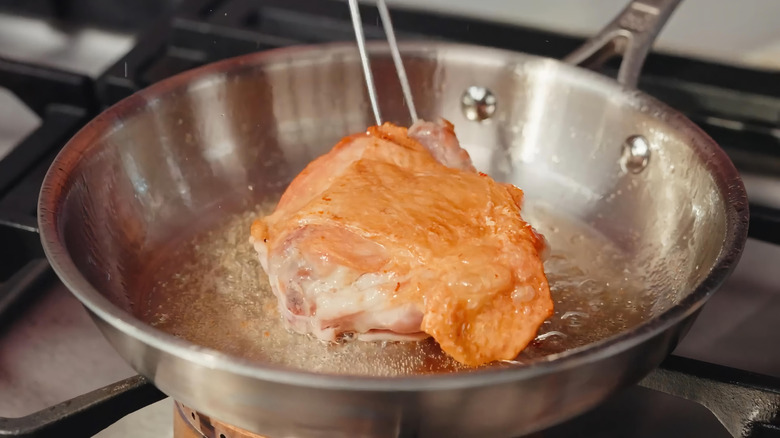
Remember when we said cooking in stainless steel isn't a race? Part of the reason you end up thinking you need a non-stick pan is that you're not waiting for foods to naturally release from the pan before you flip them. It's not the pan's fault if you're too impatient to wait for your food to self-release before flipping it.
Test whatever you're cooking to see if it comes up naturally or needs force. If it needs force to release from the bottom of the pan, it's not ready yet. And if you force it before it's ready, you'll end up with all the nice brown bits stuck to the bottom of the pan instead of staying on your food.
What if it burns? Well, if you've avoided all the mistakes mentioned so far, it shouldn't burn before it releases. To recap, put high-smoke-point oil into the pan when it hits about 200 degrees Fahrenheit and add room-temperature food to the pan once the oil shimmers. Then, let the food cook in an uncrowded pan at temperatures that aren't too high until it releases. It might take a little practice and patience, but follow this method, and you'll get the hang of it.
Not handwashing and using abrasive cleaning methods
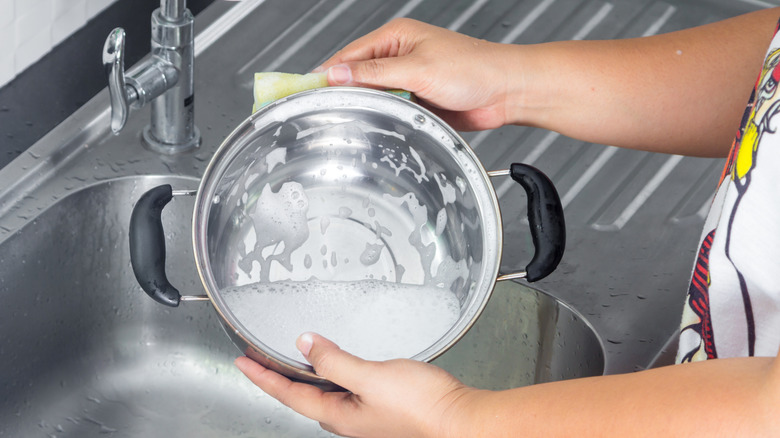
While your stainless steel pan may say that it's dishwasher safe, machine washing may not be the best option. If you want your pan to last as long as possible and in the best condition, you're going to want to learn the best way to clean your stainless steel cookware.
Not all stainless steel can handle being in the dishwasher equally. Some have top layers that won't corrode or react to dishwasher detergent at all, so long as the top layer stays intact. However, others have exposed places on them like the rims with reactive metals that can handle being in the dishwasher.
When handwashing, opt for non-abrasive mild dishwashing liquid and soft cloths or sponges that won't scratch the surface. Even paper towels can be too harsh and leave scratches behind. For cooked-on food, you can try covering it with warm and soapy water to soak. For more stubborn bits of cooked-on food, try boiling water inside and attacking the food residue with a silicone spatula. If there's still a residue buildup left behind, you can try adding an equal amount of vinegar to the water before boiling and allowing it to cool.
Cleaning the pan while it's still hot
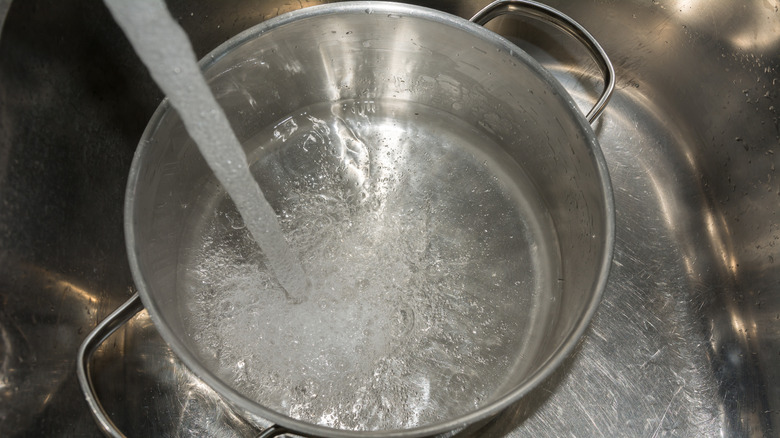
Sometimes you want to wash your pan right after you finish cooking and be done with it, especially if you aren't putting it in the dishwasher. However, this is another area where it's best to have patience when it comes to stainless steel pans. We've talked about thermal shock being negative for the cooking process, but it's also a bad deal for the cleaning process.
If you take your pan straight off the heat when it's done and pour water into it at a different temperature, you can actually end up warping your pan. This warping effect is most likely to happen when adding cold or cool water to your hot pan. You know those pans in your cupboards that you never use because they don't sit flat on your electric stovetop and don't heat evenly anymore? Someone likely tried to wash them straight off the stovetop. So, slow down a bit. Eat your food and then wash your dishes and pans at the same time. Your pocketbook will thank you when you don't have to end up buying a new pan to replace a warped one.
Not cleaning pans quickly when they've held acidic foods
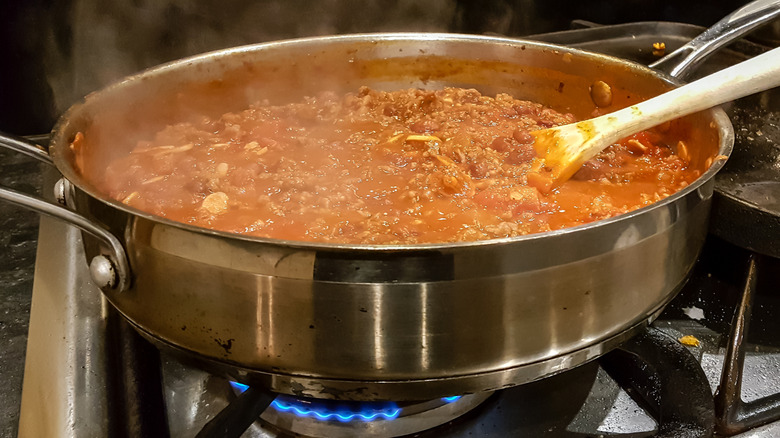
Acid might be your friend for removing tough residue, but you shouldn't let acid linger in a stainless steel pan for long before cleaning it. So, if you've used your stainless steel cookware to make acidic meals like spaghetti or lemon picatta, make cleanup a today thing and not a tomorrow thing.
There's no worries about cooking acidic foods in stainless steel, as it won't break your pan down quickly like acid does for other pans like cast iron. However, if you let your pan sit with acidic substances in it long enough, it can discolor or dull the surface. If it's strong enough or you leave it on long enough, acid can even start to corrode and even pit the surface. Even leaving an acidic substance like lemon juice or vinegar in a stainless steel pan overnight can start to have negative effects on the surface. So, don't make the mistake of thinking you can store something like spaghetti sauce in the pan in the fridge or that washing the pan tomorrow won't hurt anything.