

This Classic Italian Pasta Dish Gets Luxurious Flavor Without A Creamy Sauce
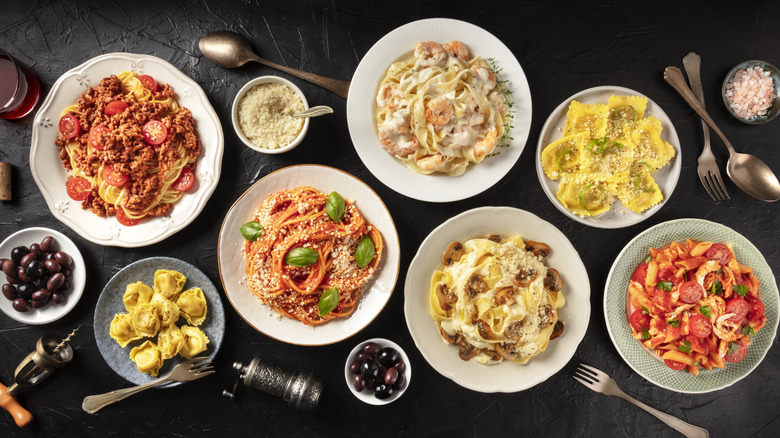
Beneath the familiarity of spaghetti bolognese and fettuccine Alfredo, Italian pasta is actually far more diverse than you think. Certain dishes rely on hearty sauces to immediately strike an impact. Others meticulously build flavors one ingredient at a time, layer after layer, until your dish is a perfect balance of depth and lightness. Pasta alla gricia falls into the second category. Loaded with all the richness you could want, and none of the usual heaviness, it's a dish worth adding to your repertoire.
Considered to be one of the four classic Roman pasta dishes, pasta alla gricia dates back centuries, possibly originating from a small town called Grisciano in Lazio, Italy. Much like others in this quartet—cacio e pepe, carbonara, and amatriciana—it derives textures and flavors from a small number of ingredients. Only three things are required: guanciale (salt-cured Italian bacon made from pork cheek), pecorino romano cheese, and ground black pepper.
The guanciale's rendered fat sets the tone for the dish, sinking richly savory notes and a slight funky brine into your taste buds. Emulsified with pasta water and grated cheese, it thickens to a smooth lusciousness, effortlessly clinging to the pasta strands without weighing them down like regular cream sauces. Every forkful unveils another hidden nuance, from the pepper's aromatic bite to the cheese's umami, nutty tang. If you also add white wine to the mix, like in Tasting Table's spaghetti alla gricia recipe, there's even a crisp acidity lingering in the undertone.
The must-knows when you're making pasta alla gricia at home
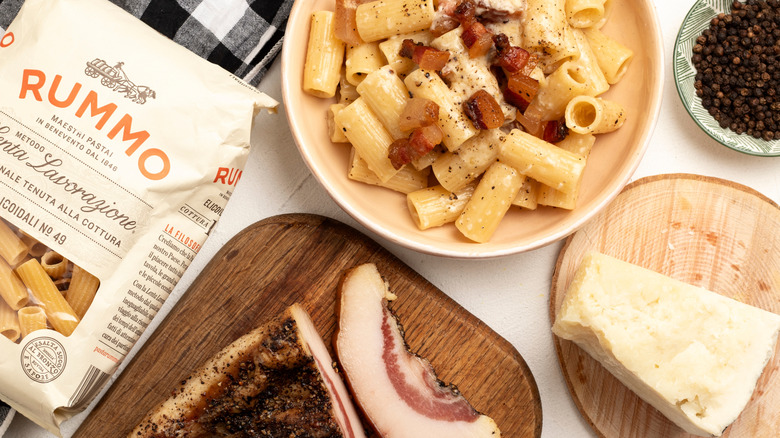
Should you decide to add pasta alla gricia to your list of recipes to upgrade spaghetti night, acquire some guanciale first. Alternatives like pancetta and bacon won't really bring the fatty funk that's signature to this cured meat, and by extension, this dish. Just as important is the cheese, which should preferably be high-quality and labeled with Protected Designation of Origin (PDO) status to ensure the truest, most potent pecorino romano flavors. As always, it's best to avoid adding pre-grated cheese to pasta and grate it yourself to get the best melt texture. Then comes the pasta, which is typically spaghetti and rigatoni, but feel free to try out any long and short varieties you like.
The cooking itself starts with rendering fat from the guanciale. After setting the meat pieces aside, grind pepper into the pan. Then, add pasta water, bring the mix to a boil, which is essential for breaking up the fat and keeping the sauce from being greasy. As you do, quickly and consistently swirl the components into each other for a seamless emulsification. You might also want to undercook the pasta because it will get transferred into the sauce skillet halfway through and continue cooking there. Once the pasta is al dente and the sauce has decently thickened, take the pan off the heat, and continue swirling the cheese in. Make small adjustments with the sauce's consistency and flavor as desired, and your pasta alla gricia should come together in a flash.