

Avoid Ordering The Seafood Carbonara At Restaurants, Trust Us
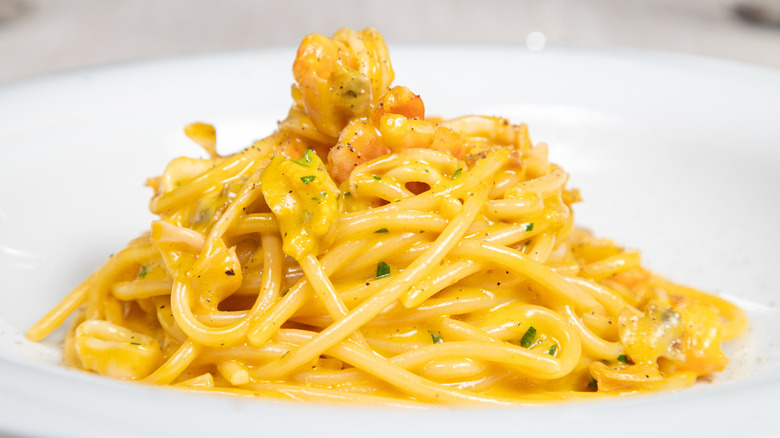
Not all restaurant dishes are worthy of a taste. Every eatery has at least one meal that doesn't satisfy — one that's earned a reputation for falling short and is better left untouched. Then, there are dishes that you're better off avoiding altogether, no matter what restaurant you're at. In some cases, no amount of culinary expertise can save a fundamentally flawed concept, and one such offering that falls into this bucket is seafood carbonara.
Classic carbonara receives a coastal makeover in an entree that combines noodles and a sauce of egg yolk, hard cheese, and black pepper with seafood such as shrimp, scallops, mussels, or clams. It may draw you in with its creaminess and maritime promises, but you'll want to resist the urge. It's a dish that's blacklisted even by top seafood chefs themselves. Franklin Becker, the chef known for crafting the renowned seafood menu at Manhattan's Point Seven restaurant, notes that seafood carbonara is not a dish he would order when out to eat. Why? He says that some restaurants use the meal as a way to get rid of food that's about to turn, meaning that what you receive could be seriously lacking in freshness.
Becker also warns that sauces and other ingredients can be used to mask seafood that's past its prime. Acidic components, in particular, can dull off-putting odors through a chemical reaction. They're not often found in a classic carbonara, but ingredients such as tomatoes are especially acidic and could be a major red flag if included on your plate.
While you're at it, add the entire category of seafood pasta to your no-go list
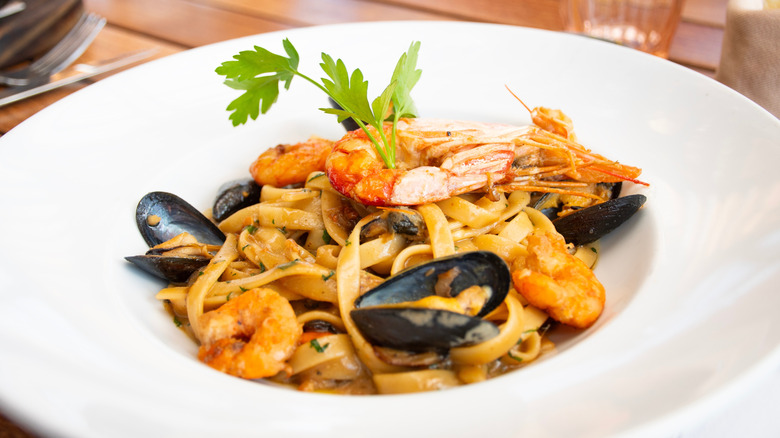
Of course, these words of warning don't just apply to seafood carbonara. These same issues can plague any kind of generic seafood pasta. It's not uncommon for restaurants to have leftover food and ingredients from daily specials or short-term features. They are a business at the end of the day, so rather than wasting these scraps and taking a loss, they may find ways to repurpose them. And, what's a great way to repurpose seafood you have lying around? Plop it on a bed of noodles and hope that a heavy blanket of pasta sauce is enough to cover up any signs that it is nearing its expiration date.
The fish or seafood found in these kinds of pasta dishes may not be inherently bad or necessarily dangerous to consume. But if you're looking for the freshest, most quality option, you're unlikely to find it in these catch-all bowls. Instead, you should look for menu items that mention a specific type of seafood, such as spaghetti alle vongole (clam pasta) or shrimp linguine alfredo. These dishes are more likely to be planned offerings, with seafood sourced and prepared specifically for that plate.
You can also always ask what seafood is being used in the seafood pasta and how fresh it is. But if that information isn't clear or can't be verified, it's a dish you're better off avoiding at seafood-focused restaurants.