

The Difference Between Saltwater Vs Freshwater Shrimp
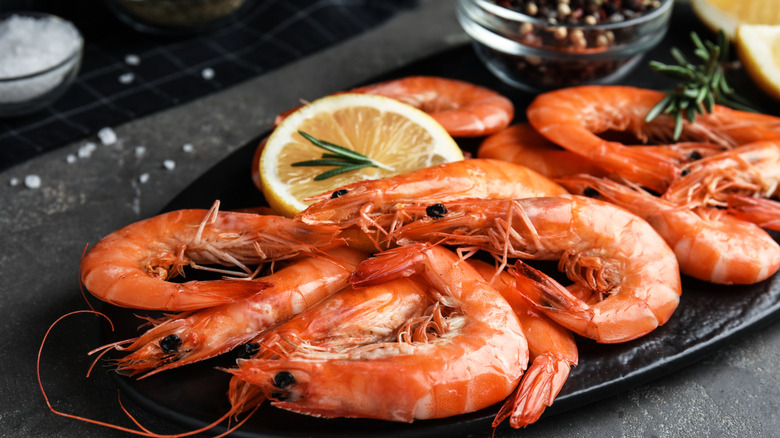
When it comes to the list of the most popular seafood in the U.S., shrimp is far and away the most consumed. While we tend to think of seafood as coming from saltwater oceans, this list also includes freshwater fish, clams and shrimp. It's true that most of shrimp we eat comes from saltwater habitats, but freshwater shrimp has its place at the table.
Setting aside the distinction between shrimp and prawns, there are some key differences between freshwater and saltwater shrimp that you should know. Freshwater shrimp are generally much larger, sometimes up to 12 inches long, with firm meaty flesh. The taste is mild but subtly sweet and has been compared to cooked lobster. Saltwater shrimp are often smaller, though this will vary with the variety of shrimp — there are more than 2,000 species worldwide, with the majority found in saltwater. The flesh is more delicate in texture with a taste that's unsurprisingly more salty.
Although shrimp do appear naturally in fresh water, many species are not edible, and they can survive in somewhat polluted waters. As a result, the freshwater shrimp you'll see in the supermarket tends to be the result of aquaculture, and is otherwise subject to seasonal availability.
The huge variety of saltwater shrimp species means they're available year round. Commercial shrimp fishing usually makes use of trawling, a method that can be destructive to ocean habitats and endangered species.
When to use saltwater vs freshwater shrimp
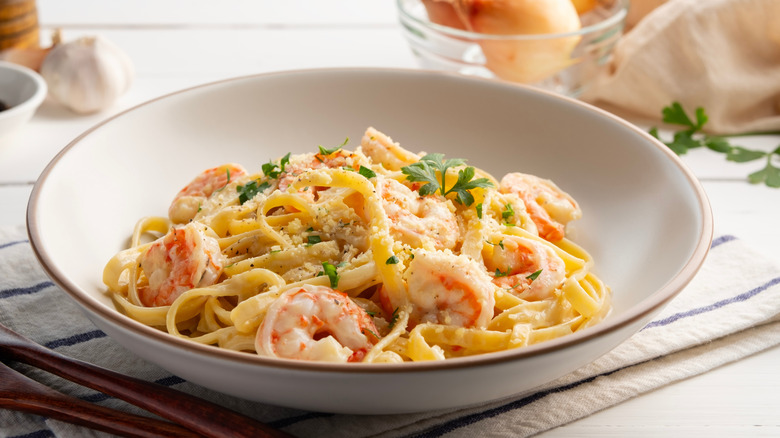
The difference between freshwater and saltwater shrimp will be evident when it comes time to eat, so knowing which option to choose is the key to making the most of your seafood.
Both the size and the taste of freshwater shrimp make them ideal for dishes where they play a starring role. Grill them simply with olive oil, or contrast the sweetness with spice in these shrimp and chorizo skewers. Larger shrimp will take longer to cook, so try the freshwater variety for dishes such as garlic butter shrimp where you want to avoid overcooking. The sweet flavor and meaty texture of freshwater shrimp means they can stand in for lobster in some dishes, say for instance if you were to make a more affordable version of a classic lobster roll.
Saltwater shrimp is best used when you really want to impart your dish with plenty of umami flavor. You can balance the saltiness out with a little acid, like you might with shrimp scampi, or make the most of it with a rich shrimp gumbo. The smaller size of saltwater shrimp can have its advantages. Bite-sized options are just what you need when making dishes where you want a good distribution of seafood, such as shrimp fried rice.