

The Slow-Growing Crop That Pays Off Big When You Start It From Seed
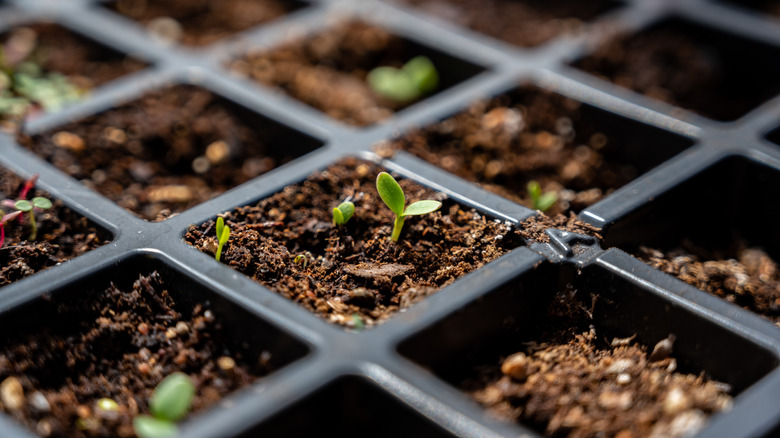
If you're looking for something new to plant in your garden this year and you haven't considered asparagus before, now is a good time to give it a try. Because asparagus is a perennial plant, growing it means you can enjoy it every year, which can make it worth the effort. That said, most asparagus is grown from one-year-old roots called crowns, but you may want to take the time to grow it from seed instead. You end up with more options and potentially healthier plants.
People grow asparagus from crowns because it shortens the long wait times for harvesting. From seed, you'll need to wait three years before harvesting asparagus. Some people consider that a waste of time. The tradeoff is that you can keep harvesting every spring for up to 15 years or more. If you plant crowns, you get a one-year jump on things. However, those crowns may have soil-borne diseases you don't know about, so there is a risk involved. Seeds remove that problem.
Another upside to seeds is you have more varieties of asparagus to choose from. Most crowns are from popular cultivars, so you'll only find a few varieties. With seeds you can grow heirloom varieties that can come in different colors and offer great variation in flavor, like Mary Washington asparagus. Seeds also tend to be cheaper because you do all the growing yourself, unlike crowns, which require a year of care before sale.
Asparagus for all of us
You can start asparagus seeds indoors about three months before the last frost. Asparagus can be a delicate plant, so it requires patience and gentle care as it grows. It's well suited for a number of soil types, but you should avoid anything too acidic. Sandy soil may be best, especially for plants grown from seed. It also needs soil with good drainage. Once the plant is established, use a fertilizer before and after stalk growth throughout its life.
When the sprouts reach about six inches in height and you're sure that the last frost has passed, you can transfer them outdoors. Full sun is ideal. Keep in mind that asparagus grows large ferns so make sure other plants won't end up in their shade. Asparagus seedlings need to be protected from weeds as they don't do well with competition. You also need to watch out for asparagus beetles that feed on the plants.
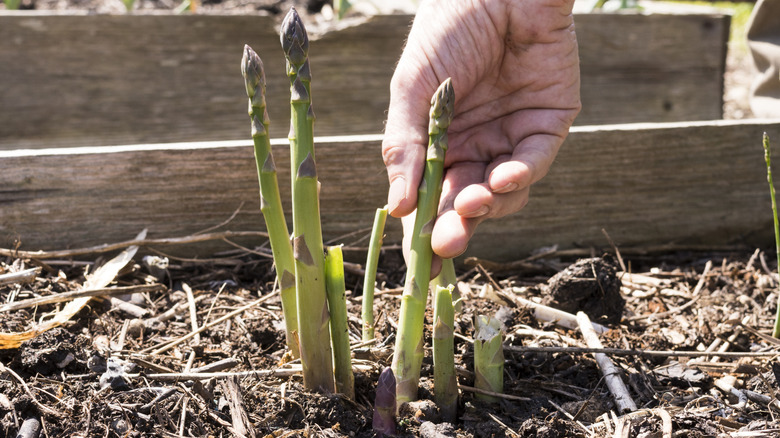
Asparagus roots spread out as the plant grows. When planting in a trench, it's recommended to give each plant about one foot of space. Also, if you're planting in rows, space them about three feet apart. A single asparagus plant will produce about a half pound during an eight-week growing season. That's about 10 spears. Plant between 10 and 20 plants per person. That should produce enough for everyone to enjoy three to five meals per week, depending on portion size. The asparagus harvest usually goes from May through June. After that, it's best to let the plants mature into ferns so they can store energy in the roots and return strong the following year.