

The Eco-Friendly Countertop Material That's Surprisingly Durable
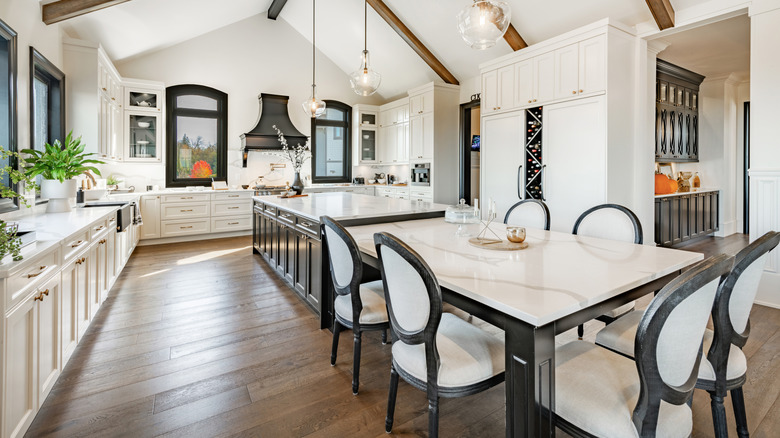
Choosing the perfect material for kitchen countertops is subjective on so many levels: Style, price, functionality, and of course, personal preference. Those counters reside in one of the most well-used spaces in a home, so you basically need to love them. That's not too much to ask, especially with the striking options available today — including the artsy-modern material called recycled glass. It's not as mainstream as materials such as granite, quartz, marble, or laminate, but it checks all the boxes, especially if you place high importance on things like durability and eco-friendliness.
It's likely that you've encountered recycled glass countertops without realizing it. They're far from the hippie-style broken-glass mosaic art of yesteryear, instead presenting as sleek, highly polished, professional slabs with intriguing bits of confetti-style color trapped inside. That's the recovered glass bits set into a binding material such as resin, cement, or concrete, and then smoothly polished so that the composite surface feels like stone. The glass fragments act as hard elements, while the binder holds everything together into a single durable slab that can be fabricated in the same way as other countertop materials.
This allows for things like sink cutouts, counter edges, and adjoining seams. The term "durability" covers a lot of territory, but recycled glass countertops are largely considered sturdy and resilient, resisting heat damage and scratching. Like most countertops, they can be subject to staining.
The environmental impact of recycled glass counters
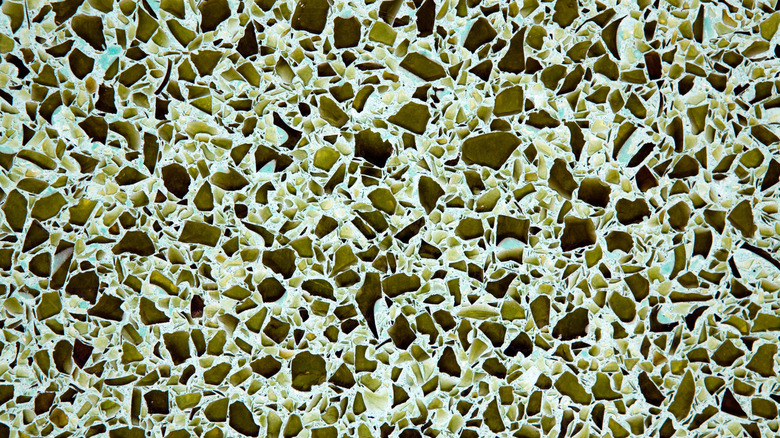
Depending on the manufacturer, the recycled content of these countertops can be very high, as much as 85% to 100%. That's a good starting point, since using recycled materials diverts it from landfills and incinerators, plus reduces demand for new-material production and related energy use. More subtle environmental impacts, specific to creating recycled glass countertops, include things like the use of waste products that would ordinarily end up being discarded. For example, when cement is the binding material, it's possible to mix in what's known as fly ash from coal-burning operations — which lessens the amount of required cement, consequently saving on harmful manufacturing emissions.
As for aesthetic appeal, the glass texture and color are a big plus, creating lively, interesting spaces for cooking, eating, and entertaining guests. The slabs can also be color-stained for versatility and coordination with cabinets and flooring. Visual appeal is definitely a major consideration for most folks, as noted in our guide for picking the perfect countertop material for your kitchen. We consulted three experts on making the best choices, including designer Michael Hartel, PhD, the founder and CEO of Cabinet IQ, who agrees that recycled glass brings a lot to the table. "If you're thinking green," he says, "then recycled glass and bamboo butcher block are worth a look, as they're both stylish AND better for the planet."
For more eco-friendly influences, check out our suggestions for incorporating sustainability into your kitchen remodel. And consider these 20 energy-saving kitchen tips.