

Why You Should Be Rinsing Kale Twice
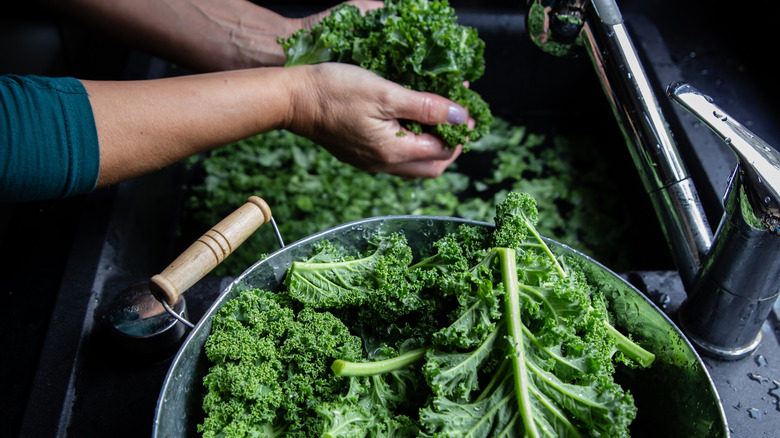
Kale is packed with antioxidants, vitamins, and nutrients, making it a vegetable you might want to incorporate into your regular recipe rotation. Proper prep is key, though — you don't want to miss the crucial step that takes it from tough and bitter to tender and deliciously earthy. According to Cook's Illustrated on Facebook, one of the most important tips for cooking with kale is to rinse — and massage — it, not once but twice. Rinse kale to rid it of dirt and bacteria, then rinse and massage kale a second time after chopping it.
This crucial one-two step not only alters kale's texture but also causes the assertively bitter compounds to release, so when you eat it, the bitterness is milder and you get more of an earthy flavor. "The second rinse and massaging make a huge difference," says nutrition-based private holistic chef Jane Olivia. "Massaging kale breaks down the tough cellulose fibers, which softens the leaves and reduces bitterness," she explains. "It transforms kale from something chewy and aggressive into something tender and slightly sweet."
There are many different ways to cook kale that help achieve this softening; but, Jane points out, the second rinse and massage is still helpful and downright essential when prepping kale raw for salads or wraps. "Beyond texture and flavor, massaging kale helps it absorb the dressing more evenly and makes it easier to digest," she says.
How to massage kale for optimal results
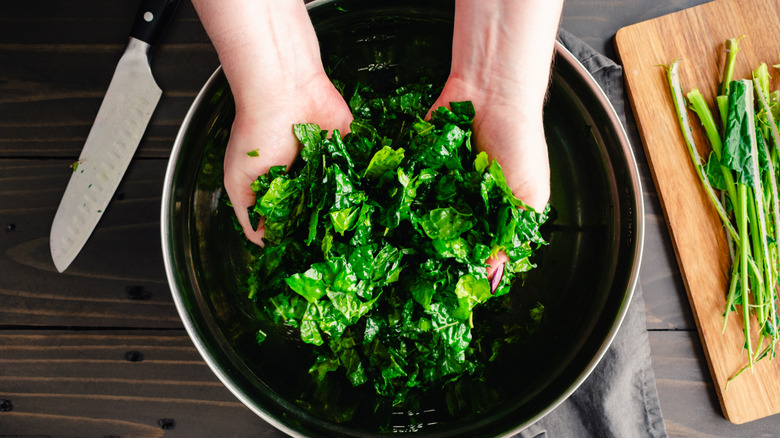
Even if you were previously unaware of this second rinse-and-massage step, you might already have enjoyed kale that's benefitted from a similar effect. "If you've ever had a kale salad that tasted better the next day, that is because the kale fully relaxed," Jane Olivia explains. That's your proof of the magic of massaging kale, and by taking just a few minutes to do this yourself, you can savor that second-day tender kale from the very first bite.
However, it is possible to over-massage kale, which can whisk these greens right past pleasantly tender to undesirably mushy. It should only take you about one or two minutes to do this massaging. The leaves should still be crisp enough to tear. With the second rinse — which is more directly responsible for toning down the sharpness of kale's bitterness — and the few minutes of massaging for texture, you're looking at just a few minutes for the tastiest kale.
It can get even better, though. Chef Eli Collins of a.kitchen in Philadelphia and a.kitchen+bar in Washington D.C., tells Tasting Table, "I advise anyone to fully massage whatever dressing they are using into the kale. The acid and salt will gently break down the kale and allow it to be less toothsome." Use an acid like lemon juice or a fat like olive oil, plus salt, to maximize that tenderizing. Then, the flavor of those ingredients will be absorbed into the leaves, creating a flavorful bite every time.