

These US States Have Completely Banned Plastic Grocery Bags As Of 2026
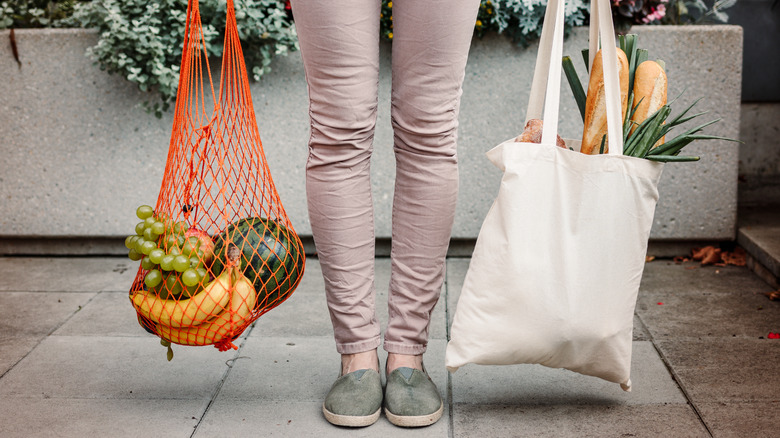
Just a few decades ago, folks got by just fine without plastic grocery bags. They are certainly convenient for both stores and shoppers, providing relatively sturdy bags for customers to haul off their purchases without requiring much storage space, but there is a waste aspect to them that is hard to look away from. If you are the sort that stuffs the bags into a kitchen cabinet with the hope of reusing them, it quickly becomes clear just how quickly a single household can fill a drawer to overflowing. When you scale that out to cover the entire planet, the numbers quickly become staggering. Around 5 trillion plastic bags are used each year globally, which equates to about 160,000 every second.
These plastic grocery bags can sometimes be reused for various household needs, but they are difficult to recycle, and most eventually end up in the landfill. While single-use plastic bags break down to some extent in around 20 years, that just means fragmenting into tiny pieces that take as long as 1,000 years to fully decompose. Looking at the end result, be it loose plastic bags entangling sea life or our consumption of microplastics — which enter the food chain as the bags break down — it is clear that there are better ways to transport items home from the store. In some parts of the U.S., this sustainability decision is made for consumers, with bans on single-use plastic shopping bags. In addition to the states mentioned in this article, there are cities with their own similar regulations. Of course, there is also the other side of the coin, with states like Arizona and Texas outlawing plastic bag bans.
California
All the way back in 2014, California was the first state to ban single-use plastic shopping bags from most grocery stores, convenience stores, and liquor stores, with the law taking effect in 2015. These stores were allowed to provide single-use paper bags, but at a cost of no less than $0.10, some of which had to be set aside for educational materials. Additionally, until the start of 2026, California stores were allowed to sell reusable bags made with recycled plastic.
The unfortunate result of this loophole was that shoppers would pay the $0.10 for reusable plastic bags, but treat them just like the old single-use bags, with most of them ending up in the landfill. Additionally, in order to be considered reusable, they were made with a much thicker plastic film. As of the start of 2026, however, this issue has been remedied, and California stores can now offer only paper bags at the point of sale.
Colorado
Colorado got on board statewide with the plastic bag ban starting with a 2021 bill. It took a few years to take effect, but as of January 1, 2024, most stores and retail food establishments are no longer allowed to provide single-use plastic carryout bags to customers. Small stores operating exclusively in Colorado with three or fewer locations are exempt from this regulation, as it could be seen to put an extra financial burden on these small businesses.
Similar to California, stores providing single-use bags must charge a fee of $0.10 or more for the bags, though shoppers who are part of a state or federal food assistance program are exempt from such fees. The stores get to keep 40% of this revenue, with the remaining 60% being paid to the municipality or county in which the store is located.
Connecticut

The plastic bag ban in Connecticut took full effect on July 1, 2021, the culmination of a plan that began in 2019. Similar to both California and Colorado, stores in the Constitution State offered 10-cent single-use plastic bags up to that deadline, but after that, only paper bags were permitted. That said, this ban has not gone off without a hitch.
In 2020, the plastic bag ban was temporarily suspended as a public safety measure during the height of the COVID-19 pandemic, though that was only a brief setback. According to some sources, however, smaller retailers often do not comply with the ban. While Connecticut's legislation technically affects businesses of all sizes, unlike that of Colorado, some smaller establishments apparently fly under the radar.
Delaware

Heading down the coast to Delaware, you will find similar legislation to that of Connecticut. Since July of 2022, Delaware has enforced a near-complete ban on single-use plastic bags at stores of all sizes. One significant exception to the law, however, is restaurants, which are permitted to continue using plastic carryout bags. Businesses are also permitted to provide plastic bags for some exempted purposes, such as bagging produce or bulk items, though in these instances, the store must also provide a station where the bags can be returned for recycling.
Additionally, the state has strict guidelines on what can be sold as a "reusable bag," a measure put in place to prevent the sort of thick plastic bags that troubled California. These requirements include a capacity upwards of 4 gallons, washable fabric, and stitched handles, among others.
Hawaii
While California may have technically been the first state to issue a ban on single-use plastic bags, really, that mantle belongs to Hawaii. Unlike all of the preceding states on this list, Hawaii does not have a statewide ban on plastic bags — at least not one that came down from the state legislature. What happened in Hawaii was the slow creep to a de facto ban in 2015, when the last county in the Aloha State got on board.
Importantly, in addition to single-use plastics, counties in Hawaii have also pushed measures to take the next steps and ban styrofoam and plastic utensils. These are two other common sources of garbage in the ocean, and it is easy to understand why a state with so many beautiful beaches and such a wealth of sea life would be more than happy to replace them with readily biodegradable alternatives.
Maine

Another state with beautiful beaches — though of a very different make than those in Hawaii — Maine passed a ban on single-use plastic bags in 2019 that took effect in July of 2021. It was initially scheduled to begin April 22, 2020 — Earth Day — but the COVID pandemic delayed the start twice, once out of public health concerns, and once due to pandemic-related supply chain disruption.
New Jersey
As of May 4, 2022, New Jersey retail stores, grocery stores, and food service businesses were no longer allowed to either provide or sell single-use plastic carryout bags or styrofoam food service products. Smaller grocery stores can still provide single-use paper bags, but any store over 2,500 square feet can only provide or sell reusable bags.
Interestingly, this single-use bag ban has created problems for New Jersey residents who order groceries online. Instead of single-use bags, the groceries come packed in reusable bags, leading to these building up in customers' homes just like the single-use bags would. The solution, however, is actually quite simple. All one has to do is stop by the grocery store and return those bags — odds are they will be happy to take them back and reuse them.
New York
The plastic bag ban in the Empire State began March 1, 2020, though enforcement did not begin until mid-October of that year. Paper bags can still be offered for a small fee, but stores are not required to stock them. Rochester-based Wegmans is one place you should bring your own shopping bags, according to regular customers, not just to avoid the five-cent fee for each paper bag, but also so you won't have to struggle with carrying a full load of groceries into the house in paper bags without handles.
Oregon
The situation in Oregon has faced similar issues to those in California. While traditional thin plastic bags were banned at checkouts in the Beaver State back at the start of 2020, the thicker "reusable" plastic bags quickly swept in to fill that void. However, in June of 2025, Oregon passed further legislation that will remove these thick plastic alternatives from the mix starting January 1, 2027.
Rhode Island
The Ocean State — or Little Rhody, if you prefer, an unofficial nickname for the smallest U.S. state — was a later arrival to the party than some of these other states, but they're on board now. A bill passed in 2022 took effect at the start of 2024, banning businesses from providing single-use plastic bags to customers at the point of sale.
Vermont
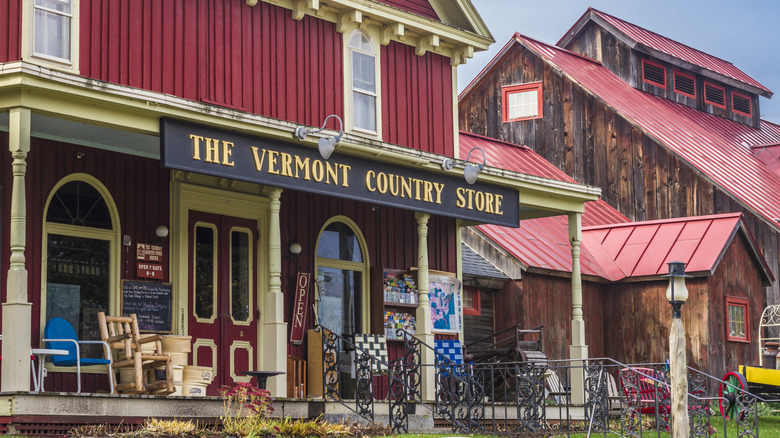
In Vermont, the focus of their legislation did not target just single-use plastic bags, but a variety of products. Going into effect in July of 2020, stores were no longer allowed to provide single-use plastic bags in most cases — excluding things like packaging meats and produce. But additional regulations also went into place banning polystyrene plates, trays, take-out containers, and egg cartons, as well as mandating that plastic straws only be given upon request.
Washington
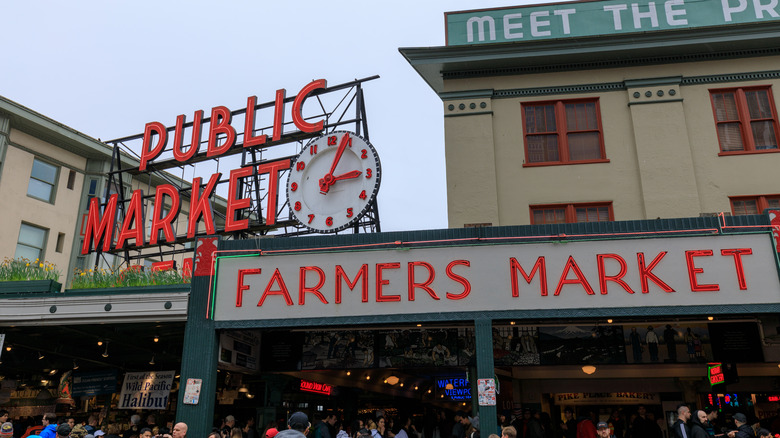
Up in the Northwest corner of the U.S., in the Evergreen State, single-use plastic bags have been banned since 2021. The situation there is similar to the other Pacific states, however, with thicker reusable plastic bags sold for $0.08 at the point of sale, replacing their single-use predecessors — alongside equally-priced paper bags. As of January 1, 2026, the fee for those plastic bags was increased by 50%, up to $0.12 per bag, while the fee for paper bags remains the same. These reusable plastic bags must be made from 40% post-consumer material, and they must be printed with the word "reusable," but they are still a significant source of potential plastic waste.