

The Unexpected Meat That Makes Bolognese Even Richer
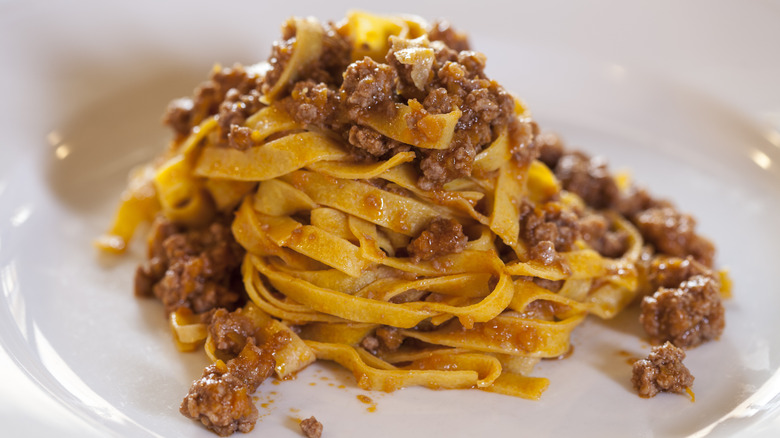
Bolognese sauce, or Ragu alla Bolognese, is the traditional Italian sauce that epitomizes meaty decadence. A traditional recipe is made with a combination of beef, pork, and pancetta, but Bolognese has many variations, often featuring extra proteins like veal and chicken livers for added richness. However, lamb is the earthy, gamey meat that will make Bolognese richer than ever.
Instead of a rack of lamb or braised lamb shanks, you'll need ground lamb to make Bolognese. Consisting of trimmings from various parts of the body, including the shoulder, neck, and leg, ground lamb has a high fat content, contributing unique earthy savoriness and richness to the sauce. It's certainly more flavorful and robust than beef chuck. You can also replace ground pork with ground lamb to simmer alongside beef and pancetta in this recipe for classic Ragu Alla Bolognese. Either way, the lamb will bring unique flavors and meaty decadence.
Ground lamb can also be the star of the show, inspiring novel spice and ingredient pairings. For example, our recipe for lamb Bolognese Bianco features unconventional ingredients like garlic, shallots, rosemary, thyme, peas, and fennel to complement the lamb's gaminess. Our recipe for Mediterranean Bolognese with fettuccine simmers ground lamb with bay leaf, thyme, red wine, canned tomatoes, roasted red pepper, and harissa for a spicier Middle Eastern twist to garnish with mint leaves.
Tips for making Bolognese
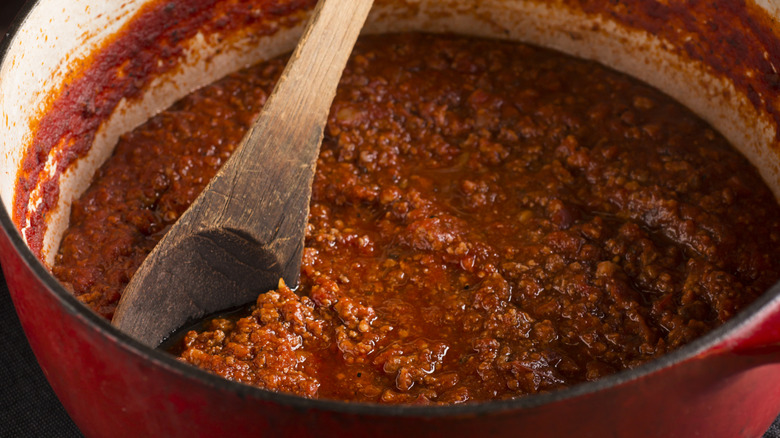
Whether you use a combination of proteins or a simple yet flavorful lamb Bolognese, a key tip for a successful sauce is patience. Bolognese requires layering flavors and a low and slow cooking method. Choosing the right kind of meat or meats is essential, and you'll want meat with high fat content to keep the sauce flavorful and the meat from drying out or becoming overly chewy as it cooks. Luckily, ground lamb has an ideal fat content for this recipe. The meat is the foundation for the sauce, and you'll start by browning it in a deep, large stock pot or Dutch oven that has the capacity for a wealth of ingredients and liquids and a durable bottom that won't scorch as you slowly stew the sauce. Deglazing the pan with white or red wine is a must, as it'll get all those browned bits of meaty goodness to meld with the next layer of ingredients while also instilling an underlying flavor complexity.
The following layer is a classic Italian flavor base, soffrito, a blend of onions, carrots, and celery fried in olive oil. Then comes the spices, dried herbs, and stock for the low and slow simmer. Milk and Parmesan cheese are the final layer and essential ingredients that'll thicken the sauce and bring a richness all their own. You can always bring more complexity by pairing the savory saltiness of this sauce with spicy red pepper flakes and a pinch of sugar.