

The Prime Rib Rule Experienced Cooks Swear By For Perfect Results
We may receive a commission on purchases made from links.
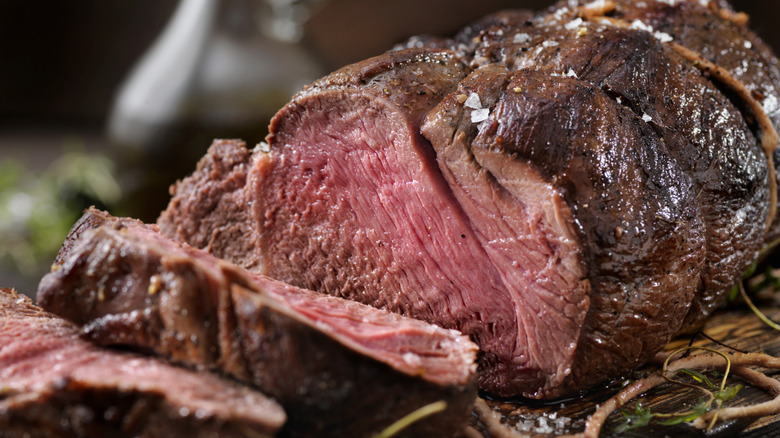
Prime rib is one of those dishes usually reserved for special occasions and holiday meals, and for good reason. The cut of beef from atop a cow's rib bones is known for its undeniably tender and juicy texture. However, large cuts of beef can easily turn chewy or overcooked if you're not vigilant while they cook in the oven. This means watching factors like time and temperature. But when cooking prime rib in your own kitchen, there's a tip chefs and home cooks alike swear by for a roast that's perfectly succulent: Use two cooking thermometers. Specifically, it helps to have an oven thermometer that reads the temperature inside the oven, as well as one for reading the internal temperature of the beef.
While it may seem like a small detail, many ovens' digital or manual temperature dials are not always accurate, and the appliance's temperature can fluctuate during cooking. Since low cooking temperatures are key to a juicy prime rib that's delectably tender, a thermometer left in the oven helps ensure your appliance's not actually 20 or 50 degrees Fahrenheit higher than the dial suggests. Those extra degrees make a difference, and high oven temps can ruin prime rib. In addition to the oven thermometer, you'll want an instant-read meat thermometer to be on top of the prime rib's internal temperature.
Why you need an instant-read meat thermometer
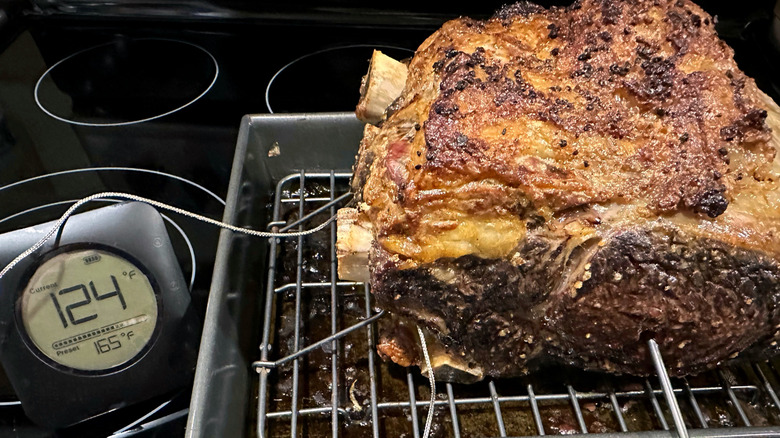
While the food safe temperature to cook prime rib is 145 degrees Fahrenheit, many cooks strive for medium or medium-rare beef for extra tenderness. This means removing the prime rib from the oven as early as when the meat reaches 120 or 130 degrees Fahrenheit (though the temperature does increase slightly as the meat rests).
While some home cooks love leave-in thermometers for their convenience and to avoid pricking the meat, which can cause its juices to leak, leave-in thermometers can be inaccurate because the thermometer's probe picks up heat in the oven. So generally, instant-read thermometers are a bit more reliable.
Since time and temperature are of utmost importance here, you'll want to ensure your oven-read thermometer and meat thermometer are both of quality. Luckily, you can easily find a variety of high-quality oven and meat thermometers online or in most home stores. Once you've got a good one (or two, rather), you'll want to avoid common meat thermometer mistakes, like not inserting it in the thickest part of the meat or washing it in the dishwasher.