

Spot This Italian Restaurant Menu Feature And You'll Know It's A Good One

If you're not an expert on Italian foods, or you're looking to branch out from those typical big-name Italian chains, it can be difficult to discern a good restaurant from an imitator. Maybe you're flipping through the menu, and you're seeing the signs of a good meal — all those saucy and cheesy entrees typical of Italian classics — but you're still hesitant. The key to spotting a good Italian restaurant doesn't boil down to olive oil on the table or white linen napkins, but whether or not the place has an antipasti menu.
In an exclusive interview with Tasting Table, celebrity chef and culinary icon Scott Conant explained in our article on seven signs you're in a superior Italian restaurant that if there's antipasti on the menu, you can rest assured that you're probably in good hands. "I think that antipasti moment, particularly for an Italian restaurant, is really vital and important," he said. As Conant explained, "I think that's the entree to conviviality at the table, if you will ... those are the things that whet the appetite, and then you're getting ready for the pasta."
Conant shared that he also ensures his own restaurants serve an assortment of antipasti. Maybe it's a short selection, only four or five items, but given that antipasti are a vital part of an Italian meal, seeing them on the menu at an Italian restaurant can make all the difference.
Antipasti are an important part of Italian meals
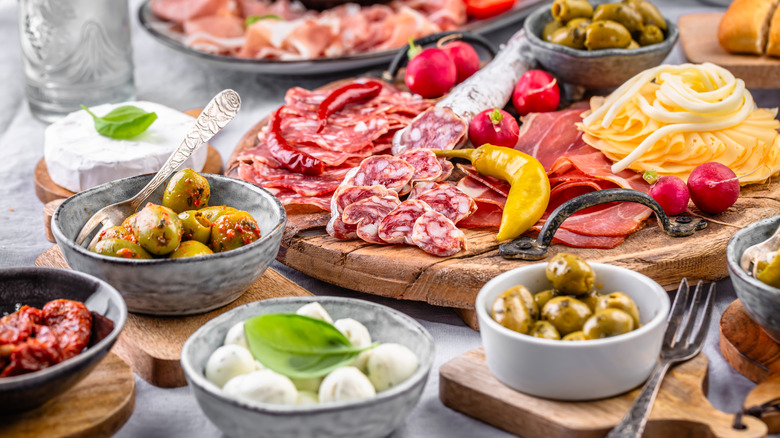
Antipasti — or the singular "antipasto" — roughly translates to "before the meal" in English, and is indeed the first course that Italians eat during a meal. It's not meant to fill one's stomach, but instead stimulate the palate in preparation for the main courses. And no, you're not necessarily expected to eat four courses for every meal in Italy, as most Italians typically only eat an antipasto once in a while. That said, the history of antipasti spans hundreds of years and encompasses several shifts in the types of foods served for the course, even largely disappearing from Italian culture during the Medieval period.
The dishes served as antipasti can vary depending on the region of Italy, which means that the antipasti offered at one Italian-American restaurant may differ from another, based on where the chefs or owners originate. Restaurants with a Northern Italian influence will have antipasti menus with dairy and herb-based dishes featuring alpine cheeses or pesto, while antipasti with a Southern Italian influence will include seafood and vegetables, such as like fried calamari or caponata. Central Italian influences instead have a healthy mix of both land and sea-faring ingredients, with antipasti such as roasted tomatoes or cod served on crostini.
Antipasti in general also combine a mixture of sweet and savory flavors, which is why you'll often spot options including tangy marinated vegetable salads, sweetly slow-cooked meatballs, salty brined anchovies, and a wide spread of meats, cheeses, and breads on the best Italian restaurant menus.