

The Old-School Bakery Item That's Making A Grand Return To Tables Today
For some old-school sweets you get at the bakery, it's a question of why they ever went out of style to begin with. One look at a pineapple upside-down cake lets you know you're in for a good time, and one bite of a chess pie will make you long for a time when modern conveniences hadn't made that mixture of non-perishable pantry staples seem like an anachronism. And if you've spent any time on social media browsing for something new to bake recently, you're also probably asking yourself why we ever stopped making pavlovas.
To be fair to the rest of the world, not everybody stopped making them. The old-school meringue classic is a perennial favorite in Australia and New Zealand, partly because both places claim to have invented it. It also still shows up over the pond on food programming like "The Great British Baking Show." But it hasn't been a common sight on American tables and menus for decades.
That's been changing recently, because chefs and influencers alike have found the perfect dessert for the aspirational age of Instagram. That's not an insult either. Pavlovas are a relatively simple recipe to make at home, but also a blank canvas that can be elaborately decorated with the most photo-friendly toppings you can imagine. The layered, shaped swooshes of meringue are dramatic, but also easy enough to pull off that a home cook can end up with a social-ready centerpiece. Oh, and they taste pretty great, too.
Pavlova is a simple, elegant dessert that can be customized with fresh, colorful toppings
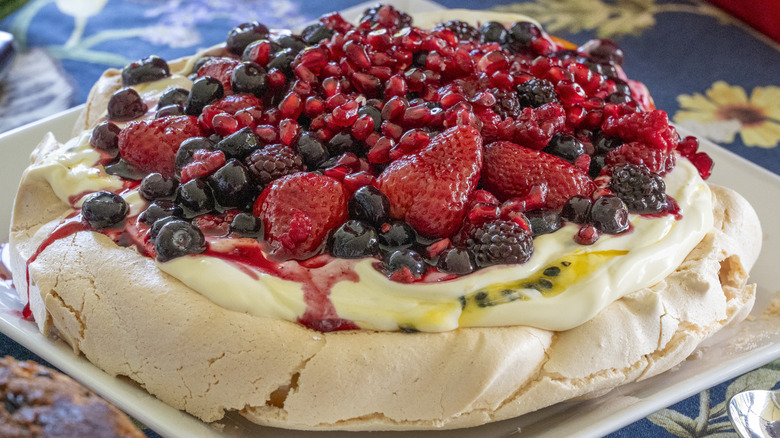
Despite Australia and New Zealand fighting over its origins, pavlova almost certainly wasn't "invented" in either place, or really anywhere specific. Shaped meringue desserts like pavlova have a history going back hundreds of years, and there are records of nearly identical mixtures topped with fresh fruit and walnuts from Austria and Germany years before Australia and New Zealand were even settled by Europeans. However, it may have acquired its current name in one of those countries, as it was named after the famous Russian ballerina Anna Pavlova during a tour of those nations in 1926. This was actually common practice at the time, and there were also dishes like peach melba, named after a famous opera singer.
But what makes pavlova special is the opposite of its lavish namesake. Its an accessible dinner party dessert that is anything but fancy once you cut into it. Being made from chewy meringue, it immediately collapses into a heap of creamy marshmallowy goodness, syrup, and fruit once served. It's elegant without being precious. Complex without being complicated. And the meringue base lends itself to almost any collection of toppings and flavors you can dream of. While tart fruit is the classic accompaniment to balance out the meringue, nuts, warm spices, boozy drizzles, simple sprinkles, or chocolate pavlova are all welcome. So this time, let's embrace the pavlova and make sure it sticks around for years to come.