

The Type Of Beef You Should Always Truss Before Cooking
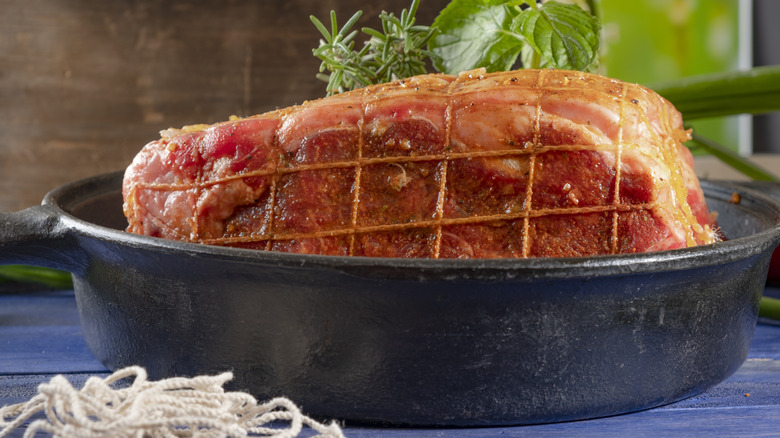
People have been roasting beef for as long as cattle have been raised for food. There are plenty of different cuts and preparations, but a standout you can find in butcher shops and grocery stores is a trussed roast. A trussed roast is bound with string to keep it in a tight package as it cooks. It's easy enough to truss your own roast, too. All you need is some butcher's twine and a little practice. If you're not familiar with the technique, you may be curious when and why you should do it at all, so we talked to an expert get to the meat of the matter.
Tasting Table asked Scott Thomas, owner of GrillinFools, what type of beef we should be trussing before cooking and why. Thomas says you want to learn how to truss a beef tenderloin because that cut has a thick end and a thinner end. "Well, if cooked whole, that skinny end will be way overcooked while the fat end is still raw. Here's where trussing is your friend," he told us.
Thomas also explained his trussing technique. "Fold maybe 6-8 inches of that tapered in back on itself and tie it off. That will make the skinny end much closer to the thickness of the fat end and allow for the roast to cook evenly," he says. "Trussing the rest of the tenderloin with tight circles of butcher's twine every couple inches will also keep the tenderloin round rather than allowing it to flatten out, which will also help with cooking evenly."
Trust in the truss
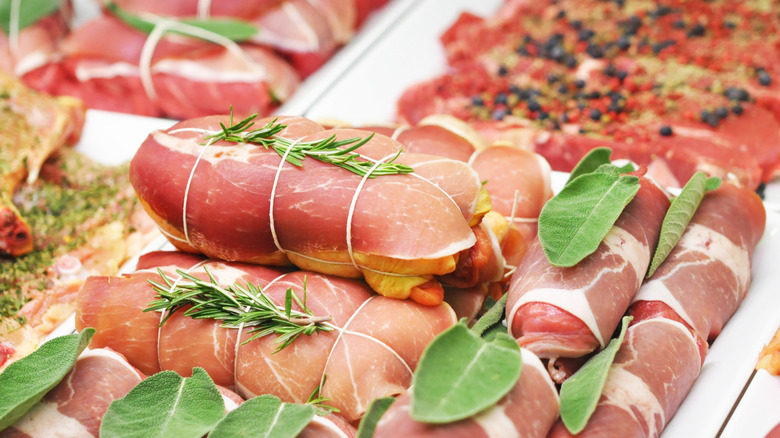
If you have never trussed a beef roast before, it can be a little intimidating to take on for the first time. This is one of those things where you just have to try it and refine your technique. Thomas recommends using a single long piece of string instead of multiple smaller ones, which require more knots. Not only will this help the roast cook evenly, but it also gives it a shape that's easier to carve when it's done. It prevents the meat from spreading and getting messier when it cooks. It's a good way to fit two roasts in the same slow cooker, too.
"Tie off the first loop at the very end of the tenderloin and then form a loop a couple inches down and run the string under the loop back toward the end you just tied off and then over the top back down toward the rest of the roast that still hasn't been trussed," he says. "Repeat until you get to the end where you tie off the last loop to close the trussing off."
Thomas makes it sound easy, but acknowledges that you may need to practice. He also has another tip that may help you out. "While some folks like to use nitrile gloves when handling raw meat, trussing a tenderloin with those gloves on is not easy. Go gloveless and just wash the paws afterward."
We have some additional tips for trussing a roast. Then you just need to follow our beef tenderloin recipe here, and you'll master the technique in no time.