

The 8 Best Non-Alcoholic Amaro Bottles Out There, According To Experts
We may receive a commission on purchases made from links.
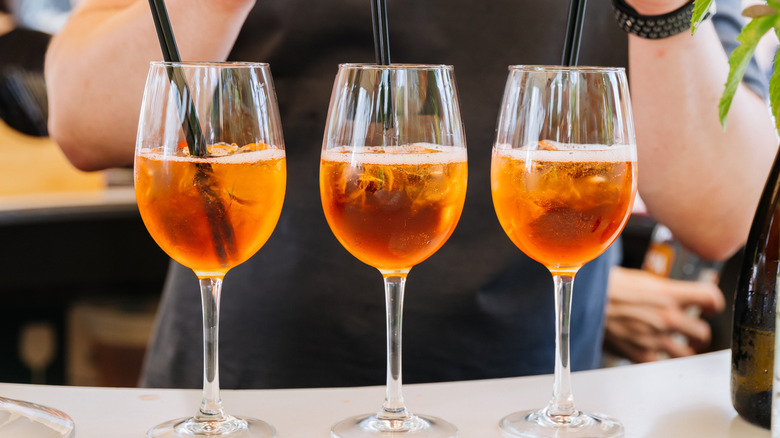
Once considered by most to be an unsung hero of the back bar, amaro is now the exalted bar ingredient that everyone wants in their glass. Built on a complex (and sometimes secret) recipe of earthy botanicals, including herbs, roots, and spices, you may be wondering if it's even possible to have a true amaro experience — intricate, aromatic, and deeply expressive — without the alcohol. Fortunately, non-alcoholic amaro is still authentically traditional, and a full-flavored way to add depth to a mocktail or to savor as a post-meal digestivo, all without breaking your Dry January resolution.
While the overall character of the Italian liqueur is bitter, there are many styles of amari to choose from, and the category has been experiencing something of a renaissance in recent years. Lots of contemporary distilleries are hopping on the amaro bandwagon, and despite the rising popularity of non-alcoholic spirits and drinks, the uptick in amaro consumption shows little sign of slowing.
Fueled by my own amaro obsession and bolstered by my lengthy experience as a bartender, I reached out to a group of expert mixologists to highlight the best picks among the lesser-known category of non-alcoholic amari. Each brings their own vision of what a successful, modern beverage program should look like, and these bartenders value specialty temperance drinks as much as their spirituous forebears, as evidenced by their respective drink menus.
Dr. Zero Zero AmarNo
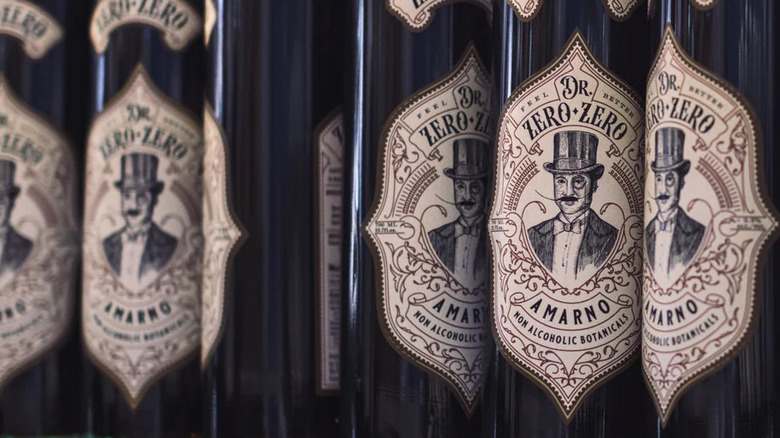
Dr. Zero Zero AmarNo is a modern take on a centuries-old Italian tradition. It's a bitter, botanically-rich amaro crafted without alcohol that retains the full, layered flavor. Launched in late 2022 in Trieste, Italy, by master "Amarologists," AmarNo honors the cultural legacy of Italian herbal digestifs while meeting the rising global demand for sophisticated non-alcoholic beverages.
Made with natural botanicals such as Chinese rhubarb, wormwood, and orange peel, the extracts are blended with water, sugar, and caramelized elements to balance its bitter notes. The result is a smooth, complex sipper that's reminiscent of Fernet-style amaro without the spirituous aftershock. That's precisely why Colleen Hughes, Beverage Director for the Tonidandel-Brown restaurant group, opts for Dr. Zero Zero AmarNo when creating temperance drinks that call for an earthier edge.
Take, for instance, the multi-award-winning mixologist's "Spirit-Free Bramble," on offer at Ever Andalo, a Michelin-recognized Italian eatery. According to Hughes, Dr. Zero Zero AmarNo is used "to add depth, complexity, and bitterness to NA cocktails, which can be a little flat on their own." Featuring blackberry syrup, basil, and soda water, the mocktail is built on a split, spirit-free base of Amethyst Botanical and Dr. Zero Zero AmarNo, although Hughes attests that the latter is the star of the show. Thanks to its profile of dark herbs, citrus peel, and earthy roots, the NA amaro imparts a structure that grips the mocktail's thinner elements without becoming a sugary distraction.
Martini Floreale
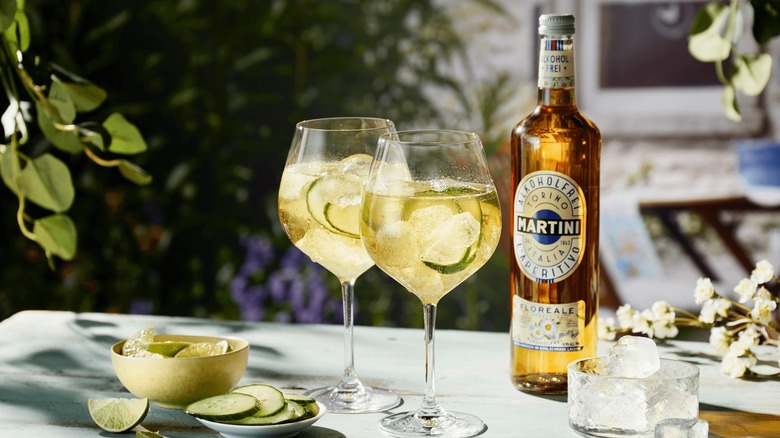
In the realm of NA amari, Martini Aperitivo Floreale offers a distinctly delicate flavor profile that sets it apart from bolder aperitivos and amari. Crafted by removing the alcohol from high-quality wine infused with botanicals like Roman chamomile, artemisia, and citrus peel, Floreale delivers fresh, floral aromatics and herbaceous notes with a gentle, balanced bitterness.
"I'm a big fan of Floreale in spritz and sour style drink builds," says Ray Tremblay, Director of Bars for COJE Management Group in Boston. "Martini Floreale really shines on aromatics. It's bright, floral, and clean, and with a gentle bitterness that stays elegant, it slots into lighter aperitivo builds without feeling syrupy."
Softer than a traditional aperitivo amaro, like Campari (which leans heavily into pronounced bitterness and herbal intensity), Floreale is also less candy-sweet than Aperol, making it especially well-suited for sophisticated spritzes and zero-proof cocktails. Tremblay expertly enhances Martini Floreale with delicate chamomile and citrus in his Bloom mocktail on the menu at Yvonne's. Served with silky, plant-based Fee Foam (courtesy of Fee Brothers), it exudes a sophistication that rivals any classic spirit-based concoction.
Figlia Fiore
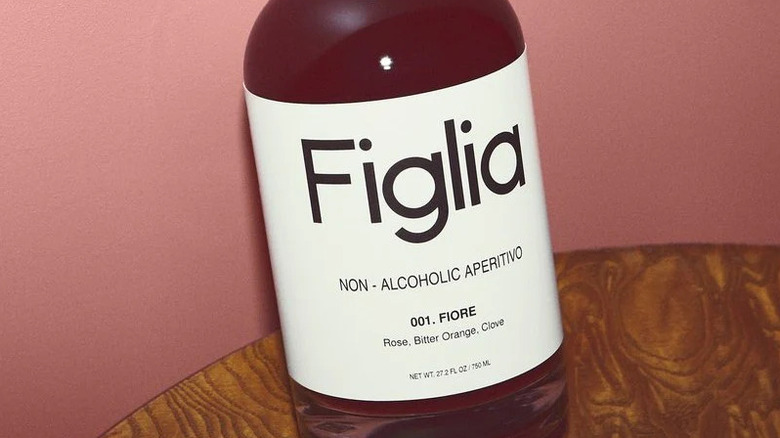
Founded by New York City native Lily Geiger in 2021, Figlia's production uses all-natural juices and botanical extracts to build flavor without adding sugar. When combined with filtered water, the blend of concentrated juices and botanical infusions creates depth and complexity reminiscent of a traditional amari. Figlia's Fiore Non-Alcoholic Aperitivo is intended to evoke lush Italian gardens and the leisurely ritual of spritz hour.
Showcasing a bitterness that's gentle and nuanced rather than sharp or medicinal, Fiore delivers a vibrant floral and aromatic character with prominent notes of rose, bitter orange, and clove. With its flower-forward layers and warming spice notes, this NA amaro sits squarely in the aperitivo camp as an ideal zero-proof alternative for refreshing, rose-forward spritzes, and for sipping over ice. That's why Sam Nelis, former Barr Hill beverage director and current owner of Specs in Vermont, uses it in his spritzes, citing Figlia Fiore's floral and rose notes as the reason for its brighter character.
Ghia Original Apéritif

Since launching in 2020, Ghia has become one of the most talked-about brands in the non-alcoholic beverage category. Soon after its arrival, Ghia Original Apéritif was named Esquire's "Drink of the Year," the first non-alcoholic beverage to ever win the award, and was featured in Vogue and Bon Appetit. While the brand's meteoric rise has reflected the growing consumer interest in mindful drinking, Ghia's sophisticated bottle design echoes the heritage of classic apéritif bottles, all while signaling a modern take on aperitivo culture — one that offers ritual and flavor without the buzz.
Rather than fermenting or distilling alcohol, Ghia builds complexity through natural botanical extracts and juices — including yuzu, lemon balm, gentian root, rosemary, and fig — without adding sugar or artificial flavors. This method creates a bright, herbaceous profile reminiscent of an authentic apéritif. According to Sam Nelis, Ghia Original Apéritif is a delicious zero-proof replacement for Aperol and similar liqueurs thanks to its pronounced orange notes, and slightly less-bitter profile.
That balance is why Nelis serves it spritz-style at Specs, his mixed-use retail space in Winooski, Vermont. Nelis' operation consists of a hybrid café, bar, and drinks market, stocked with everything from aperitivos and rare vermouths to artisanal coffee and tea – a candy store for beverage nerds and a hospitable space to geek out in.
Wilfred's Non-Alcoholic Aperitif
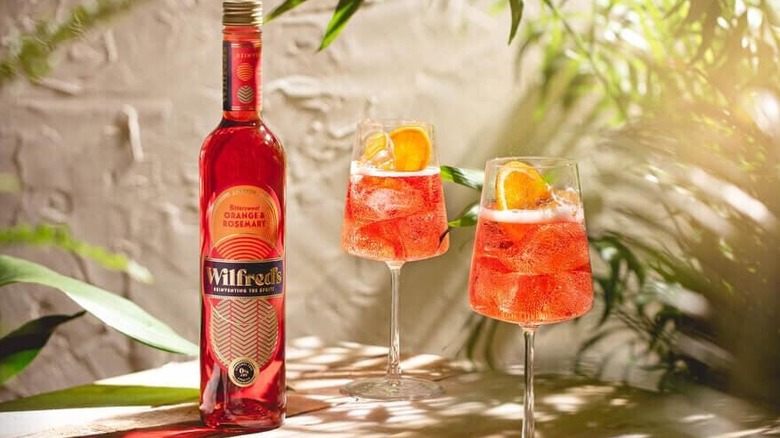
Wilfred's has earned rarefied credibility by debuting at The Savoy, the luxury London hotel synonymous with modern cocktail culture. Home to the American Bar and Beaufort Bar — widely regarded as being among the most influential bars in the world – The Savoy is where drinks like the White Lady and Corpse Reviver No. 2 were codified, and where tradition and innovation have long coexisted. Available on multiple menus at the legacy cocktail destination, Wilfred's Non-Alcoholic Aperitif makes up one-third of the "No-Groni," a non-alcoholic Negroni offered at Gallery at The Savoy. Wilfred's presence signals its seriousness as a non-alcoholic aperitif, rather than a simple NA alternative.
Featuring bittersweet orange, pungent rosemary, and earthy rhubarb, Wilfred's is celebrated for its aromatic and botanical profile, which makes it a natural stand-in for traditional bitter spirits in zero-proof concoctions. It's especially beloved in Negroni-style riffs, such as the "Negroni Sbagliato-no," where the aperitif is topped with non-alcoholic sparkling wine and complemented by alcohol-free cocktail bitters to echo the structure of a classic Negroni while remaining wholly booze-free. These adaptations show how Wilfred's bridges classic cocktail tradition with contemporary no-alcohol trends, and explains why it's been adopted by bartenders as a worthy substitute for Campari's bittersweet backbone, citrus brightness, and herbal complexity.
Lyre's Italian Spritz
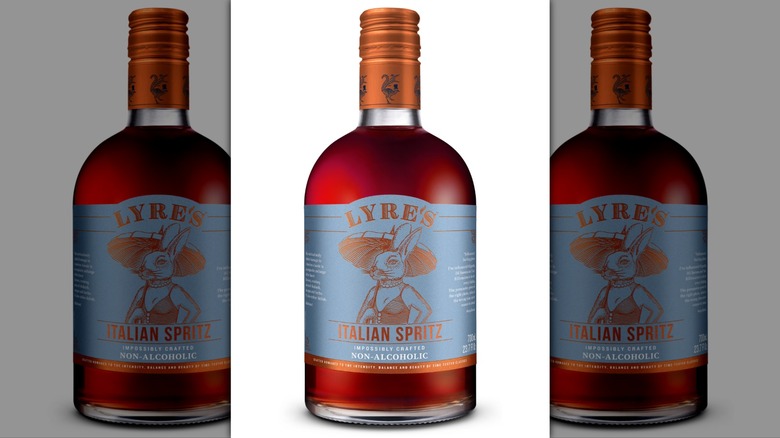
Lyre's Italian Spritz is a standout expression from Lyre's, one of the most influential and widely recognized names in non-alcoholic spirits. Its products are crafted via proprietary blends of natural essences, extracts, and distillates engineered to mimic classic spirits without the alcohol. Launched as part of Lyre's expanding portfolio of premium NA alternatives, Italian Spritz captures the bright, bittersweet charm of a classic aperitivo.
As the Beverage Director overseeing several Italian-inspired restaurants in Charlotte, North Carolina, Colleen Hughes features Lyre's Italian Spritz prominently in her beverage program, naming it her favorite NA amaro. "You can't tell it's non-alcoholic," explains Hughes, highlighting two Lyre-based mocktails in her current repertoire of NA drinks. The Spirit-Free Spritz at Ever Andalo is a relatively restrained pairing of Lyre's Italian Spritz and non-alcoholic sparkling wine, but Hughes gets molecular with the Spirit-Free Italian Spritz at Supperland. There, Hughes punches up Lyre's liqueur with acid phosphate before topping it with non-alcoholic cava, soda water, and orange slices.
Lyre's spirits have earned hundreds of awards and a dominant placement on bar menus for producing flavors and finishes analogous to their spirituous counterparts, all while containing less than 0.5% alcohol. Its genuine dependability has empowered bartenders to mix drinks that honor tradition while embracing mindful drinking, and redefining how high-quality cocktails are experienced without alcohol.
The Pathfinder
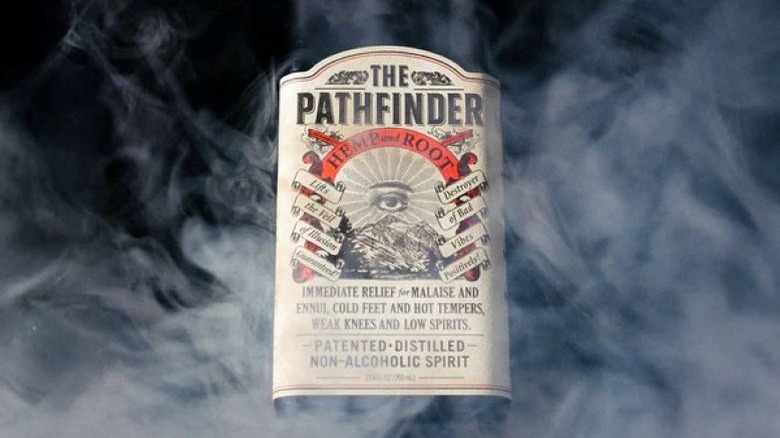
A new-age amaro from the Pacific Northwest, The Pathfinder Hemp & Root Non-Alcoholic Spirit takes the runner-up position in this list of best NA amari. Inspired by apothecary traditions and prized for its bold character, The Pathfinder delivers a slightly sweet, herbaceous bitterness akin to a classic amaro. It quickly developed a cult-like following in the bar scene, first gaining traction at acclaimed venues like Life on Mars in Seattle's Capitol Hill, before spreading to celebrated bars such as Death & Co., and Amor y Amargo. Distilled from fermented hemp in a copper pot still, and layered with botanicals including wormwood, angelica root, saffron, and orange peel, bartenders have embraced its rich, earthy profile that is on par with its alcoholic counterparts.
"The Pathfinder is worth calling out for depth and structure," says Ray Tremblay. "It can actually carry a drink in the way people expect amaro to. Outside of the amaro world, few brands are able to create complexity without falling flat." The rich flavors we associate with amaro are more easily extracted when using alcohol, and creating a flavorful and structured liquid without it is no small feat. Non-alcoholic producers essentially have to reconstruct the production process, so when it works, it feels intentional rather than imitative.
Sam Nelis is also a fan of The Pathfinder. "It's dry, aromatic, and punchy — a bit in the same world as a NA Fernet," she explains. Indeed, The Pathfinder channels the medicinal essence of Fernet-Branca, minus its mentholated heat. While Fernet is considered to be among the more polarizing styles of amaro, The Pathfinder has softer edges, balancing bitterness with earthiness, citrus, and subtle floral notes.
Amaro Lucano Non-Alcoholic

Amaro Lucano's story is one of authentic heritage and enduring reputation, so it's little surprise that Amaro Lucano NA takes first place in our roundup of the best NA amari. Boasting over thirty Mediterranean botanicals including myrtle, rosemary, citrus peel, and chamomile, Amaro Lucano NA preserves the essence of the original secret herb blend in its non-alcoholic formula, specifically designed to reflect the intense, yet delicately bitter profile of the classic amaro.
Sam Nelis applauds Lucano NA for its classic amaro flavors of chocolate, espresso, orange, and caramel, stating, "In terms of replacing a true amaro from Italy [with a NA amaro], this is as close as it gets." Ray Tremblay couldn't agree more. "If I want an NA drink to read like a real amaro-driven cocktail with depth and a firm, bitter finish, Lucano NA is the move," he says. Tremblay goes on to describe exactly what lends Lucano NA its classic amaro profile: "It's herbal, distinctly bitter, and finishes with a darker, bittersweet note that holds up even after dilution. This makes it great for stirred, spirit-forward NA cocktails as well as effervescent drinks like our coffee soda at Yvonne's." Both a champion in the world of classic Italian spirits and a respected ambassador of amaro culture worldwide, Lucano is the best in class for NA amaro bottles.