

Why Copper Kitchenware Needs A Protective Lining
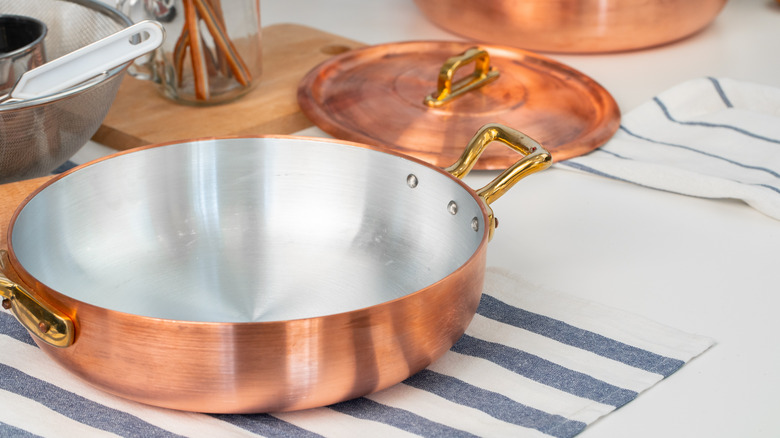
If price is no question, then copper kitchenware is often considered the best of the best. However, copper cannot do the job without a good lining. While copper is prized both for its utility and its beauty, it usually comes covered with a different type of metal for protection. In the past, it was commonly tin, and in more recent times stainless steel has become the standard — although both are still available for purchase. But if copper is such an excellent cooking material, why bother with the lining at all? It's because copper can actually leach into some foods if it comes in direct contact with them.
The leaching of copper into food happens because copper is reactive. When acidic ingredients are exposed to copper, they draw copper into the food. That's a big problem because acidic ingredients like tomatoes, vinegar, and lemon juice are very common additions to recipes, and because ingesting copper can be harmful. It's also why you shouldn't put copper cookware in the dishwasher. Yet, copper is a great cooking material because it heats up and cools down very quickly. This gives cooks incredible control, allowing them to sear at high temperatures and more easily avoid burning. Copper has the added benefit of distributing that heat evenly as well. It is so desirable that chefs looked at a metal that was slowly poisoning them and thought, "we have to find a way to make this work." And the answer was protective linings.
The linings on copper kitchenware prevent it from leaching into acidic food
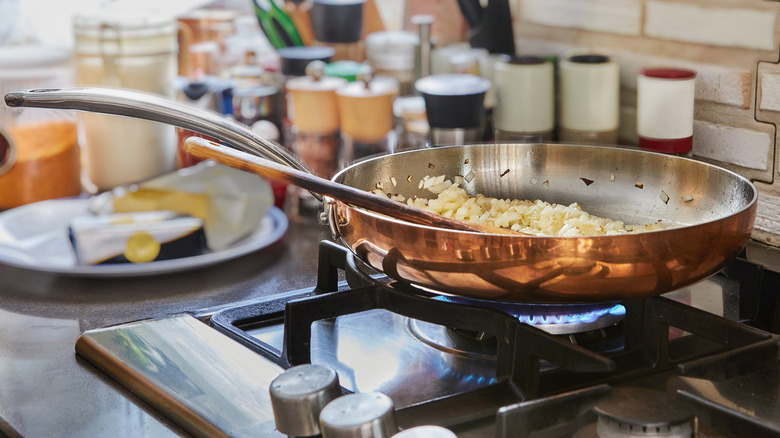
Tin was the original copper kitchenware lining because it is easy to shape and adheres to copper very easily. Beyond being nonreactive, it also happens to be naturally non-stick as well. But tin has its own issues. It has a low melting point of only 450 degrees Fahrenheit, and it is not very durable in general. Over time the tin lining on copper kitchenware breaks down and gradually exposes the copper underneath, defeating its purpose. This means tin-lined copper pots and pans occasionally need to be "re-tinned," to keep them safe, which is an added expense and hassle.
That is why stainless steel has become the standard for most new copper kitchenware. It also is not reactive and happens to be extremely durable, too. But stainless steel has its own downsides. First off, it is the furthest thing from non-stick. The stainless steel lining is also a relatively poor conductor of heat, so pans lined with stainless steel won't be quite as effective with temperature control as those lined with tin. In the end, both copper linings still have their fans, which is why you can still find each of them online. Most modern brands will be stainless steel, but some still have tin options, and vintage tin-lined copper kitchenware is also very popular with resellers and collectors. Either kind of copper kitchenware to be an expensive investment, so what's a little extra work for such a beautiful, effective kitchen tool?