

Loading Your Dishwasher This Way Is Sabotaging Every Wash
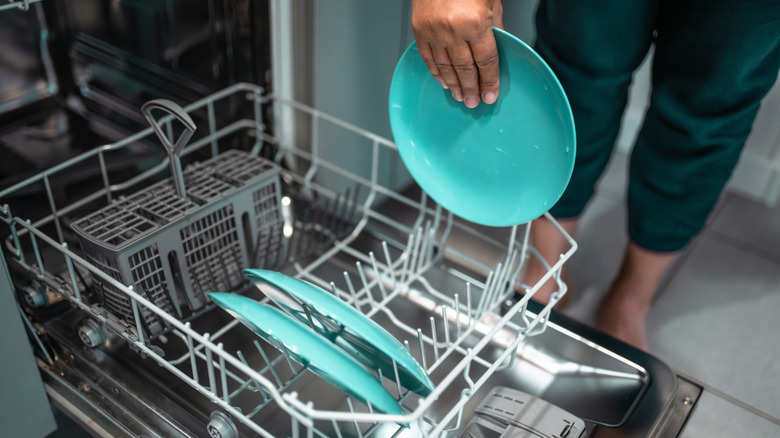
Along with the stove and the refrigerator, the dishwasher is arguably one of the most helpful appliances in your kitchen. Using a dishwasher is more efficient than washing by hand, and it can save more water too — up to 5,000 gallons per year compared to hand washing, depending on what type of dishwasher you have. But you want to make sure you're using your appliance properly to get the most benefit from it. If you notice dishes coming out dirty or food still stuck on utensils, it could be because you're loading the dishwasher incorrectly. There is a right way and a wrong way to load your appliance, and you need to make sure you're not stacking or "nesting" bowls and plates.
Nesting is what happens when you put things too close together in the dishwasher. If you don't have tines separating plates and bowls, they can fall against one another and that prevents water from getting between them. The front of one plate and the back of another will remain dirty when the wash cycle is done, and you'll have to clean them again. It's a waste of time and energy, and it can be a real frustration to deal with.
Even if dishes aren't pressed together when you load the dishwasher, water pressure can force them together if there's nothing between them. You need to make sure bowls are separated and angled down. Plates should instead be lined up evenly with tines between them, and utensils like forks and spoons should be alternated so matching items don't nest into each other.
Loading your dishwasher the right way
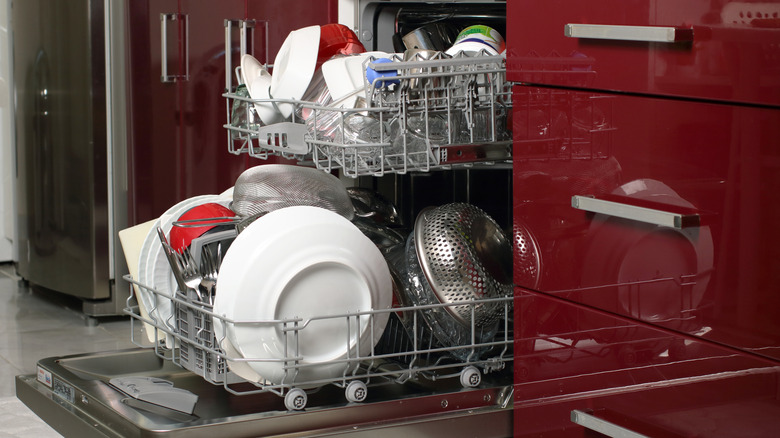
To start off, you don't need to rinse your dishes before loading the dishwasher. Scrape them, sure, but you don't need to pre-wash. Dishwashers are more effective when they actually have something to clean. If you wash your dishes ahead of time, enzymes in your detergent won't be able to react with the food residue on them, and your dishes won't get as clean as they could.
For the best results, angle dirty surfaces towards the center of the dishwasher so the sprayer arms can reach them. Additionally, don't place items over the tines. They are meant to separate dishes, not hold them in place. Water pressure can knock items around if they are placed over the tines, and they may not get clean. Make sure nothing is blocking your sprayer arms, either. This can happen unintentionally if you put an item that is too large in the bottom rack, or one with a handle that extends below a rack. If the sprayer arms can't spin, the dishwasher won't be able to properly clean the dishes.
When loading your dishwasher, always keep heavy items on the bottom rack towards the back. If they are loaded in front, they may accidentally block the soap dispenser. Use the top rack for lighter plastic and more delicate glass. Most importantly, don't try to force extra items in if you don't have the room. It's better that you leave one or two things out to clean in the sink than run a whole wash cycle and have to clean them by hand again afterward. We have some other essential tips for loading your dishwasher that you can check out, and even a few hacks to ensure your next wash cycle is a breeze.