

The Vintage Planter You Actually Need To Skip At The Thrift Store For Safety Reasons
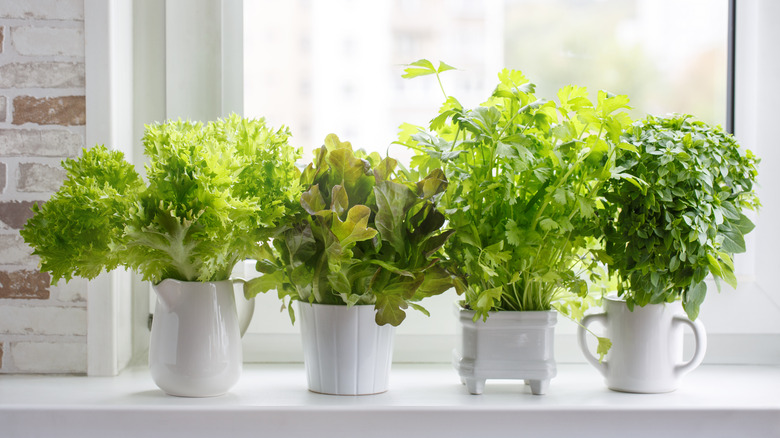
So, you're ready to start a garden in the kitchen. Yay! You've got your seeds picked out, the windowsill prepped, and now all that's left to do is find the perfect vintage planter to start growing your next batch of mint for a tasty cocktail. We're big fans of thrifting our kitchen decor here at Tasting Table, but we're also suckers for a dose of caution, which means that if we happen to spot a Willy Guhl planter at that antique shop, it's going to stay exactly where it is on the shelf.
As cute and minimalistic as Willy Guhl's planters from the 1950s and 60s may look, these retro pots are made with Eternit, a fiber-like cement material now known for containing asbestos. Guhl made a name for himself crafting planters out of Eternit, which critics praised for their unique shapes, textures, and functionality. He crafted round planters, square planters, hourglass-shaped planters, and just about everything in between, until the collection was officially discontinued in 1980 due to the revelation of asbestos.
Asbestos, in case you need to brush up, is extremely dangerous because the nearly invisible fibers can become lodged in the human body and lead to cancers, lung damage, and even skin damage — and Guhl's pieces are absolutely full of it. Even though Julia Child once baked with asbestos for extra crackly bread, it's not a material you want to keep around the house, especially not where you'll be growing herbs for consumption.
Willy Guhl's asbestos-filled planters can be a huge danger
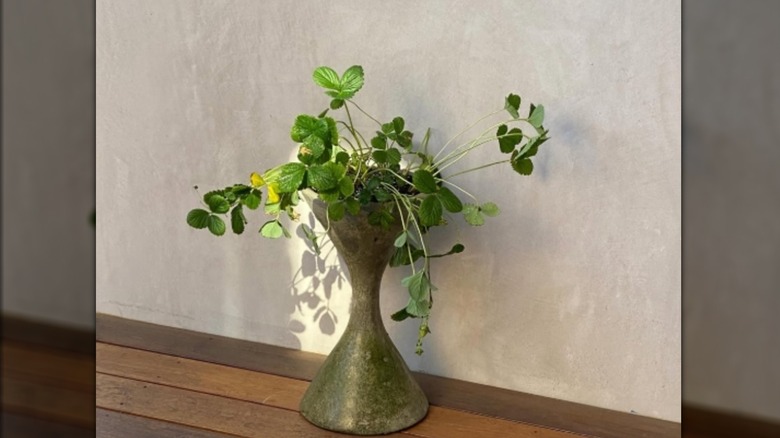
Willy Guhl's pieces pop up in various thrift stores and resale websites, even if these 16 vintage kitchen brands are truly the ultimate thrift store find. Some auction sites show the uniquely-shaped (and totally unmistakable) planters going for as much as $2,400, while other sites show smaller planters going for around $280. But, interestingly, not every resale site mentions the risk of asbestos in the pieces. Although there have been no official, worldwide recalls on the collection, the danger of Guhl's planters is so serious that some foreign nations, such as the European Commission and the Dutch government, issued risk warnings about owning and handling Guhl's pieces.
If you come across one of Guhl's planters, it's probably wise to skip out on the purchase for your own safety. Now, if you see a cast-iron skillet at the thrift, among these 10 vintage kitchen tools that can be worth a fortune today, that's something you won't want to leave behind. If you already own one of the asbestos-containing planters, you'll want to properly dispose of it, especially if the planter is chipped or cracked, since asbestos is most dangerous through inhalation exposure. Don't burn the pot or toss it into the regular trash bin, as this can create an even bigger hazard for you and your neighbors. Due to the nature of the material, the planters will need to be handled at specific landfills that are equipped to deal with hazardous material, which you can find in your area through a quick Google search.