

Homemade Grape Jam Is Nearly Effortless With This Slow Cooker Technique
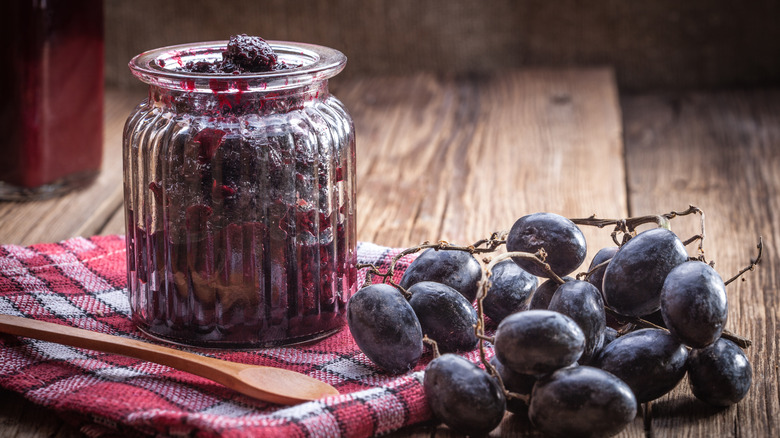
If you've ever had a grape arbor in your life, or you're a smart shopper looking to cash in on the low prices of the high season, you've probably faced the "problem" of an abundance of grapes. Grapes ripen in a short window of time, and they're fragile, so they don't wait patiently. Preserving a fleeting harvest is what jam was invented for, but grape jam can easily get messed up on the stovetop. Grapes are naturally very high in sugar and relatively thin-skinned, which means traditional jam-making requires a watchful eye. As the hot mixture reduces and the water cooks off, the sugars concentrate and the jam gets progressively jammier and denser, and the temperature at the bottom of a pot can rise fast enough to scorch before the jam thickens properly. You can't exactly see what's happening down there, and a distracted moment can lead to a charred pot and a ruined batch.
But jam doesn't actually need high heat to set; it mainly needs steady evaporation to concentrate the sugars, and to get to 220 degrees Fahrenheit to activate the pectin. A slow cooker, by design, keeps temperatures low and consistent, way below the point where the grape jam's sugars could caramelize or burn. Over several hours, the excess water from the fruit will evaporate gently and the jam will thicken perfectly, without constant stirring or babysitting.
To make grape jam in a slow cooker, add your de-stemmed, washed grapes directly to the crock, and crush them slightly to release their juices; you can use your hands (fun!) or a good potato masher for this part. Then just turn the cooker to low and let time do the work. As the fruit softens, the skins will break down and the mixture will slowly thicken.
Jelly, jam, and more
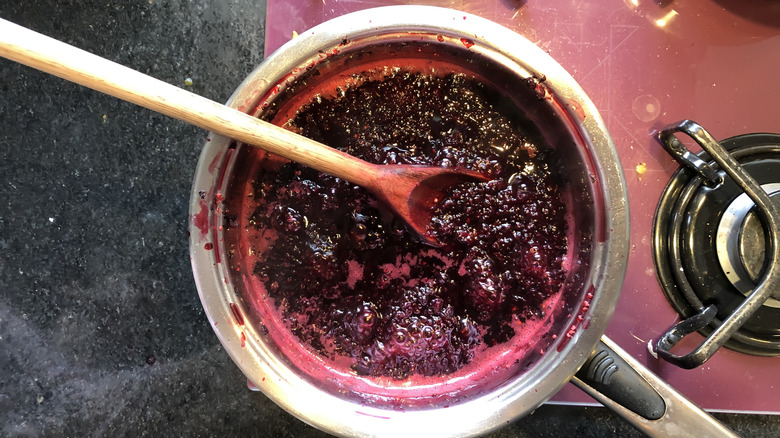
Because grapes already contain natural sugars and pectin, adding more sugar is optional. Store-bought grape jam usually has tons of sugar added, and it does help preserve it if you're planning to home-can, but grape jam doesn't actually need it if you're going to keep it in the fridge or freezer. Many slow cooker versions rely solely on the already-quite-sweet fruit itself, sometimes suggesting a squeeze of lemon juice to balance the high sweetness and some lemon seeds to support thickening by activating the pectin in the jam. If you prefer a sweeter jam, you can add your desired sweetener toward the end, once you can taste where the jam is heading. The longer it stays cooking in the crock, the more water evaporates, the more the sugars will concentrate into a sweeter end result.
Regarding texture, you've got options, and your choice may influence the name of your creation. First, you'll probably want to do the spoon test to check that the homemade jam is done. Then, decide how much more processing you want to do. Leaving the skins in will give you a more rustic jam, or you can blend briefly (once it's cool! Hot jam can be a bit dangerous) for a smoother spread, or strain completely if you want something closer to jelly. Unlike stovetop jam (which is still a fun project, just a little more hands-on), this method is hard to ruin. There's little risk of burning, and if the flavor drifts too far in intensity, the finished product can easily be repurposed as a glaze or even a smoky-sweet base to something unexpected, like meatballs or brisket. This low heat application leaves room to adjust, which is exactly what makes this method "nearly effortless."