

The Trick To Juicy Pork Chops Without Brining
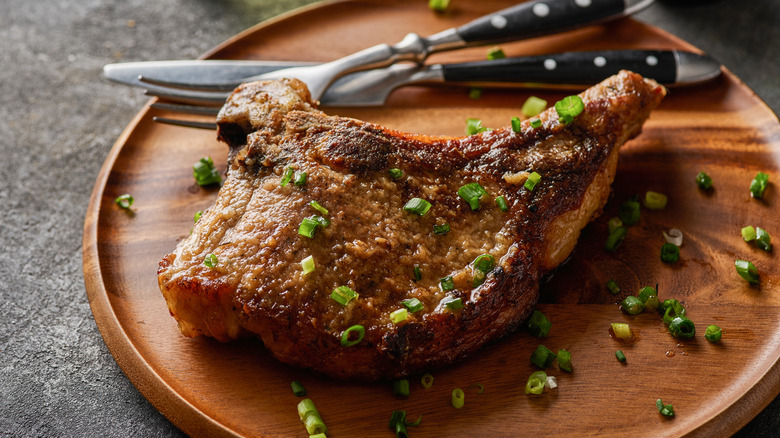
Most of us know that it's worth it to brine pork chops ahead of time, as brining meat (and sometimes even thick fillets of fish) in either a wet or dry brine can help the meat retain moisture during the cooking process, as well as add more flavor. In an ideal world, we'd all be brining most meats long before cooking them, but in reality, there isn't always time to let meats sit in a coating of salt overnight in your refrigerator. We spoke with Chef John Politte, founder and host of It's Only Food, about the best way to keep pork chops tender and juicy without brining them beforehand.
Chef Politte starts by telling us that if you haven't had a chance to brine your pork chops ahead of time, encasing the chop in a breaded crust before searing then oven-baking the chop is your best bet. "This technique ensures a crisp, flavorful crust while gently finishing the pork chop without overcooking, resulting in tender and juicy meat," says Politte. To start, Politte shares his tried-and-true blend for encrusting pork chops, which includes panko breadcrumbs for a crispy, light texture, grated Parmesan for savory depth and a browned crust, minced fresh herbs like rosemary and thyme for aromatic notes, garlic and onion powder to boost umami, a bit of smoked paprika, and, of course, salt and black pepper. "To help the crust adhere," explains Politte, "first dip the pork chops in a mixture of beaten egg and a splash of buttermilk or Dijon mustard."
Resting the meat is key to juicy pork chops
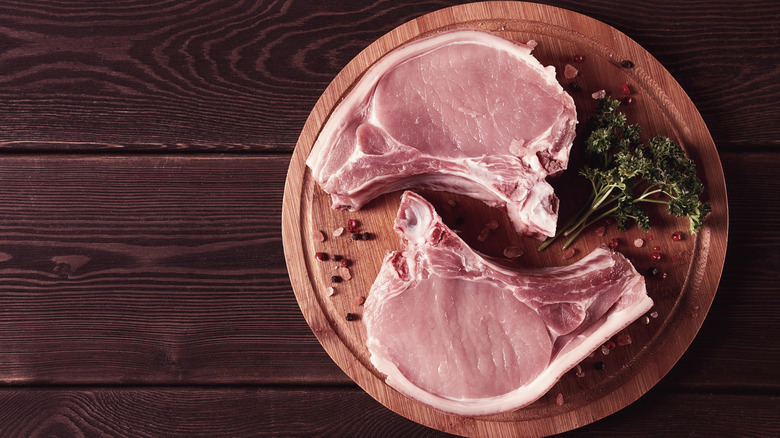
To cook those perfectly-crusted pork chops, chef John Politte recommends searing then baking the chops — what he refers to as the "pan-to-oven method." To start, Politte tells us to preheat the oven to 400 degrees Fahrenheit, and then to "heat a heavy skillet over medium-high heat and add a small amount of oil." Once the skillet is hot, sear the chops until you get a nice golden brown crust, about two minutes on each side. From there, "transfer the skillet to the oven and bake for 6–10 minutes, depending on thickness, until the internal temperature reaches 145 degrees Fahrenheit," Politte directs. But be sure to let the crusted chops rest for about five minutes before slicing so they stay juicy inside, as resting allows the internal juices to redistribute. Politte says that "this technique ensures a crisp, flavorful crust while gently finishing the pork chop without overcooking, resulting in tender and juicy meat."
In terms of mistakes to avoid if you can't brine your pork chops, there are a few Politte warns against, like overcooking at low temperatures, constantly flipping the meat, or piercing the meat with a turning fork. He also advises letting the meat come to room temperature for a bit rather than cooking the meat straight out of the refrigerator. Overall, Politte recommends you "sear over high heat, rest the meat, and avoid slow-cooking, excessive handling, and piercing for the juiciest results."