

7 Tips To Make Restaurant-Quality Crab Cakes At Home
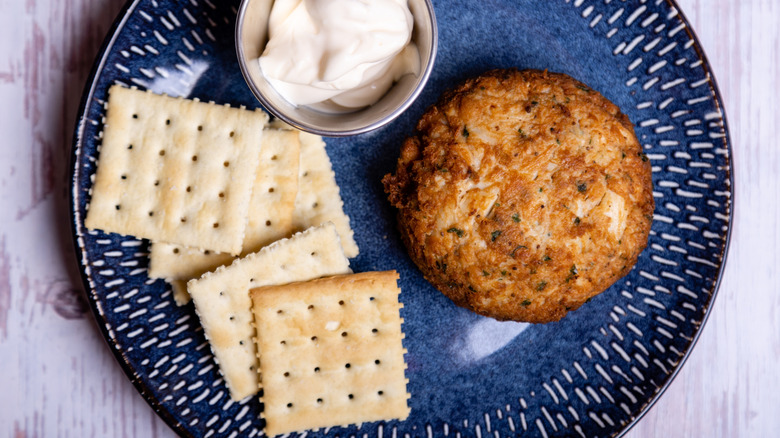
"Crab cakes and football, that's what Maryland does!" For any Millennial who grew up around the Chesapeake Bay, that line, delivered by Carson Elrod's character in the 2005 comedy "Wedding Crashers," is like a biblical passage. Although the success of football teams from the state waxes and wanes, the pride of being the region of origin of crab cakes will forever belong to the Old Line State. That said, the deliciousness of this dish has long since spread far and wide across the country, and these days, it doesn't matter whether you're in Maryland, Louisiana, the Carolinas, or your own kitchen: Good crab cakes can be cooked anywhere — as long as you know what you're doing.
Therein lies the problem. From the outside, crab cakes look like a simple, intuitive thing to put together. However, they are deceptively difficult. Without the right ingredients, techniques, and timing, it's far easier to end up with a lumpy mess than a crisp and golden-brown delight. As someone who has had their fair share of failure (and eventual success) preparing crab cakes, it's always best to take advice from an expert, which is why I touched base with chef Dan Witwer. While he may not be Maryland-based, Witwer's experience as the executive chef of The Darling Oyster Bar in Savannah, Georgia, suggests that he knows a thing or two about working with seafood.
Start with high-quality crabmeat
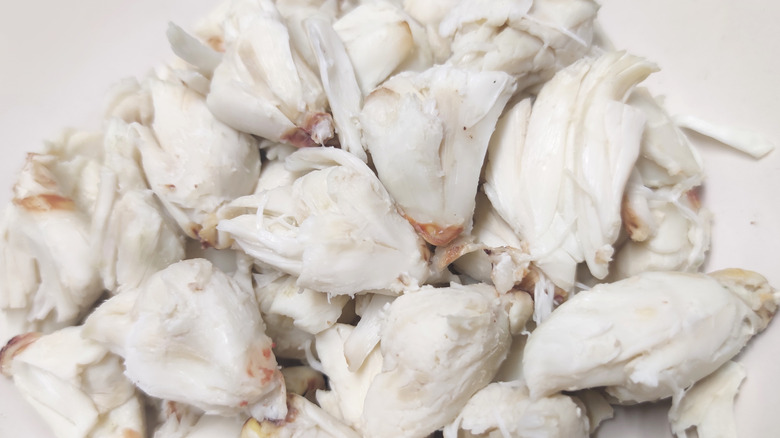
The most important choice you'll make with your crab cake is the type of meat used to fill it. Realistically, it shouldn't be much of a choice at all. "I always opt for the larger jumbo lump," says chef Dan Witwer. "You get what you pay for and the product is ideal for a dish like this."
There are a number of things that make jumbo lump crab the best ingredient for the job, but it comes down to the fact that it is the meatiest option you can buy. Jumbo lump is harvested from the muscle attached to the crab's swimming legs, and should appear in unbroken, compact knobs that are white in color. Tender but firm in texture, jumbo lump has a delicate flavor that, when fresh, tastes oceanic and slightly sweet without smelling fishy. It's those qualities that make it superior for crab cakes, as it will give you a meaty bite that focuses your tastebuds on the seafood, rather than any filler.
Because jumbo lump can be expensive, (ranging anywhere from $50 to $100 for imported crab), you may find yourself enticed to use a less-premium grade. In that case, lump crab meat would be the next best option. Jumbo lump and lump are different grades; the latter consists of broken pieces of jumbo lump mixed with other body meat. Lump meat is significantly less expensive, and in some Marylanders even swear that it holds together better than jumbo. Regardless, make sure your meat is fresh, rather than canned. "I also suggest going through the meat, even if it's pre-cleaned, to look for stray shell pieces," Witwer says.
Handle the crab gently
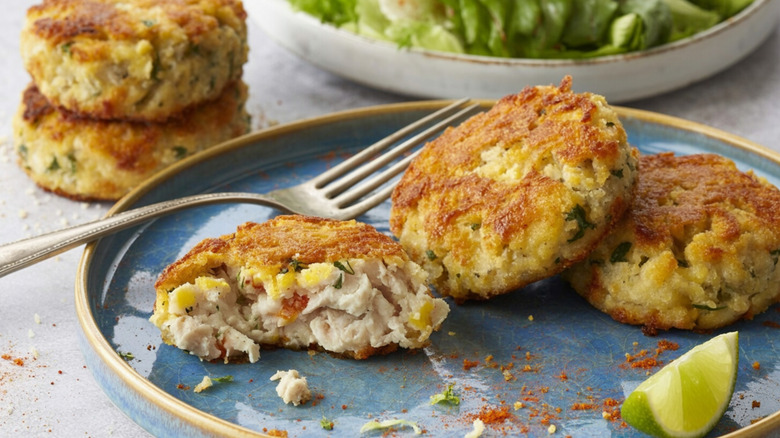
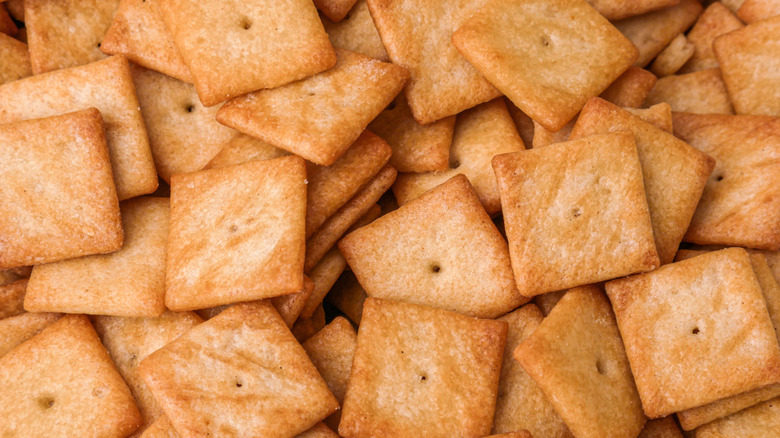
Once you have your meat selected, you'll need to add other ingredients to make a true traditional Maryland crab cake recipe. Breadcrumbs or saltine crackers as well as dry seasonings (more on that later) are integral. Your recipe may also call for wet ingredients like egg, mustard, or Worcestershire sauce; there are plenty that use heavy cream or half-and-half, while others use mayo. Though the added components of this recipe are minimal, it's important to stay focused first and foremost on the crab. The meat is delicate, and if it falls apart, then the jig is up.
Talking about how the sausage, er, crab cake gets made, Dan Witwer reminds us that "gentle handling is important." To guarantee that the physical integrity of your lump meat is preserved, Witwer's simple tip is to cordon off each ingredient in its own space, thereby making sure nothing gets mashed together. "I will have three separate mixtures when making my crab cakes: my wet ingredients, dry ingredients, and the crab meat." Only after the first two are mixed does Witwer recommend folding in the crab meat.
"Your crab cake won't have the same consistency and texture if it is overmixed," he says. "While you do want to make sure your dry and wet ingredients are completely mixed, the crab should still be intact in lumps."
Be cautious with the amount of binder
One thing that crab cake connoisseurs know well is the disappointment of visiting a restaurant, ordering a crab cake platter or sandwich, and getting a bite of something that has much more crunchy breading than succulent seafood. Binders do play a crucial part in keeping everything together, but they should never make up the majority of your crab cake.
The binder you choose depends on which style of crab cake you want to make. Louisiana-style crab cakes, for example, will sometimes include breadcrumbs or even cornmeal to hold things together. Maryland-style crab cakes aren't entirely devoid of fillers either, especially if you're going for a deep-fried, boardwalk-style crabcake. At the end of the day, what you use to hold your mix together depends on trial and error, and the ingredients you have at hand.
Dan Witwer recommends testing for texture before you toss in all that pricey crab meat. "To determine if you have the right amount of binder, make a sample cake before folding in the crab meat — is your mix too dry? Too wet? Once right, you can add the crab and form your cakes."
Keep in mind that the ratio may change, depending on other ingredients you've added. There are recipes out there that urge home cooks to use bell pepper, celery, or even potatoes. While there's never a wrong or a right when it comes to satisfying your appetite, there are traditions to keep in mind.
Season with restraint and intention
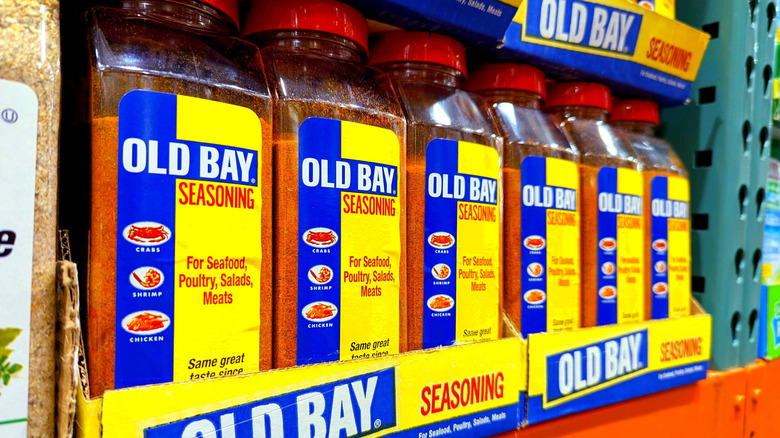
At the end of the day, how you season your crab cake is always going to be a personal choice. With that in mind, seasoning is one way that you can affirm your dish's identity, especially if you're interested in lining said flavor up with a certain style or regional preparation.
If you're going for an authentic Maryland crab cake, then there's one spice that you can't pass on: Old Bay. Old Bay has an interesting history and a popularity that is intimately tied to crabs. It was shellfish purveyors who first gave the savory seasoning a shot, long before it was an iconic part of Maryland's food culture.
By using Old Bay, the mix of cinnamon, cayenne, celery, paprika, and a host of other unnamed spices creates a warming taste that grounds crabby sweetness in smoldering earthy flavors. Alternatively, another Maryland spice you could consider is J.O. seasoning. It has a profile that's similar to Old Bay, albeit slightly saltier and with a bit more punch. Just make sure you grab J.O. No. 1. The No. 2 seasoning, while great for steaming crabs, has large flakes that will make your crab cakes crunchy and almost gritty. All things considered, you should aim for about 1 tablespoon of seasoning spice per half-dozen crab cakes. Outside of your spices, other common ways to flavor crab cakes include squirting Dijon mustard in your wet ingredients, adding the umami tang of Worcestershire, or a incorporating a handful of freshly chopped parsley into the mix.
Chill the mixture before forming the patties
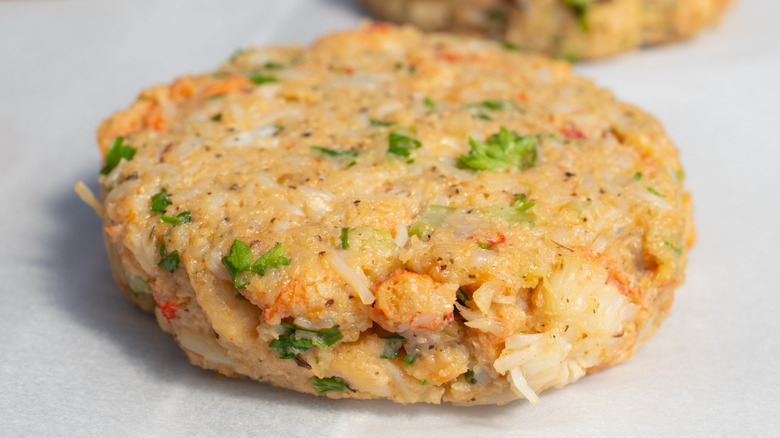
With your crab cake ingredients now combined and spiced, you might be tempted to move right into cooking. At this stage in the process, though, to rush would be a drastic mistake. Along with food safety concerns, applying heat to your mixture without giving it some time to rest would result in your crab cakes falling apart before they ever reach your fork.
"Temperature will [affect] the end quality," says Dan Witwer. "If it is too warm, the mixture won't set correctly." As with many things in cooking, excess moisture can be the enemy of a well-finished product. When you chill your crab cakes, you allow the binder to do what a binder does, which is absorb some of that moisture in order to set and hold. Also, as your crab cakes chill in the fridge, the fats will solidify, helping the ingredients stay together when they are inevitably cooked.
So, how long should you chill your crab cakes for? While one hour can do the trick, it's safe to keep them in the fridge for up to 24 hours before cooking. For the planners among us, that means that your crab cakes can actually be prepped far in advance of cooking, which can free up your attention if you planned on serving them at a dinner party.
Pan-fry your crab cakes for an ultra-crisp texture
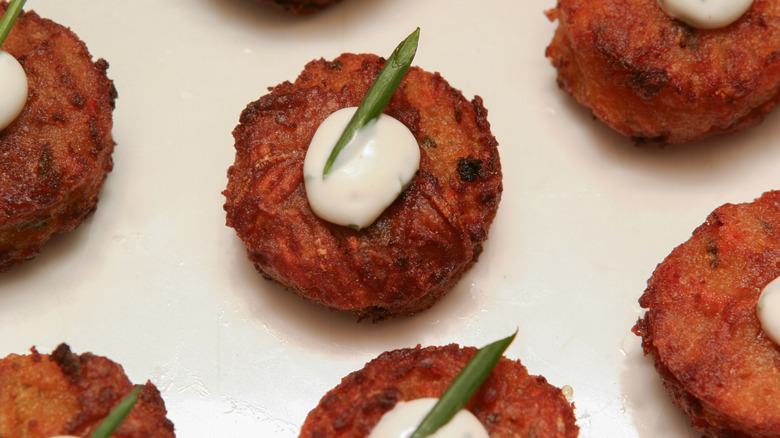
Before you can cook your crab cakes, there's a final decision to make: How are you going to cook them? If you want something that cracks, crunches, and crumbles, then frying is the way to go. "Personally, I like to pan fry my crab cakes for ... a more controlled cooking experience," says Dan Witwer.
If you've coated the crab cakes in panko, breadcrumbs, or anything else, you're making what's akin to boardwalk-style crab cakes. They're often deep-fried, but pan-frying is a more ideal technique for home cooks (and makes the cakes more in line with restaurant-style crab cakes).
Take some time to make sure your mix is properly bound before you fry, says Dan Witwer. "Best practices in my opinion are making a sample cake before committing to the entire batch to make sure all the ratios are correct," he says, recommending a neutral oil — like canola or soybean — for cooking. When frying crab cakes, reaching proper temperature is imperative. Since your crab meat is technically already cooked, the goal is to have the center warm slowly while the crust develops a uniform golden color. Heating your oil to between 350 and 375 F will get your cakes to where they need to be.
Broil for a lighter, more traditional finish
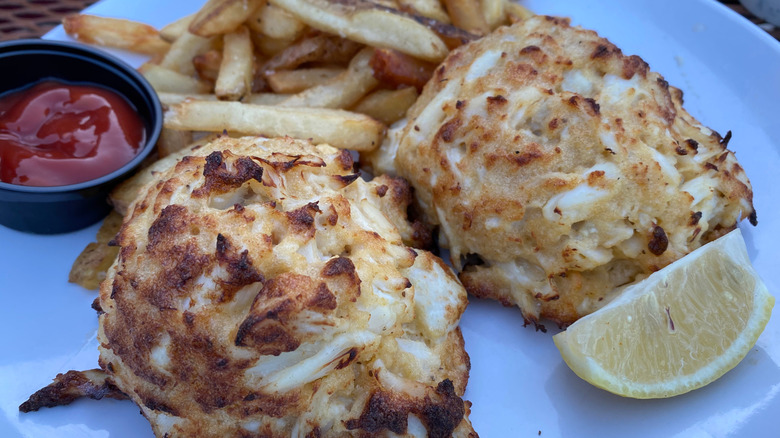
Broiled crab cakes bring something different to the table. Broiling is different than baking in that it uses high, direct heat — 500 F or more — to bear down on your dish, creating a seared, friable finish without having to soak your crab cake in oil.
"I'd say broiling crab cakes is a regional thing," says Dan Witwer. In Maryland, it's widely agreed that broiled crab cakes are top of the line, and are what you'd want to aim for if you're looking for a restaurant-quality finish. Still, it is easy to stumble into common pitfalls with this technique. The most regular one? "It may get too hot and not cook evenly," says Witwer.
Broiled crab cakes require your full and undivided attention. You'll want to have the broiler set between 400 and 425 F. Using a stainless-steel, cast-iron, or other type of oven-safe pan, keep them in the oven and under heat for no more than 15 minutes total, flipping halfway through, but also keep in mind that they can cook in as little as four minutes per side. If your crab cakes begin to burn, move them to the next oven rack down. A pat of butter on top can ensure a golden finish.
All in all, if broiling seems too finicky of a technique for you, a well-baked crab cake can yield a similar texture. The lack of direct heat will not yield the same crusted finish, but it will allow you a bit more flexibility to step away from the oven, as well as cook larger batches simultaneously.