

These Familiar Grocery Chains Are Actually Owned By Kroger
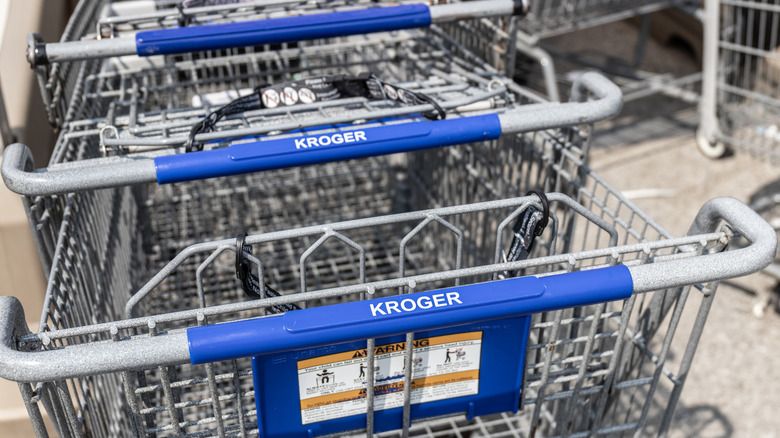
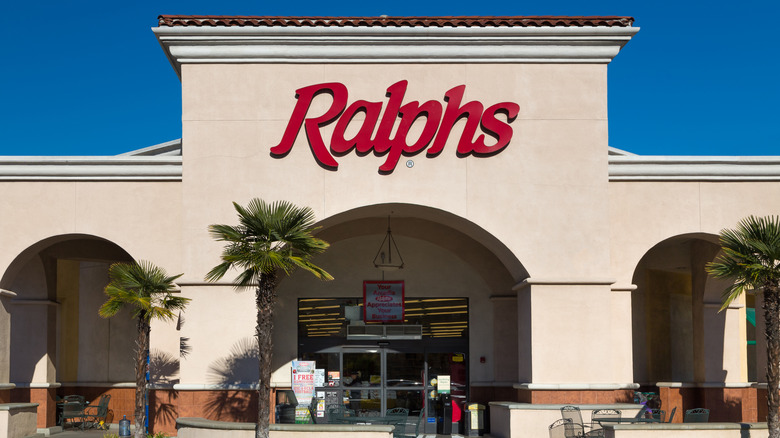
Walk into a Ralphs supermarket in California or a King Soopers in Colorado, and you might get a feeling vaguely familiar to shopping at Kroger. The signs are different, the store layout isn't quite the same, and local products mingle with store-brand ones — but the shopping experience still has a Kroger-ish ambiance. There's a reason for that, and you might not like it. About 20 favorite "hometown" regional grocery brands across America are actually part of the same huge Kroger family. The corporation is not only the oldest grocery chain in the U.S. but also the largest grocery operator in the country, with thousands of retail stores across 35 states and D.C..
Some of the most recognizable Kroger-owned chains include Fry's in Arizona; Smith's in a smattering of Western states; Fred Meyer and QFC in the Pacific Northwest; Ralphs and Food 4 Less across California; and Dillons in Kansas. Then there's the roughly 100 supermarkets in Wisconsin under the Pic' n Save and Metro Market banners.
In practice, Kroger uses all those banners to "stay local" in very different regions, while still operating as one national business. That's what allows your neighborhood store to keep its identity even though they're part of a much bigger machine. The shared benefits across all these smaller stores become evident in things like sourcing, distribution, private-label products, and support for retail operations such as in-store pharmacies, digital platforms, fulfillment centers, fuel and EV charging stations, and lots more that customers don't necessarily see.
The failed mega-merger leading to grocery store closures
All that coordination and benefit-sharing sounds good for the formerly independent grocery chains as well as for Kroger — seeming a win-win scenario all around. But when it came to taking its biggest step ever, which involved Kroger's bid to merge with Albertson's, a federal judge brought that deal to a screeching halt. The mega-merger deal was valued at about $24.6 billion, presented as a fair way for supermarkets to compete with giants like Walmart, Costco, and Amazon.
But regulators and a group of states pushed back super hard, warning that as a combined company, Kroger and Albertson's could annihilate competition and raise prices at will in the smaller local grocery markets. With Kroger and Albertson's collectively operating more than 5,000 grocery stores and employing about 700,000 people, it was an insurmountable sticking point when challenged by the FTC, employee unions, and several states.
Kroger and Albertson's eventually ditched the proposed merger. But the fallout was significant, with consumers paying the price by the closure of many Kroger-operated supermarkets. By June 2025, they announced the pending closure of up to 60 stores over the coming 18 months, spread across officially undisclosed locations. But reports show the closures are slowly unfolding, with Kroger-owned banner stores shutting down in at least 11 states. It's considered an impactful contributing factor to the recent wave of grocery store closures, which include not only the Kroger family of stores but also ones operated by Safeway.