

The Last Ingredient To Add To Red Pepper Soup For A Thick, Luxurious Finish
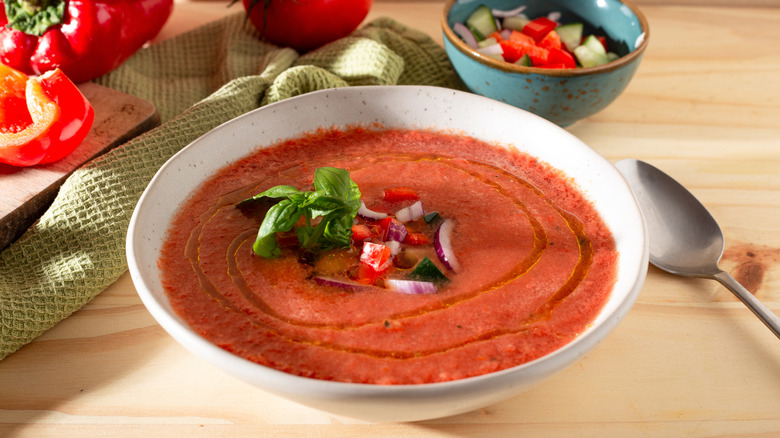
Blended vegetable soup recipes can be deceptively simple. But, there's still an art and a science to getting your bisque to be its best, even if you ultimately call in centrifugal force to bring it all together. In this blended Hearty Red Pepper Soup recipe, by the time the veg, aromatics, and broth have softened and been puréed, the soup is technically "done," but it can still taste a little thin or sharp. Cooked down red peppers impart a balanced sweetness and acidity, with a slight undertone of earthy, vegetal bitterness, and blending amplifies those edges. What the soup needs at that point isn't more cooking, but a change in viscosity.
That's where coconut milk comes in. Full-fat coconut milk thickens a soup not by starch or reduction, but with a high fat content and suspended solids. When stirred in at the end, it increases body, smooths out acidity, and gives the soup a more even, luxurious mouthfeel without turning it greasy. Compared to heavy cream, coconut milk holds its own in vegetable-forward, slightly acidic soups like red pepper. Cream can curdle as it warms, while aromatic coconut milk brings substantive, rich sweetness that "goes" with the flavors of the vegetables. Coconut milk isn't made better by prolonged heat. If it's simmered hard or boiled, it can separate slightly and lose its silkiness, the sugars can start to overcook or burn, and the flavor disambiguate into the broth, becoming flat.
How coconut milk elevates this soup

In the recipe, the soup is fully cooked and blended first, then finished with coconut milk off direct heat, which allows the soup to thicken while staying smooth and cohesive. When you add coconut milk at the end of a blended vegetable soup, the nature of the fluid changes chemical composition, not just because of the fat and flavor, but the viscosity, and as you stir it in, you see the thin purée start to become more of a spoon-coating texture, which is what really takes it from a savory smoothie to a satisfying soup. The stronger coconutty notes mellow into the background, especially when paired with spices like cumin, coriander, or smoked paprika, which the recipe calls for.
For the best results, use full-fat canned coconut milk, shaken well before opening. "Light" coconut milk doesn't have enough fat to meaningfully thicken a soup. You don't need much, so start with a small pour or scoop, stir, and assess. The goal isn't to turn the soup white or tip too far into an overtly coconut-forward flavor profile, but to give it weight and cohesion. Stir gently so it incorporates without breaking.
This technique isn't limited to red pepper soup. Coconut milk works the same way in carrot-ginger, tomato, pumpkin, and squash soups, pretty much anywhere a blended vegetable base tastes incomplete and needs a little something. With this method, coconut milk is a finishing adjustment rather than a main ingredient. Added last, coconut milk does exactly what you want it to do, which is to round out and finish the soup.