

Robert Irvine's Extra Steps For Perfectly Golden-Brown Ribs
We may receive a commission on purchases made from links.
There's something deeply rewarding about making a rack of ribs at home. Sure, you could go to a barbecue restaurant and trust a pitmaster to make them for you, but do it yourself and it's like hitting the carnivore's jackpot. Chef Robert Irvine, known for his beefy arms and even beefier recipes, has perfected a succulent homemade dish of baked and deep-fried ribs with a simple technique. The best part? All you need is some plastic wrap and aluminum foil.
To achieve tender, juicy perfection, chef Irvine's crispy fried pork spare ribs recipe involves wrapping a rack of ribs tightly in plastic wrap, then in aluminum foil after they've been seasoned and have had time to rest before oven cooking. But the plastic! Won't the heat from the oven melt it? In short, no. In a similar rib recipe for Food Network, Chef Irvine specifically notes that at 225 degrees Fahrenheit, the plastic wrap won't get hot enough to melt.
Irvine isn't the only proponent of this method. The consensus is that for fall-off-the-bone deliciousness, this oven-cooked method of ribs that are double-wrapped in a protective coating is the answer. For extra peace of mind, pick heavy-duty plastic wrap (like this BPA-free 2000-foot long Pami brand from Amazon), and extra strong aluminum foil to avoid direct heat exposure to the plastic. Some folks also advocate using parchment or baking paper instead of plastic wrap if it worries you, but it's unlikely to provide such a tight wrap.
Double wrapping makes for the most tender ribs
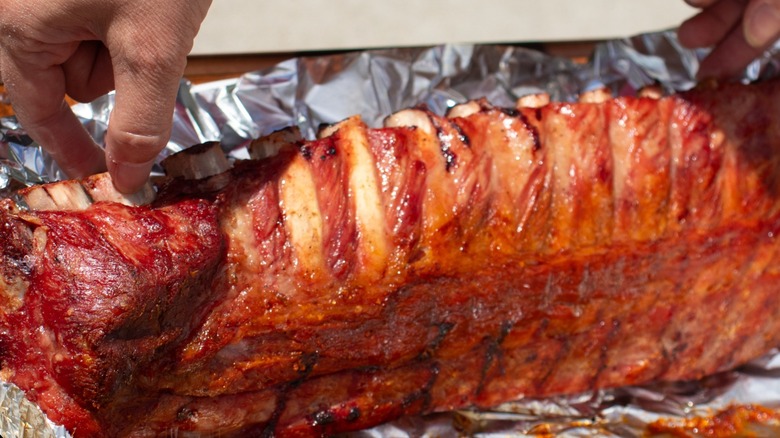
As with so many things regarding cooking, the reasoning behind the plastic wrap and aluminum foil method comes down to science. The plastic wrap essentially acts as a steam bath, wrapping the ribs tightly and keeping all the moisture inside, almost like a sous vide method without the water bath. As the meat steams, the collagen is broken down, resulting in tender, fall-off-the-bone meat. The second line of defense is in the aluminum foil, which acts as a heat protectant, ensuring the temperature remains constant throughout.
After wrapping the ribs in plastic and foil and letting them cook low and slow in that Irvine-approved 225 degrees Fahrenheit oven for about three hours, take the meaty package out of the oven, allow the ribs to cool down, and remove them from both layers of wrapping. Irvine then suggests cutting the rack into double rib sections, before giving them a quick dredge in a flour, corn meal, and your favorite spice mixture for a flavorful coating before dropping the cut ribs into a 360 degrees Fahrenheit deep fryer. Let the ribs fry for three to four minutes, which will give the outside a crisp, deeply golden brown crust.
If you're still not convinced about that plastic wrap method, allow the internet to ease your mind. One Redditor in the r/AskCulinary subreddit uses the plastic and foil wrapped method. They note that it's their go-to for pre-cooking ribs berfore grilling. "I do it all the time. A really low oven...for about 2 hours. Then unwrap and let the charcoal flames kiss the ribby goodness. They always fall right off the bone."