

The Taco Shop Tortilla Red Flag We Just Can't Ignore
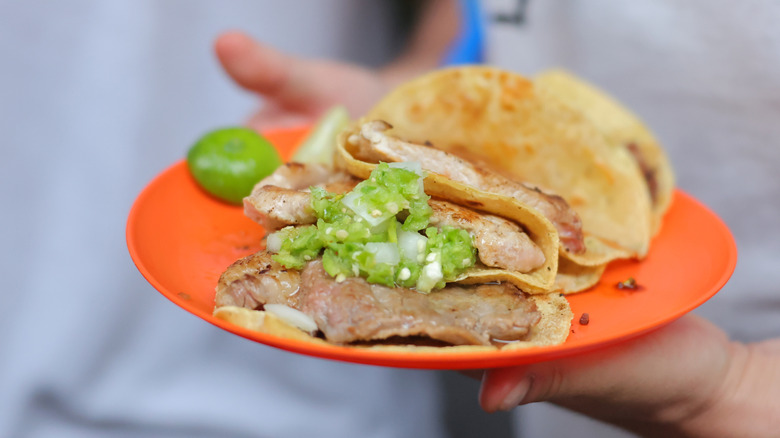
Depending on where you live, you may have a lot of options when you head out for tacos. You can go for something with mass-market appeal like Taco Bell, head to a local Mexican spot, or even visit a street vendor for something a little more authentic. No matter where you go, the basics of a taco should be pretty much the same. There's a tortilla filled with a main ingredient and topped with garnishes. Since tacos are very simple, this means each part needs to be as good as it can be. Unfortunately, too many places focus on the fillings and toppings and ignore the tortilla. If you're at a taqueria that's using shelf-stable tortillas out of a bag, you might want to think twice about eating there.
When we talked to Rene Valenzuela about taco shop red flags, shelf-stable tortillas were by far one of the big ones for him. At his restaurant, Rene's Mexican Kitchen in Florida, he has fresh, nixtamalized tortillas brought in regularly to serve customers for a better dining experience.
We're not saying shelf-stable tortillas are bad. They're convenient, they get the job done, and there are ways to elevate them, too. But if you're looking for authentic tacos, you deserve authentic tortillas. Shelf-stable tortillas are made with preservatives like sodium benzoate and potassium sorbate. They may also contain emulsifiers like mono- and diglycerides that provide texture, bleaching agents that alter color, and other chemicals that help maintain shape and stability. There are concerns that some of the chemical additives in shelf-stable tortillas may not be good for you, in much the same way that any processed foods can be potentially harmful. Preservatives may affect your gut bacteria, and some bleaching agents have been linked to breathing issues.
Old-school tortillas for the win
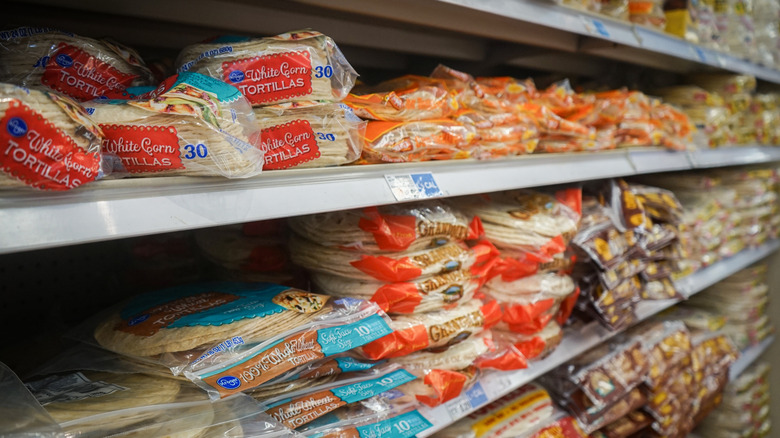
Traditional tortillas were never made with preservatives and stabilizers, and you can still find versions made without them. You can also make them yourself. An authentic tortilla relies on a process called nixtamalization, discovered centuries ago by Mesoamerican cultures. Nixtamalization requires you to soak and cook the corn in an alkaline (often calcium hydroxide) solution. It's a lengthy process and the soaking takes up to 12 hours. You can then hull the corn, which is now called nixtamal, and rinse it clean. The nixtamal can be ground into masa, which can be used to make tortillas, tamales, and many other dishes.
Nixtamalization preserves nutrients lost through other kinds of processing. A tortilla made this way will be more nutritious, and is even easier to digest. The texture is also nicer than a processed tortilla, and it will also taste better.
Any taqueria can go the extra mile to serve nixtamalized tortillas if they want. Also, any taco shop can choose a middle ground by making fresh tortillas from ground masa that has already been nixtamalized. They don't need to perform the whole process themselves. If they're putting in the effort to make tortillas rather than just buying the same ones you could get at the store, that's the difference you want, and it will make a better tasting taco every time.