

Not All Hawaii Macadamia Nuts Are Local — A New 2026 Law Makes That Clear
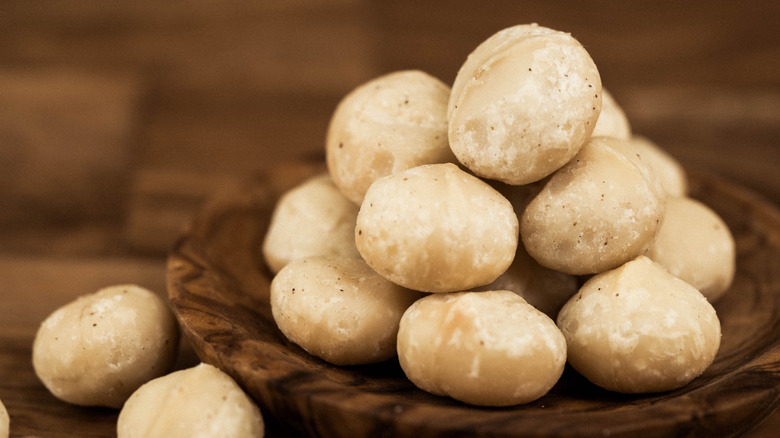
The tropical island chain of Hawaii is deeply tied in the global mind with a handful of agricultural products. Bright, fresh pineapple from the famous Dole plantation is certainly one, Kona coffee grown on the Big Island's volcanic slopes another, but there may be none more emblematic and prized than the macadamia nut. Chocolate-covered macadamias are a favorite souvenir to bring back from a trip to the Aloha State, and the nuts can be found in countless Island recipes, both sweet and savory, from pancakes and shortbread cookies to fried rice and macadamia-crusted mahi mahi. But despite being such a symbol of the island chain's agricultural bounty, until recently, these Hawaiian macadamia products were not required to disclose if the nuts used were actually sourced from somewhere on the island. Thankfully, as of just a few days ago, that has changed.
Back in 2024, the Hawaii legislature passed, and Governor Josh Green enacted Act 199, a law requiring that as of January 1, 2026, products that contain macadamia nuts produced outside the Aloha State be labeled: "This package contains macadamia nuts that were not grown in Hawaiʻi." The law is intended both to strengthen consumer confidence and highlight the quality of the local macadamia nuts, which are considered by many to be a premium product. Given the high cost of buying food in Hawaii, it will certainly be reassuring to shoppers that the macadamia nuts they bring home to share are indeed a taste of Aloha.
The details and omissions of Hawaii Act 199

These treasured nuts are a major product in Hawaii, with the majority of cultivation occurring on the Big Island, but they are not the world's top producer of macadamia nuts, nor is the product native to the island. Macadamia nuts actually originated in Australia, though they have been grown in Hawaii since the 1800s. However, given that nothing comes cheap in the Aloha State, the monetary incentive to outsource some of this nut production was plain. Unfortunately, the availability of cheaper nuts produced abroad that could still be packaged under a Hawaiian name led to troubles for Hawaii's nut farmers.
This change in labeling will not only make it easier for consumers to purchase exactly what they mean to, but also increase sales of locally-grown macadamia nuts. For most macadamia-focused products, it will be plain to see if any of the nuts used were grown outside of the state. Producers do not need to specify where the nuts were grown, nor what percentage are locally grown versus brought in from other locations, only that they contain nuts not grown in Hawaii. There are, however, a few exceptions.
According to the newly enacted law, products in which macadamia nuts are not a predominant ingredient are not required to make these labeling changes. Examples of these products include things like candies, cookies, ice cream, and other baked goods. So, while you can trust that from here on out any jar of macadamia nuts purporting itself to be Hawaiian is the real deal, the same might not be true for the Honolulu Cookie Company mini pineapple macadamia shortbread cookies you find on the shelf at Home Goods.