

10 Ingredients Celebrity Chefs Reach For To Make Bland Food Taste Better

For many people, cooking is a form of stress relief. In fact, according to research from HelloFresh, more than 70% of Americans say that cooking eases their stress more than it contributes to it. But do you know what can really spoil a relaxing cooking experience? Spending ages in the kitchen preparing food that turns out to be, well, at best, pretty average.
If you find that your food tends to lack flavor, don't worry. There are many fixes that can help turn this around. In fact, we scoured the internet to find some of the best top tips from celebrity chefs that will help bland food taste much better, and you can find our results below. The best part? It often comes down to just adding one ingredient, like chili paste or even lemon zest, to create a flavor explosion.
We're not kidding. Check out the expert advice from top chefs like Giada De Laurentiis, David Chang, and Andrew Zimmern, and you'll never make a dull meal ever again.
Giada De Laurentiis: Calabrian chili paste
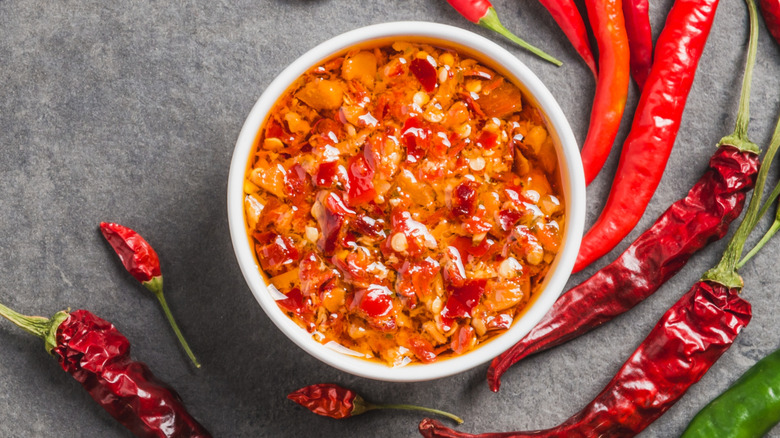
Rome-born Giada De Laurentiis is, perhaps unsurprisingly, a champion of Italian ingredients. The TV personality and cookbook author trained at Le Cordon Bleu in Paris, but her cooking style is firmly rooted in her homeland. Her go-to ingredients include olive oil, dried pasta, simple jarred tomato sauce, and Arborio rice, but the one thing De Laurentiis puts in everything? Calabrian chili paste.
This particular paste, which hails from Calabria in Italy, has a little bit of a kick. Calabrian chiles measure between 25,000 and 40,000 Scoville heat units (for context, that's a pretty similar heat level to a cayenne pepper, which sits between 30,000 and 50,000). According to De Laurentiis, this kick helps bring a depth of flavor to whatever you're cooking, while also imparting a pleasant, smoky, and sweet flavor.
But don't worry if you're not a heat lover — while it does have a kick, this paste is actually not too overwhelmingly spicy. The chef says that the olive oil and vinegar in the paste help to turn up the flavor while simultaneously mellowing the heat.
Emeril Lagasse: Roasted garlic
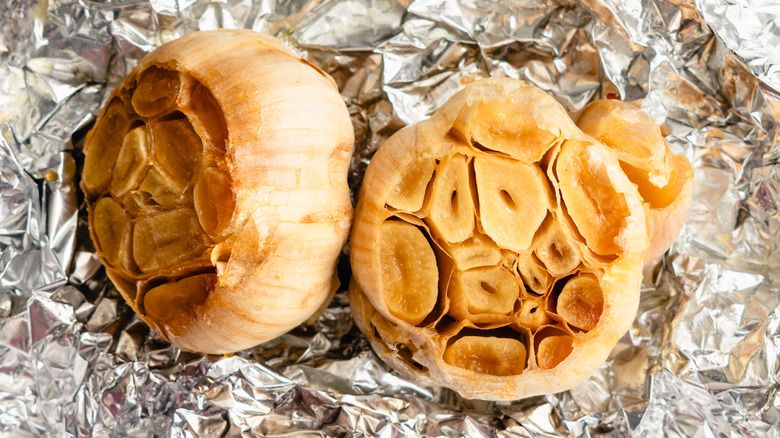
Chef, TV personality, and cookbook author Emeril Lagasse has opened more than 20 restaurants in his career, so it's fair to say he knows a thing or two about how to turn up the flavor. One of his favorite ingredients for enhancing any dish is garlic. But not just any garlic — for Lagasse, it has to be roasted.
In a video uploaded to his YouTube channel, the popular chef discussed how he loves to add roasted garlic to everything from pizza to sauces to mashed potatoes. He even loves roasted garlic on its own, combined with a little olive oil, and spread on crostini. The trick, he says, is to roast it slowly, for around an hour on a low heat, to maximize its sweet, mild, earthy flavor.
If you're thinking: "But garlic isn't sweet?" You're right. When it's raw, garlic has a pungent and bitter taste. But when it's roasted whole, the compound that is responsible for that overpowering flavor, allicin, breaks down, resulting in a much milder flavor. The heat also caramelizes the garlic, giving it that pleasant, slightly sweet taste.
Alex Guarnaschelli: Dry Marsala

Iron Chef, restaurateur, and Food Network TV personality Alex Guarnaschelli has a few go-to ingredients. She loves tangy pickle juice, for example, and says that vinegar-soaked mustard seeds can add a little depth and kick to most spice rubs. But one of her favorite ingredients to dial up the flavor is dry Marsala. In fact, the renowned chef says that a dash of this Sicilian wine makes pretty much anything taste better, from meat to fish to stews and soups.
Marsala is a fortified wine, similar to sherry or port, made with grapes that are indigenous to Sicily. It comes in various levels of sweetness, but Guarnaschelli's favorite, dry Marsala, is widely considered to be the best for cooking. That's all down to its slightly caramelly, nutty flavor.
So, next time you're whipping up a marinade, consider adding a dash of dry Marsala to the mix to take your cooking to the next level. Guarnaschelli says it's just like the fortified wine version of vinegar, and goes particularly well with mustard.
David Chang: Salt
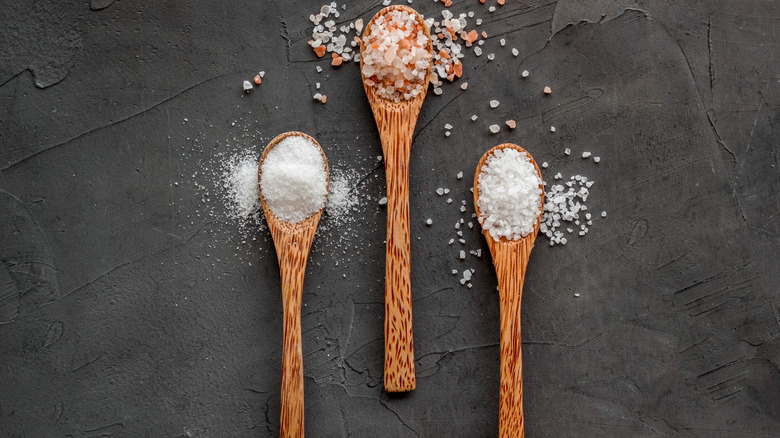
Salt might seem like the most basic seasoning on the planet, but David Chang says that, when it comes to taking the flavor of a dish up a notch, this simple ingredient should not be underestimated. The celebrity chef and founder of Momofuku restaurant group is not alone: Andrew Zimmern always keeps around nine different types of salt on hand, while Gordon Ramsay is loyal to French fleur de sel, and Alex Guarnaschelli loves kosher and coarse salt.
Chang is particularly passionate about adding just the right amount of salt to your food to deepen the flavor. But achieving this can be a complex process. "A chef can go crazy figuring out how much salt to add to a dish," he told Wired. But taking the time to nail it is worth it. "When a dish is perfectly seasoned, it will taste simultaneously like it has too much salt and too little salt," he added. "It is fully committed to being both at the same time."
The best way to achieve that elusive correct amount of salt? Don't add it all at once. Keep it in a bowl and keep adding small amounts until you've achieved the flavor you're after, which, according to Chang, should be salty but not too salty. Best of luck.
Michael Symon: Aioli
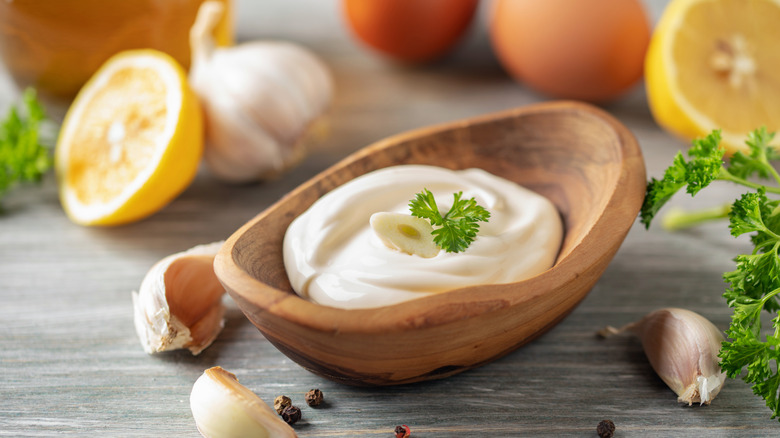
Aioli is a simple Mediterranean sauce that's full of flavor. It's kind of like mayonnaise in appearance and texture, but while mayonnaise is made with emulsified eggs, oil, and lemon juice or vinegar, aioli is just a combination of two ingredients: garlic and olive oil.
According to award-winning chef and restaurateur Michael Symon, who was raised in a Greek family, the simple sauce is a great way to turn up the flavor in very simple dishes. It's bold, but it isn't overpowering, and it's also versatile. The chef often experiments with aioli in his food, sometimes combining it with tarragon or even saffron.
Symon says aioli is especially good at making healthy foods, which might be perceived as boring by some, more exciting. It can add a little pizzazz to roasted vegetables, for example, or grilled fish. He also recommends adding some fermented ingredients to deepen the flavor of bland dishes or adding in crunchy whole-grain croutons for extra texture.
Andrew Zimmern: Fermented chili bean sauce
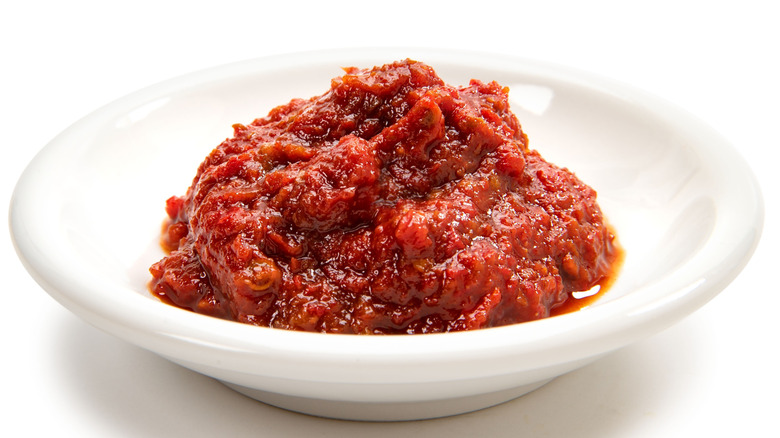
Salt isn't the only ingredient that Andrew Zimmern swears by. The award-winning chef and TV personality is also a huge fan of toban dijan, which is a fermented chili bean sauce made with chili peppers, soybeans, and broad beans. The sauce is similar to doubanjiang paste, which is an umami-rich cornerstone of Sichuan cooking. However, unlike doubanjiang, toban dijan has a spicy kick and is usually used in Cantonese cuisine.
Zimmern writes on his website that he couldn't live without toban dijan. The flavor profile is deeply savory, a little spicy thanks to the chiles, and pleasantly salty. It'll add umami and depth to pretty much anything, says Zimmern, who likes to use it in marinades, rubs, and sauces of all kinds, but, of course, it shines most in Chinese dishes. While it is endlessly versatile, one of Zimmern's favorite dishes to make with the paste is pork and asparagus with a chili-garlic sauce.
Antoni Porowski: Lemon zest
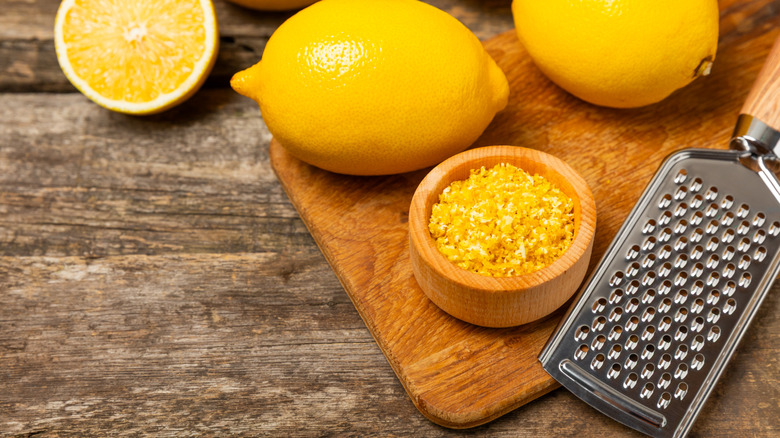
TV personality Antoni Porowski is arguably best known for his role on "Queer Eye," the hit Netflix makeover show that helps people transform their lives from the inside out. On the show, Porowski educates people about food and teaches them new skills in the kitchen. He's a master of home cooking, so it makes sense that his go-to ingredient for improving the flavor in most meals is accessible and simple. It's lemon zest.
Yep, according to Porowski, lemon zest helps to add a nice layer of flavor to basically any dish. He loves it so much, he puts it in nearly everything he cooks. He's not alone; many chefs like to add lemon to their food. And it makes sense: This ingredient is a multitasker. Not only does it have its own pleasant citrusy zingy flavor, but it can also help to balance out other strong flavors, like sweet or salty, for example, and cut through fat.
Yotam Ottolenghi: Biber salcasi
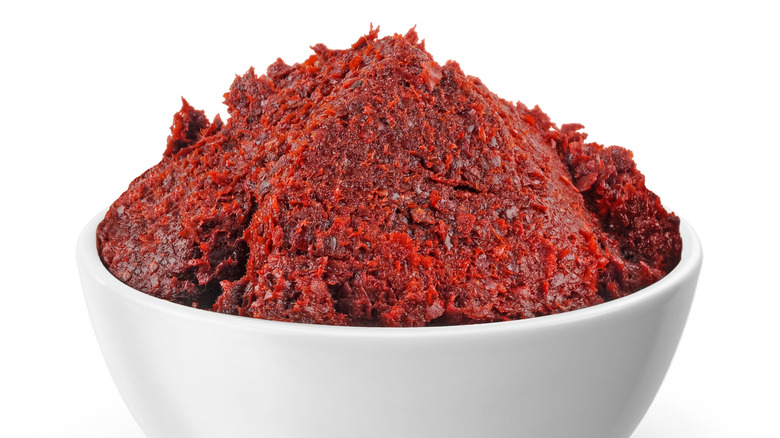
Yotam Ottolenghi is with Giada De Laurentiis and Andrew Zimmern in the pepper paste club. However, the renowned Israeli-British chef's go-to paste isn't from Italy or China; it's from Turkey. And it isn't particularly spicy, either. No, Ottolenghi is a big fan of biber salcasi, which is a simple red paste made with sweet salcasi peppers. But don't be fooled. While biber salcasi is simple in terms of ingredients, it's still full of complex flavor. This is largely because to make it, the peppers are dried outside in the sun, which gives them a slightly smoky element to complement the sweetness.
Ottolenghi says there aren't really any limits to what you can add biber salcasi to. In fact, he told CN Traveller that it is a "real cheat ingredient." You don't have to do anything fancy with it. He says you can just stir it through some scrambled eggs to take the flavor up a notch. "I stock up on it at the Eminönü Egyptian spice bazaar every time I'm in Istanbul and advise all my friends do the same," he added.
Ming Tsai: Soy sauce
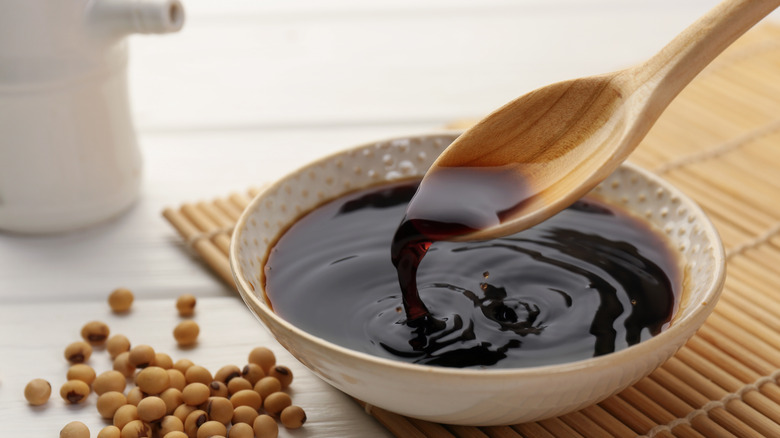
Let's be honest, most of us know we need to eat more vegetables. But the problem is, they can often taste pretty bland. But that's why seasoning exists. When we spoke to popular Iron Chef, restaurateur, and cookbook author Ming Tsai back in 2023, he told us that the secret to making vegetables more exciting, without relying too much on salt, is to add soy sauce.
"If you use soy sauce versus salt, you're going to get a sweeter, more deep flavor of soy sauce without the same sodium quantity," he explained. It's true that, while salt is a great cooking ingredient, it's not necessarily the healthiest. At least not when it's consumed to excess, anyway. That's mostly because sodium can increase blood pressure in high amounts. Soy sauce still contains sodium, but considerably less than the same quantity of standard table salt. It also helps impart an umami quality to the food, making blander ingredients, such as vegetables, more exciting to eat.
Another tip Tsai gave us to make vegetables better without relying overly on salt is to add acid. "Quite often, I'll use half the amount of sodium that a recipe normally would call for, and I will squeeze a lemon or a lime or [add a] splash of vinegar in it," he explained. "That makes veggies sing."
Martha Stewart: Vegetable bouillon
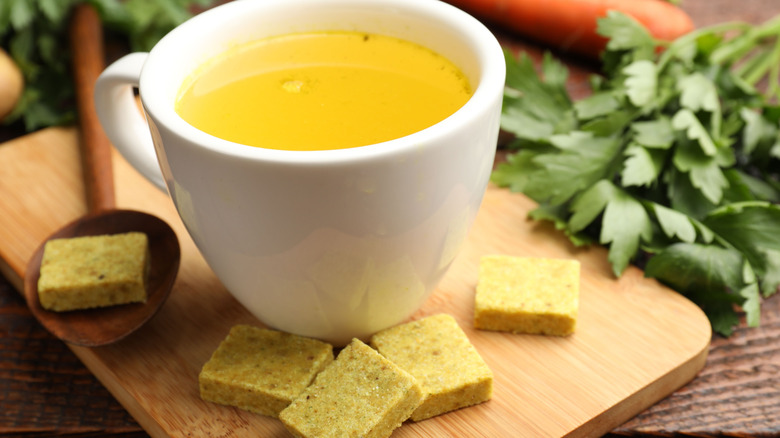
For decades, Martha Stewart has been guiding home cooks across the U.S. with her handy tips and tricks. The successful homemaker, entrepreneur, cookbook author, and TV personality often keeps things simple. Her advice for gardening? Use sharp pruning tools. For hosting? Give each guest an individual menu. For cooking? Don't skip the vegetable bouillon.
Yep, Stewart, the ultimate hostess with the mostest, says that just one vegetable bouillon cube can give most dishes a new depth of flavor. In fact, she says she has added bouillon to everything from vegetable purees to soups and veloute sauces for years with great success. It makes sense, really. Bouillon, whether used in cube or powder form, is packed with umami, which is that deep savory flavor that sits on the tongue and makes you salivate.
While vegetable bouillon is Stewart's go-to, she also uses beef bouillon when making beef dishes. According to the professional cook, the trick is to use it "sparingly." She told Delish: "It's enhancing, not cheating."