

You Need To Stop Throwing Out The Green Part Of Lobsters ASAP
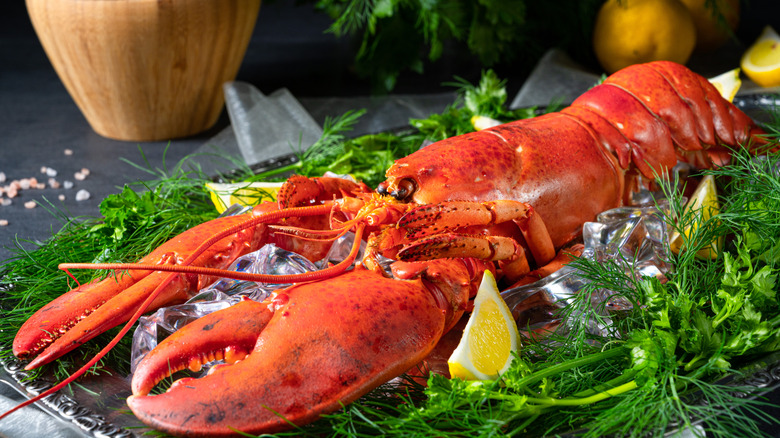
Cracking open a whole lobster reveals many different delicacies. You can start with the meaty tail, dipping bites of this easily-accessed firmer flesh in drawn butter, or you may prefer to start with the sweet, tender claw meat. But when you pull off that tail section, you will reveal inside the cavity something that stands out against all of the pink and white flesh — a strange green paste. For many bib-clad lobster eaters, this green stuff ends up in the bin along with the scraps of cracked and empty shells, but they don't know what they are missing. That green paste is called tomalley, and despite its potentially off-putting appearance, it's a part of the lobster experience begging to be savored.
The tomalley is actually an organ, the lobster's hepatopancreas, which functions in the roles of both liver and pancreas for the creature. It certainly isn't the most visually-appealing part of the crustacean, but looks can be deceiving. Tomalley is fatty and rich, but unlike other organ meats you might have tried, the taste isn't all that different from the rest of the flesh. It is almost like a lobster concentrate, packing an exceptional amount of flavor into even the tiniest scoop on the end of your lobster fork. It may take a bit of courage to sample that first bit, but once you do, you will understand that this part of the lobster has lots of potential in the kitchen.
How to use lobster tomalley
The simplest way to make use of lobster tomalley is to treat it like you might a nice pate. The texture is that of a thick paste, so it is ideal for spreading onto bread or crackers. It is already quite rich, but spread on a piece of crusty white bread with a few drops of melted butter and a light spritz of lemon on top, tomalley makes an excellent bite. If you don't fancy the appearance, however, there are plenty of other ways to make use of tomalley.
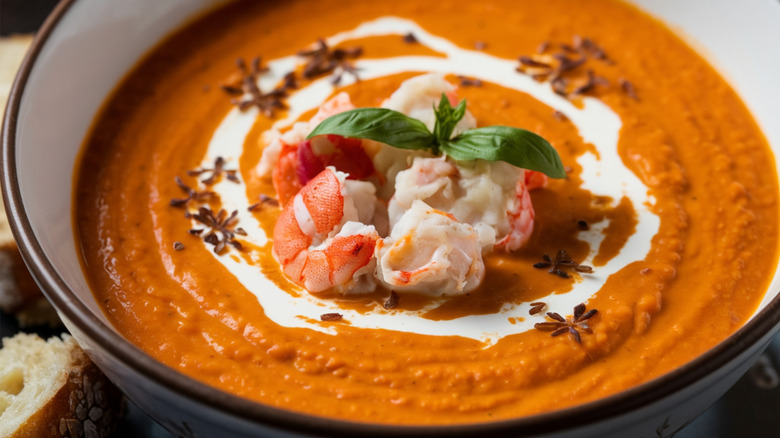
Another common use is to mix it into soups and stews. If you plan on making a rich and creamy lobster bisque, tomalley is often mixed in both as a thickener and to punch up the flavor. Whether you are talking about a bisque or any other kind of seafood chowder, you really can't go wrong with an extra taste of lobster mixed in.
Similarly, tomalley can be used in any number of different sauces. For a simple sauce that you can eat while cracking the claws, try mixing it into mayonnaise or butter to amp up the taste of the sea. It can also be whisked into the bechamel in a lobster mac and cheese recipe or added to the dressing you use for making lobster rolls. Folks can be very particular about how to dress these seaside sandwiches, but a combination of butter and mayonnaise in lobster rolls is the best of both worlds, and it's even better with some tomalley in the mix.
Health concerns with consuming tomalley
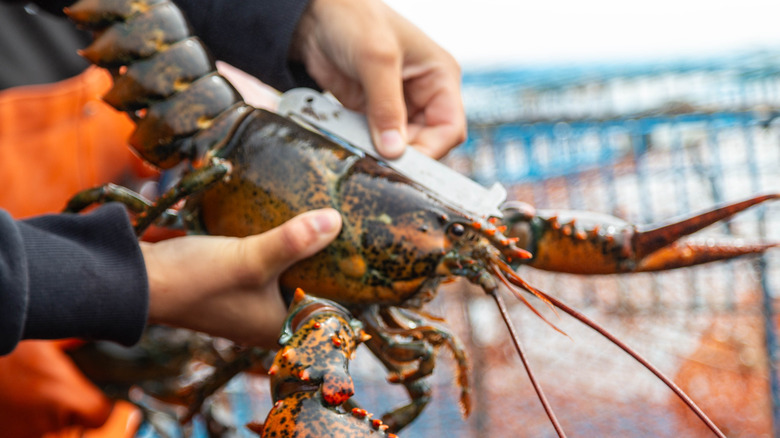
While tomalley is considered a delicacy and is an ingredient with a lot of traditional uses, there is some potential danger when it comes to eating this part of the lobster. Just like livers in other creatures, one of the roles of the lobster's hepatopancreas is to filter out toxins. This means that if the lobster in question was living in an environment with high levels of toxic materials these can accumulate to unsafe levels in the tomalley.
Whether or not this should be a deterrent to eating the tomalley is a difficult question. There are historical instances in which the FDA suggested that lobster tomalley should not be consumed, though this was typically in response to specific occurrences. In 2008, a warning was issued regarding risks of paralytic shellfish poisoning (PSP) in Northeastern lobster tomalley as a result of a red tide. Cooking the lobster does not affect PSP toxins, but even in such cases the flesh of the lobster is considered safe to eat. The presence of these toxins, however, is the result of a specific event — a bloom of particular species of algae — meaning it is not an ever-present threat.
Unfortunately, some of the other concerns are a constant concern. According to Maine's Department of Health and Human Services, lobster tomalley should be entirely removed from the menu due to the potential for toxins. These toxins include PCBs, dioxin, and heavy metals such as mercury. Particularly for sensitive and at-risk populations, the wise move would be to avoid eating lobster tomalley altogether. Others would likely still do well to consume it only in moderation. The waters from which the lobster is pulled determine the risk factor, so be sure to do your research ahead of time.