

New England's Unique Topping For Clam Chowder Is A Lot More Hearty Than Oyster Crackers
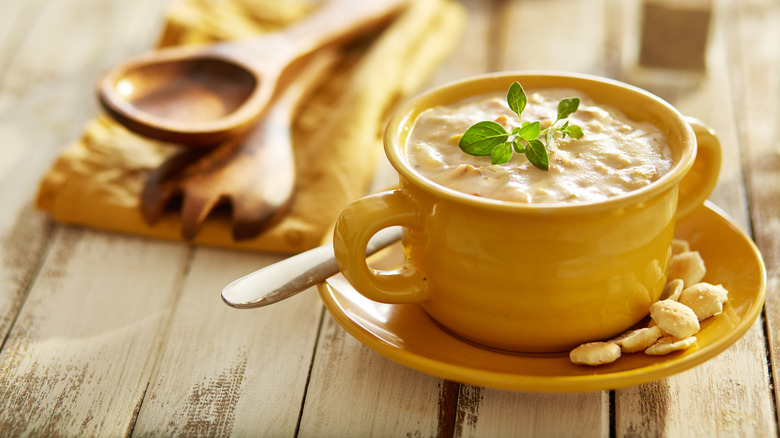
Steam curls up from a warm bowl of clam chowder, and it hits you: The rich magic of cream with briny clams, smoky bacon, garlic, and herbs is only missing one thing — a handful (or two) of crackers. In New England, the official dipping buddy for creamy clam chowder is called a common cracker, and it's different than any other cracker in almost every possible way. For starters, it's larger (about the size of a Ritz cracker), rougher, and looks unmistakably old-school. The common cracker's flavor is also deliberately restrained.
Wheaty, crunchy, and very hearty — these unleavened crackers swell slightly in creamy New England clam chowder. This makes them take on a dumpling-like quality, and it's not accidental. History tells us those common crackers helped make any chowder fuller, especially if there were more diners on the list than anticipated. And while they are puffy like oyster crackers, common crackers came first. Think of them as the oyster cracker's great-grandmother, with companies like Cross Bakers and Westminster producing them around 1820. By the mid-1800s oyster crackers became a thing, a very popular thing, along with oysters around 1870, thanks to refrigeration and more railroads. But common crackers never gave up the ghost. Also known as St. Johnsbury or Montpelier crackers — they're still a must-have across New England and beyond. New Yorkers have been known to dunk them into their Long Island-style chowder and their Manhattan-style chowders, too.
The common cracker has a unique texture, too
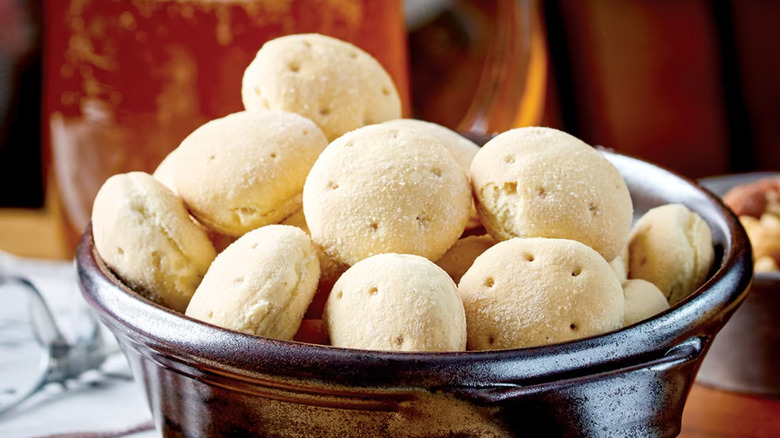
Pale and plain, common crackers were sold loose from barrels in general stores and bakeries. That's because these crackers were designed for utility, not snacking. Common crackers were and are especially good for dunking into chowders and soups. But historically, these crackers were eaten with milk or sharp cheddar for sustenance. Thick and blunt, common crackers resembled something closer to small, flour-dusted hockey pucks. In Vermont, the Cross Brothers bakery still supplied stores statewide for generations. When the bakery closed in 1979, the crackers might have disappeared entirely if not for the Vermont Country Store, which purchased the original equipment and continued making them, preserving a humble but enduring regional food tradition.
New England common crackers are still a working food today. They show up in the same creative ways we use Ritz crackers — crushed on top of macaroni and cheese and casseroles, folded into stuffing, or used as a binder for crab and fish cakes. They're served plain with butter, peanut butter, or sharp cheddar, and kept on hand for illness, travel, and long days. But these crackers deserve to be surrounded by fancier fare, too. Common crackers are a unique and fun way to easily upgrade your charcuterie board – just don't forget the Vermont cheddar. That intentionally plain, flour-forward, lightly salted, and neutral taste is just the thing for any pie crust that calls for crushed crackers, too.